
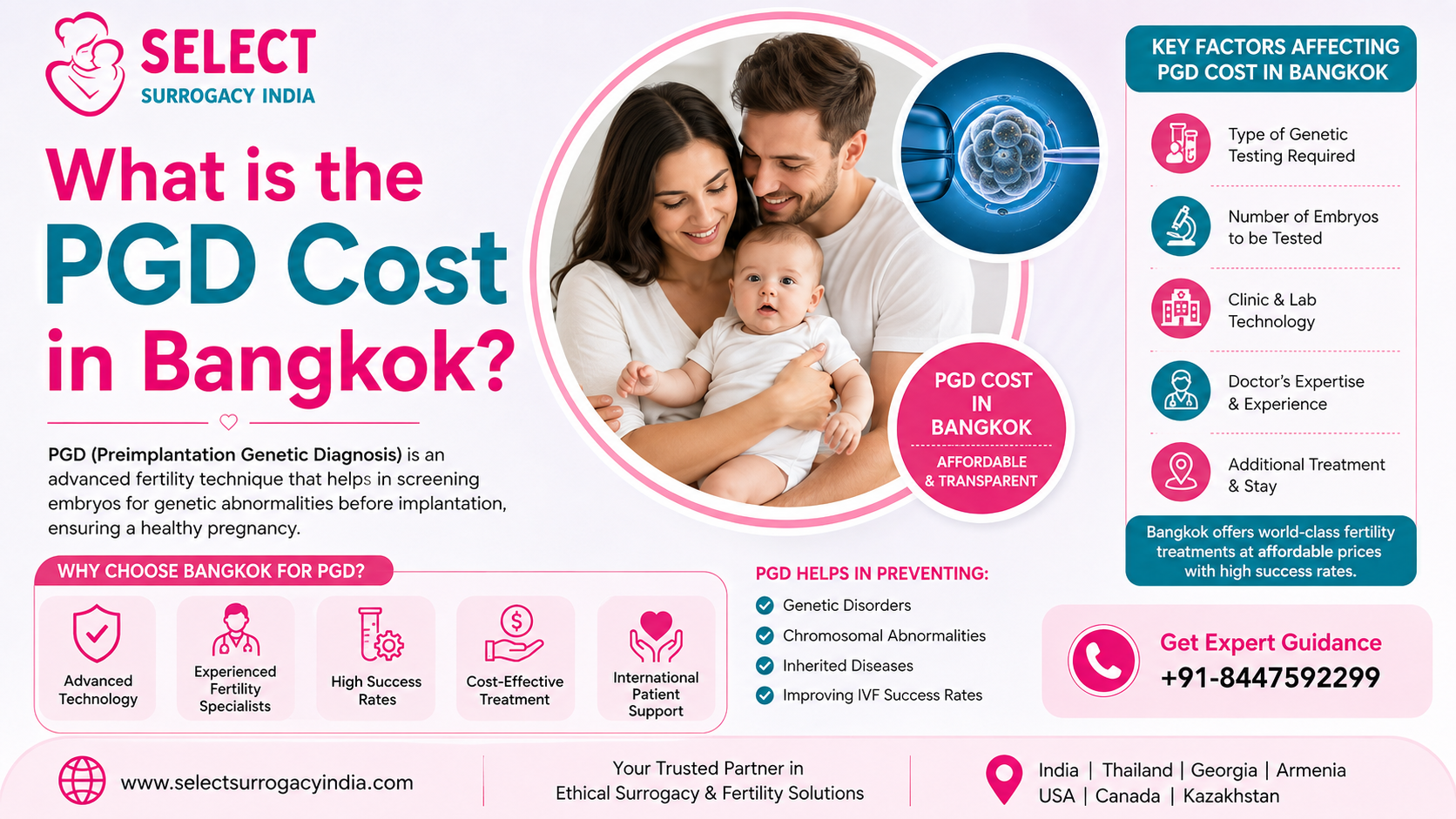
Advancements in fertility treatment have made it possible for many couples to overcome complex reproductive challenges. Along with IVF, genetic testing has become an important part of fertility care for couples who have a family history of inherited diseases, repeated miscarriages, or multiple unsuccessful IVF cycles. One of the most commonly recommended genetic tests during IVF is Preimplantation Genetic Diagnosis (PGD). PGD is performed before embryo transfer to identify specific genetic conditions in embryos. By testing embryos before pregnancy, doctors can select embryos that meet the recommended genetic criteria based on the couple’s medical condition. This technology has become an important option for couples who want to reduce the risk of passing certain inherited disorders to their children. Bangkok has emerged as one of the leading destinations for advanced fertility treatment in Asia. The city is home to experienced fertility specialists, modern IVF laboratories, and hospitals equipped with advanced reproductive technology. Many international patients choose Bangkok because it offers high-quality fertility treatment with comprehensive medical care. One of the first questions couples usually ask is, “What is the PGD cost in Bangkok?“ The answer depends on several factors, including the fertility clinic, IVF treatment plan, number of embryos tested, laboratory technology, and additional procedures required during treatment. In general, the PGD cost in Bangkok may range from THB 100,000 to THB 250,000 or more, while the total cost of IVF with PGD may range between THB 400,000 and THB 700,000 or higher, depending on the complexity of the treatment and the services included in the package. Some fertility centres also offer customized treatment plans based on individual medical requirements. This guide explains everything you need to know about PGD Cost in Bangkok, including the procedure, treatment process, cost breakdown, factors affecting the price, benefits, possible risks, and tips for choosing the right fertility centre. What is PGD? Preimplantation Genetic Diagnosis (PGD) is a specialised genetic testing procedure performed during an IVF cycle. It is designed to identify specific inherited genetic disorders in embryos before they are transferred into the uterus. Unlike routine prenatal tests performed during pregnancy, PGD takes place before pregnancy begins. This allows fertility specialists to evaluate embryos and select those that do not carry the targeted genetic condition being tested. PGD is generally recommended for couples with a known risk of passing on certain inherited diseases. It is not a replacement for IVF but an additional laboratory procedure carried out after embryos are created through IVF. The process involves removing a very small number of cells from the embryo without affecting its normal development. These cells are then examined in a specialised genetics laboratory. Based on the test results, fertility specialists determine which embryos are suitable for transfer according to the couple’s medical circumstances. What is the Difference Between PGD and PGT? Many people use the terms PGD and PGT interchangeably, but they are not exactly the same. PGD (Preimplantation Genetic Diagnosis) focuses on identifying specific inherited genetic disorders that are already known within a family. Examples include: PGT (Preimplantation Genetic Testing) is a broader term that includes several types of genetic screening, such as checking embryos for chromosomal abnormalities or specific genetic mutations. Today, many fertility centres use the term PGT as the general category, while PGD refers to testing for known single-gene disorders. Your fertility specialist will recommend the most appropriate test based on your medical history and genetic background. Who May Need PGD? PGD is not required for every couple undergoing IVF. Doctors recommend it only when there is a medical reason to perform genetic testing. Some common situations include: Couples with Genetic Disorders If either partner carries an inherited genetic condition, PGD may help identify embryos that are not affected by that specific condition. Recurrent Pregnancy Loss Repeated miscarriages can sometimes be associated with genetic abnormalities. After evaluating the couple’s medical history, doctors may recommend PGD as part of the treatment plan. Multiple Failed IVF Cycles Some couples experience repeated unsuccessful IVF attempts despite good-quality treatment. In selected cases, genetic evaluation of embryos may provide additional information that helps doctors plan future treatment. Advanced Maternal Age As women grow older, the likelihood of chromosomal abnormalities in eggs increases. Depending on the patient’s overall fertility assessment, genetic testing may be considered. Family History of Genetic Diseases Couples with a known family history of inherited medical conditions may benefit from discussing PGD with a fertility specialist. PGD Cost in Bangkok The PGD Cost in Bangkok depends on the complexity of the treatment and the laboratory techniques used. Most patients undergo PGD as part of an IVF cycle, so the overall treatment cost includes both IVF and genetic testing. Below is an estimated cost overview: Treatment PGD Cost Initial Consultation THB 2,000–5,000 Fertility Tests THB 10,000–30,000 IVF Cycle THB 250,000–450,000 Embryo Biopsy THB 30,000–80,000 PGD Testing THB 100,000–250,000 Embryo Freezing THB 20,000–50,000 Frozen Embryo Transfer THB 50,000–100,000 Factors Affecting PGD Cost in Bangkok Several factors influence the overall treatment expense. 1. Number of Embryos Tested One of the biggest cost factors is the number of embryos undergoing genetic analysis. More embryos generally require additional laboratory work, increasing the total cost. 2. Type of Genetic Disorder Being Tested Different genetic conditions require different testing methods. Testing for a single inherited disease may differ from more comprehensive genetic screening, which can affect laboratory costs. 3. IVF Treatment Plan Since PGD is performed alongside IVF, the complexity of the IVF cycle also affects the total price. Factors include: 4. Fertility Medications Hormonal medications are used to stimulate the ovaries before egg retrieval. Medication costs vary depending on: 5. Laboratory Technology PGD requires advanced genetic laboratories equipped with specialised technology. Clinics with experienced embryologists and modern laboratory facilities may charge higher fees due to the precision involved in embryo biopsy and genetic analysis. 6. Additional Procedures Some couples may also require: These services are usually billed separately and increase the overall cost. Why Understanding the Cost Matters Before starting treatment, it is important to understand exactly what is included