Advancements in fertility treatment have made it possible for many couples to overcome complex reproductive challenges. Along with IVF, genetic testing has become an important part of fertility care for couples who have a family history of inherited diseases, repeated miscarriages, or multiple unsuccessful IVF cycles. One of the most commonly recommended genetic tests during IVF is Preimplantation Genetic Diagnosis (PGD).
PGD is performed before embryo transfer to identify specific genetic conditions in embryos. By testing embryos before pregnancy, doctors can select embryos that meet the recommended genetic criteria based on the couple’s medical condition. This technology has become an important option for couples who want to reduce the risk of passing certain inherited disorders to their children.
Bangkok has emerged as one of the leading destinations for advanced fertility treatment in Asia. The city is home to experienced fertility specialists, modern IVF laboratories, and hospitals equipped with advanced reproductive technology. Many international patients choose Bangkok because it offers high-quality fertility treatment with comprehensive medical care.
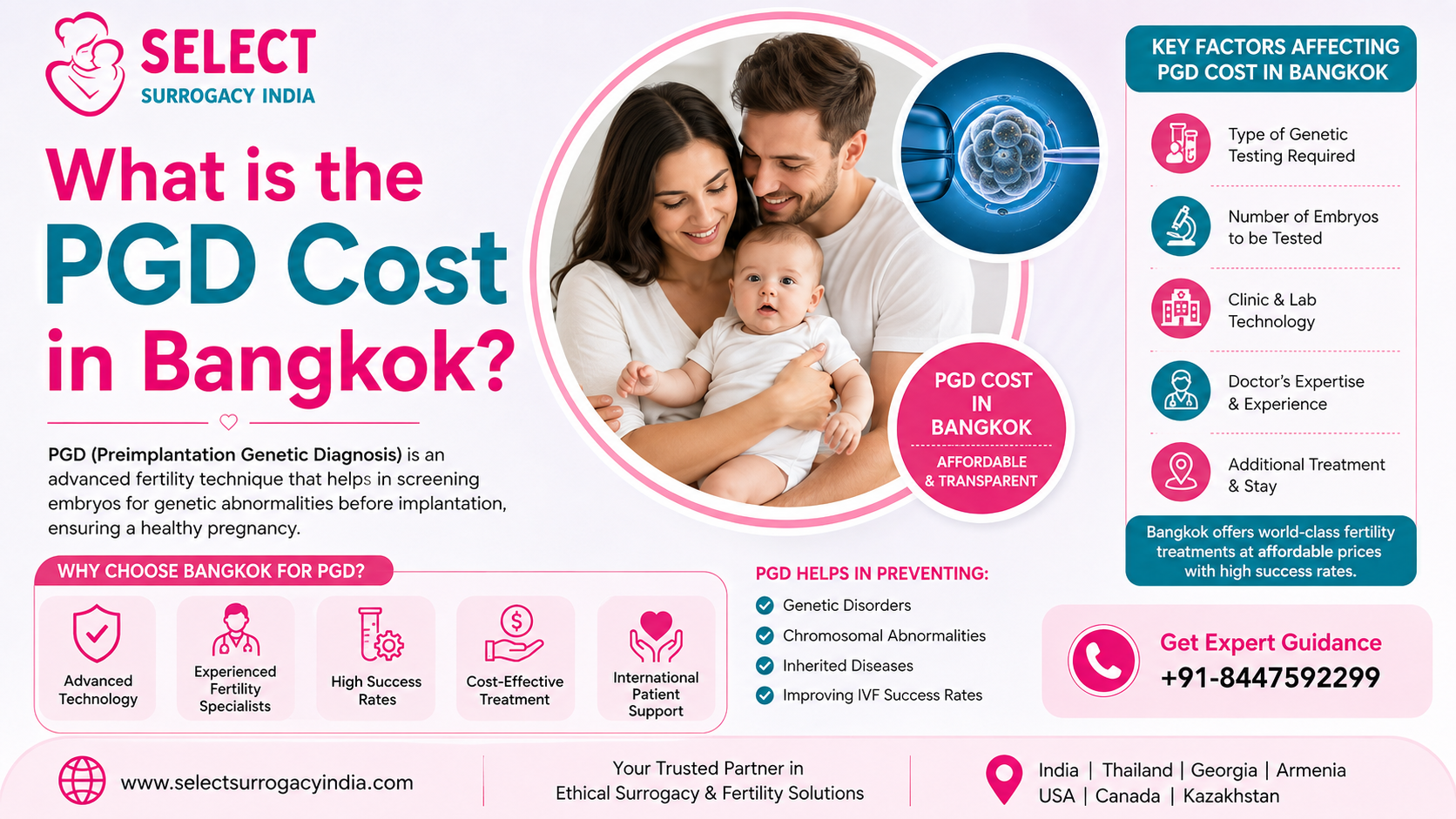
One of the first questions couples usually ask is, “What is the PGD cost in Bangkok?“ The answer depends on several factors, including the fertility clinic, IVF treatment plan, number of embryos tested, laboratory technology, and additional procedures required during treatment.
In general, the PGD cost in Bangkok may range from THB 100,000 to THB 250,000 or more, while the total cost of IVF with PGD may range between THB 400,000 and THB 700,000 or higher, depending on the complexity of the treatment and the services included in the package. Some fertility centres also offer customized treatment plans based on individual medical requirements.
This guide explains everything you need to know about PGD Cost in Bangkok, including the procedure, treatment process, cost breakdown, factors affecting the price, benefits, possible risks, and tips for choosing the right fertility centre.

What is PGD?
Preimplantation Genetic Diagnosis (PGD) is a specialised genetic testing procedure performed during an IVF cycle. It is designed to identify specific inherited genetic disorders in embryos before they are transferred into the uterus.
Unlike routine prenatal tests performed during pregnancy, PGD takes place before pregnancy begins. This allows fertility specialists to evaluate embryos and select those that do not carry the targeted genetic condition being tested.
PGD is generally recommended for couples with a known risk of passing on certain inherited diseases. It is not a replacement for IVF but an additional laboratory procedure carried out after embryos are created through IVF.
The process involves removing a very small number of cells from the embryo without affecting its normal development. These cells are then examined in a specialised genetics laboratory.
Based on the test results, fertility specialists determine which embryos are suitable for transfer according to the couple’s medical circumstances.
What is the Difference Between PGD and PGT?
Many people use the terms PGD and PGT interchangeably, but they are not exactly the same.
PGD (Preimplantation Genetic Diagnosis) focuses on identifying specific inherited genetic disorders that are already known within a family.
Examples include:
- Thalassemia
- Cystic fibrosis
- Sickle cell disease
- Huntington’s disease
- Muscular dystrophy
PGT (Preimplantation Genetic Testing) is a broader term that includes several types of genetic screening, such as checking embryos for chromosomal abnormalities or specific genetic mutations.
Today, many fertility centres use the term PGT as the general category, while PGD refers to testing for known single-gene disorders.
Your fertility specialist will recommend the most appropriate test based on your medical history and genetic background.
Who May Need PGD?
PGD is not required for every couple undergoing IVF. Doctors recommend it only when there is a medical reason to perform genetic testing.
Some common situations include:
Couples with Genetic Disorders
If either partner carries an inherited genetic condition, PGD may help identify embryos that are not affected by that specific condition.
Recurrent Pregnancy Loss
Repeated miscarriages can sometimes be associated with genetic abnormalities.
After evaluating the couple’s medical history, doctors may recommend PGD as part of the treatment plan.
Multiple Failed IVF Cycles
Some couples experience repeated unsuccessful IVF attempts despite good-quality treatment.
In selected cases, genetic evaluation of embryos may provide additional information that helps doctors plan future treatment.
Advanced Maternal Age
As women grow older, the likelihood of chromosomal abnormalities in eggs increases.
Depending on the patient’s overall fertility assessment, genetic testing may be considered.
Family History of Genetic Diseases
Couples with a known family history of inherited medical conditions may benefit from discussing PGD with a fertility specialist.
PGD Cost in Bangkok
The PGD Cost in Bangkok depends on the complexity of the treatment and the laboratory techniques used.
Most patients undergo PGD as part of an IVF cycle, so the overall treatment cost includes both IVF and genetic testing.
Below is an estimated cost overview:
| Treatment | PGD Cost |
| Initial Consultation | THB 2,000–5,000 |
| Fertility Tests | THB 10,000–30,000 |
| IVF Cycle | THB 250,000–450,000 |
| Embryo Biopsy | THB 30,000–80,000 |
| PGD Testing | THB 100,000–250,000 |
| Embryo Freezing | THB 20,000–50,000 |
| Frozen Embryo Transfer | THB 50,000–100,000 |
Factors Affecting PGD Cost in Bangkok
Several factors influence the overall treatment expense.
1. Number of Embryos Tested
One of the biggest cost factors is the number of embryos undergoing genetic analysis.
More embryos generally require additional laboratory work, increasing the total cost.
2. Type of Genetic Disorder Being Tested
Different genetic conditions require different testing methods.
Testing for a single inherited disease may differ from more comprehensive genetic screening, which can affect laboratory costs.
3. IVF Treatment Plan
Since PGD is performed alongside IVF, the complexity of the IVF cycle also affects the total price.
Factors include:
- Medication dosage
- Egg retrieval procedure
- Laboratory fertilisation
- Embryo culture
- Embryo transfer
4. Fertility Medications
Hormonal medications are used to stimulate the ovaries before egg retrieval.
Medication costs vary depending on:
- Age
- Hormone levels
- Ovarian reserve
- Individual response to treatment
5. Laboratory Technology
PGD requires advanced genetic laboratories equipped with specialised technology.
Clinics with experienced embryologists and modern laboratory facilities may charge higher fees due to the precision involved in embryo biopsy and genetic analysis.
6. Additional Procedures
Some couples may also require:
- ICSI
- Assisted hatching
- Embryo freezing
- Frozen embryo transfer
- Additional fertility investigations
These services are usually billed separately and increase the overall cost.
Why Understanding the Cost Matters
Before starting treatment, it is important to understand exactly what is included in the quoted package.
Ask your fertility centre whether the estimate covers:
- Consultation fees
- Fertility medicines
- Embryo biopsy
- Genetic testing
- Laboratory charges
- Embryo freezing
- Storage fees
- Follow-up visits
Having a clear understanding of the complete treatment cost helps couples plan financially and avoid unexpected expenses during the IVF journey.
Step-by-Step PGD Procedure
Understanding the PGD procedure helps couples know what to expect during treatment. Since PGD is performed as part of an IVF cycle, both procedures work together to achieve the best possible outcome.
The entire process usually takes several weeks, depending on the patient’s response to fertility medications and the treatment plan recommended by the fertility specialist.
Step 1: Initial Consultation
The journey begins with a detailed consultation with a fertility specialist.
During this appointment, the doctor reviews:
- Medical history
- Family history of genetic disorders
- Previous pregnancies
- Previous IVF treatments
- History of miscarriages
- Current fertility reports
If necessary, the doctor may recommend additional blood tests, hormone evaluations, ultrasound examinations, or genetic counselling before beginning treatment.
This consultation helps create a personalized treatment plan.
Step 2: Ovarian Stimulation
The woman receives fertility medications to stimulate the ovaries.
Normally, one egg develops naturally each month. During IVF, fertility medicines encourage the ovaries to produce multiple mature eggs.
Throughout this stage, doctors carefully monitor the ovaries through:
- Ultrasound scans
- Blood hormone tests
- Follicle monitoring
The dosage of medication is adjusted according to the patient’s response.
Step 3: Egg Retrieval
Once the eggs have matured, they are collected through a minor medical procedure known as egg retrieval.
The procedure is usually performed under light sedation and generally takes about 20–30 minutes.
The collected eggs are immediately transferred to the IVF laboratory for fertilization.
Step 4: Fertilization
The retrieved eggs are fertilized with sperm in a specialized laboratory.
Depending on the couple’s fertility condition, doctors may perform:
- Conventional IVF
- ICSI (Intracytoplasmic Sperm Injection)
The embryos are then carefully monitored over the next few days as they develop.
Step 5: Embryo Biopsy
When the embryos reach the blastocyst stage (usually Day 5 or Day 6), an experienced embryologist removes a very small number of cells from the outer layer of each embryo.
These cells are carefully collected without significantly affecting the embryo’s continued development when performed by trained professionals.
The embryos are then usually frozen while the genetic analysis is completed.
Step 6: Genetic Testing
The biopsy samples are sent to a specialized genetics laboratory.
Scientists examine the DNA to identify the specific genetic condition or mutation that the couple is being tested for.
The laboratory prepares a detailed report showing which embryos meet the testing criteria.
This process generally takes several days, depending on the type of testing performed.
Step 7: Embryo Transfer
After receiving the genetic testing results, the fertility specialist discusses the findings with the couple.
An embryo that meets the planned medical criteria is selected for transfer into the uterus.
The embryo transfer procedure is simple, does not require surgery, and usually takes only a few minutes.
Step 8: Pregnancy Test
Around 10 to 14 days after embryo transfer, a blood test is performed to determine whether implantation has occurred successfully.
If the pregnancy test is positive, the doctor schedules follow-up scans to monitor early pregnancy.

Best PGD Centres in Bangkok
Bangkok is home to several fertility centres that provide advanced reproductive treatment, including IVF, ICSI, embryo freezing, and genetic testing such as PGD/PGT.
Below are some centres couples may consider while exploring treatment options.
1. Select IVF India
Select IVF India provides fertility guidance and treatment support for couples seeking advanced reproductive solutions, including IVF and genetic testing options.
The organisation believes that fertility treatment should be personalized because every couple has different medical needs and fertility goals.
The experienced team includes fertility specialists, embryologists, patient coordinators, and medical professionals who guide couples through every stage of treatment.
From the first consultation to treatment planning, embryo development, genetic testing guidance, and follow-up support, the team focuses on providing complete assistance throughout the journey.
Select IVF India also helps international patients understand different treatment options, required medical reports, expected timelines, and important considerations before starting treatment abroad.
The centre focuses on transparent communication, ethical medical practices, and patient education so couples can make informed decisions about their fertility treatment.
Services
- IVF Treatment
- PGD Guidance
- PGT Support
- ICSI
- Fertility Consultation
- Embryo Freezing
- International Patient Support
Why Choose Select IVF India?
Choosing the right fertility centre is one of the most important decisions during your parenthood journey. Select IVF India focuses on providing personalized fertility care based on each couple’s medical history, fertility condition, and treatment goals.
The experienced medical team works closely with patients to explain every stage of treatment in simple language. Whether it is IVF, PGD, ICSI, or embryo freezing, couples receive proper guidance before making any important decision.
The centre believes in transparency, ethical treatment practices, and patient-focused care. Instead of following the same treatment plan for everyone, specialists create individualized treatment strategies that match each patient’s specific needs.
International patients also receive assistance with medical documentation, treatment planning, appointment scheduling, and travel-related coordination, making the overall process smoother.
With experienced specialists, modern fertility techniques, and compassionate patient care, Select IVF India continues to support couples who are working toward their dream of building a family.
2. LRC Fertility Center
LRC Fertility Center is one of Bangkok’s specialized fertility clinics with experience in assisted reproductive technology and preimplantation genetic diagnosis. The clinic is supported by reproductive specialists and embryologists experienced in embryo culture, cryopreservation, and genetic testing.
The centre provides comprehensive fertility evaluation before recommending treatment. Doctors review fertility history, medical reports, and genetic concerns to create individualized treatment plans.
Services
- IVF
- PGD/PGT
- ICSI
- Embryo Freezing
- Fertility Consultation
- Genetic Counselling
3. Superior A.R.T.
Superior A.R.T. is one of Bangkok’s established fertility centres offering IVF and advanced genetic services. The centre combines reproductive medicine with modern embryology laboratories and provides PGD/PGT for eligible patients.
The fertility team works with patients throughout diagnosis, treatment planning, embryo development, and follow-up care.
Services
- IVF
- ICSI
- PGD/PGT
- Embryo Freezing
- Fertility Preservation
- Male Infertility Treatment
4. Prime Fertility Center
Prime Fertility Center provides fertility treatments supported by internationally accredited laboratory standards. The clinic offers IVF, ICSI, egg freezing, embryo freezing, and PGT services using modern laboratory technology.
Doctors evaluate every patient’s fertility condition before recommending appropriate treatment options.
Services
- IVF
- ICSI
- PGD/PGT
- Egg Freezing
- Embryo Freezing
- Fertility Consultation
Benefits of PGD
PGD offers several important advantages for couples with specific medical indications.
Helps Detect Certain Genetic Conditions
PGD allows specialists to identify embryos with specific inherited genetic disorders before embryo transfer.
Supports Better Treatment Planning
Genetic information helps doctors make more informed decisions when planning embryo transfer.
May Reduce the Risk of Passing Certain Inherited Disorders
For couples carrying known genetic mutations, PGD can help reduce the likelihood of transmitting those conditions to future children.
May Reduce Emotional Stress
Many couples feel more confident knowing that embryos have undergone genetic evaluation based on their medical circumstances.
Although no treatment guarantees pregnancy, additional information may provide reassurance during the IVF journey.
PGD Success Rate in Bangkok
Many couples ask whether PGD increases IVF success.
The answer depends on individual medical circumstances.
PGD itself is designed to identify specific genetic abnormalities—it is not a treatment for infertility. However, selecting embryos based on appropriate genetic testing may improve decision-making for certain patients, particularly those with known inherited disorders or recurrent pregnancy loss.
Several factors influence the overall success of IVF with PGD, including:
- Female age
- Egg quality
- Sperm quality
- Embryo quality
- Uterine health
- Underlying medical conditions
- Experience of the fertility team
For this reason, success rates differ from one couple to another, and no fertility centre can guarantee pregnancy.
Risks and Limitations of PGD
PGD has become an important part of modern fertility treatment for couples with specific genetic concerns. Although it offers several benefits, it is equally important to understand that no medical procedure is completely free from limitations.
Before starting treatment, fertility specialists explain both the advantages and the possible challenges so that couples can make informed decisions.
1. PGD Cannot Guarantee Pregnancy
One of the biggest misconceptions about PGD is that it guarantees pregnancy.
In reality, PGD helps identify embryos for specific genetic conditions, but pregnancy depends on many other factors.
Successful implantation is influenced by:
- Female age
- Egg quality
- Sperm quality
- Uterine health
- Embryo quality
- Overall reproductive health
Even after transferring a genetically tested embryo, pregnancy cannot be guaranteed.
2. Not Every Embryo May Be Suitable
After genetic testing, some embryos may not meet the required medical criteria.
If only a small number of embryos are created during IVF, there may be fewer embryos available for transfer after PGD.
For this reason, doctors usually explain the possible outcomes before treatment begins.
3. Additional Cost
PGD is performed in addition to IVF, so it increases the overall treatment cost.
Extra expenses may include:
- Embryo biopsy
- Genetic laboratory testing
- Embryo freezing
- Frozen embryo transfer
- Additional consultations
Understanding the complete financial plan before treatment helps couples prepare better.
4. Emotional Challenges
The waiting period between embryo biopsy and receiving genetic test results can be emotionally stressful.
Couples often experience:
- Anxiety
- Hope
- Uncertainty
- Fear of disappointing results
Having emotional support from family members, counsellors, or the fertility team can make this period easier.
5. Time Required
PGD usually extends the overall IVF timeline because embryos need to be tested before transfer.
After the biopsy, genetic analysis takes several days, and embryo transfer is often performed in a later frozen embryo transfer cycle.
Although this requires additional patience, it allows doctors to review the genetic results before proceeding.
Why Choose Bangkok for PGD Treatment?
Bangkok has become one of the leading destinations for fertility treatment because it combines modern reproductive technology with experienced medical professionals and comprehensive patient care.
Many international couples choose Bangkok because of the balance between quality healthcare and competitive treatment costs.
Advanced Fertility Centres
Bangkok is home to fertility centres equipped with modern IVF laboratories and advanced reproductive technology.
Many centres offer services such as:
- IVF
- ICSI
- PGD
- PGT
- Embryo freezing
- Egg freezing
- Fertility preservation
These services allow couples to receive comprehensive fertility care under one roof.
Experienced Fertility Specialists
Experienced fertility specialists carefully evaluate each patient’s medical history before recommending treatment.
They consider:
- Previous pregnancies
- Genetic history
- Hormone levels
- Fertility reports
- Individual treatment goals
A personalised approach helps ensure that each couple receives care suited to their situation.
International Patient Services
Many fertility centres in Bangkok regularly treat international patients.
Support services often include:
- Online consultations
- Appointment scheduling
- Medical record review
- Treatment planning
- Language assistance
- Travel coordination guidance
These services help make the treatment journey smoother for patients travelling from abroad.
Modern Genetic Laboratories
PGD requires highly specialised laboratory equipment and experienced embryologists.
Many fertility centres in Bangkok have advanced embryology and genetics laboratories that follow international quality standards.
Laboratory quality is an important factor because embryo handling and genetic analysis require a high level of precision.
Comprehensive Patient Care
Good fertility treatment is not only about medical procedures.
Many centres also focus on:
- Patient education
- Emotional support
- Clear communication
- Regular follow-up
- Personalised treatment planning
This holistic approach helps couples feel more confident throughout the fertility journey.

PGD Cost in Bangkok Compared with Other Countries
Many couples compare treatment costs before choosing a destination for fertility care.
The approximate comparison is shown below:
| Country | PGD + IVF Cost |
| Bangkok, Thailand | THB 400,000 – 700,000+ |
| India | USD 3,500 – 7,000+ (varies by clinic and treatment) |
| United States | USD 18,000 – 30,000+ |
| United Kingdom | GBP 8,000 – 15,000+ |
| Australia | AUD 10,000 – 18,000+ |
Tips Before Starting PGD Treatment
Planning carefully before treatment can make the process more organised and less stressful.
Choose an Experienced Fertility Centre
Before selecting a clinic, check:
- Doctor qualifications
- Experience with PGD cases
- Laboratory facilities
- Success in handling complex fertility cases
Understand the Complete Treatment Plan
Ask your fertility specialist to explain:
- Every treatment stage
- Expected timeline
- Number of appointments
- Possible additional procedures
Having a clear understanding helps reduce confusion during treatment.
Request a Detailed Cost Estimate
Before beginning treatment, ask for a written cost estimate that includes:
- Consultation fees
- IVF charges
- PGD testing
- Embryo biopsy
- Fertility medicines
- Embryo freezing
- Frozen embryo transfer
- Storage fees
Knowing the complete cost helps with financial planning.
Maintain a Healthy Lifestyle
Healthy habits can support overall reproductive health.
Doctors often recommend:
- Eating a balanced diet
- Staying physically active
- Getting enough sleep
- Avoiding smoking
- Limiting alcohol
- Managing stress
Follow Medical Advice
Always take medications exactly as prescribed and attend all scheduled appointments.
Close communication with your fertility team is important throughout the treatment process.
Final Conclusion
PGD has become an important advancement in reproductive medicine, offering couples with specific genetic concerns an opportunity to make informed decisions during IVF treatment. By identifying certain inherited genetic conditions before embryo transfer, PGD can play a valuable role in carefully planned fertility treatment.
Understanding the PGD Cost in Bangkok is an essential part of preparing for treatment. The overall expense depends on factors such as the fertility centre, IVF procedure, laboratory technology, number of embryos tested, medications, and additional services. Having a clear discussion with your fertility specialist about the complete treatment plan and expected costs can help you plan with confidence.
Bangkok has earned a strong reputation as a destination for advanced fertility care because of its experienced specialists, modern IVF laboratories, and comprehensive patient services. Many centres also provide dedicated support for international patients, making the treatment process more convenient for those travelling from abroad.
While cost is an important consideration, it should not be the only factor when choosing a fertility centre. The experience of the medical team, laboratory standards, transparent communication, and personalised care are equally important in creating a positive treatment experience.
Every fertility journey is unique. Some couples may achieve success in their first cycle, while others may require additional time and treatment. Patience, proper medical guidance, and a trusted fertility team can make a meaningful difference.
With the right support, informed decisions, and access to advanced reproductive technology, many couples continue moving closer to their goal of building a healthy family.
Frequently Asked Questions (FAQs)
PGD (Preimplantation Genetic Diagnosis) is a genetic testing procedure performed during IVF to identify specific inherited genetic conditions before embryo transfer.
The PGD test itself may cost around THB 100,000–250,000 or more, while IVF combined with PGD generally ranges from THB 400,000–700,000+, depending on the clinic and treatment plan.
Usually, no. PGD is considered an additional laboratory procedure and is often charged separately.
No. PGD helps identify embryos for specific genetic conditions, but pregnancy depends on many biological and medical factors.
Embryo biopsy is generally performed by trained embryologists using specialised techniques. Your fertility specialist can explain the potential benefits and risks in your individual case.
Read Also:-
- Best IVF Centre in Bangkok: Advanced Fertility Treatment
- What is the IVF cost in Bangkok?
- Best Surrogacy Centre in Thailand: Trusted Fertility Experts
- Surrogacy Cost in Thailand: The Honest, Heart-First Guide You Actually Need
- What is the PGD cost in Thailand?
- Best IVF Cost in Thailand: A Warm, Complete Guide for Hopeful Parents

Medically Reviewed By: Select Surrogacy India Medical Team (Fertility Experts & IVF Specialists)
Our content is reviewed by experienced fertility specialists and IVF professionals associated with Select Surrogacy India, ensuring accurate, up-to-date, and reliable information for intended parents.
✔ IVF Treatment Guidance✔ Surrogacy Consultation✔ Egg Donation Support
👉 Content reviewed for accuracy and latest IVF & surrogacy laws in India