
IVF in Ethiopia: Treatment, Process, Cost, Clinics and What Patients Should Know For individuals and couples experiencing difficulty conceiving, IVF in Ethiopia may be one of the fertility treatment options recommended after a medical evaluation. In vitro fertilization (IVF) is an assisted reproductive treatment in which eggs are collected from the ovaries, fertilized with sperm in a laboratory, and the resulting embryo may then be transferred to the uterus. Fertility treatment is highly individualized. The most appropriate treatment depends on factors such as age, ovarian reserve, sperm quality, reproductive history, medical conditions, previous fertility treatment and the cause of infertility. Patients researching IVF treatment in Ethiopia often have questions about the IVF process, fertility testing, treatment duration, IVF cost, clinic selection, success rates and whether treatment in another country may be an option. This guide explains these considerations so that prospective patients can have more informed discussions with a qualified fertility specialist. What Is IVF? In vitro fertilization, commonly called IVF, is an assisted reproductive technology in which eggs are collected from the ovaries and fertilized with sperm in a laboratory. If fertilization results in viable embryos, an embryo may be transferred into the uterus. Depending on the treatment plan, suitable embryos may also be frozen for possible use in a future cycle. The IVF process generally involves: The exact treatment plan can differ from one patient to another. Who May Consider IVF Treatment in Ethiopia? IVF may be considered for different causes of infertility. A fertility specialist may recommend IVF depending on the findings of the patient’s evaluation. Possible reasons for considering IVF include: Having one of these conditions does not automatically mean that IVF is necessary. A fertility specialist should evaluate the individual circumstances before recommending treatment. When Should You See a Fertility Specialist? The appropriate time to seek an infertility evaluation varies according to age, medical history and individual circumstances. A fertility evaluation may be appropriate when pregnancy has not occurred after a period of regular, unprotected intercourse. Earlier evaluation may be appropriate when there are known fertility concerns, previous reproductive problems or other medical factors that could affect fertility. A fertility specialist may review: The purpose of the evaluation is to understand the possible cause of infertility and determine which treatment options may be appropriate. Fertility Assessment Before IVF in Ethiopia Before starting IVF, patients generally undergo an assessment designed to provide the fertility team with information about their reproductive and general health. Depending on the patient, testing may include: Not every patient requires the same tests. The fertility specialist determines which investigations are appropriate based on the patient’s history and treatment plan. Patients should ask why a particular test is recommended and how its result may affect the treatment plan. IVF Process in Ethiopia: Step-by-Step The IVF process involves several stages. The exact schedule varies depending on the patient’s treatment plan and response to medication. Step 1: Consultation and Treatment Planning The fertility specialist reviews the patient’s medical history, fertility investigations and previous treatment. The specialist may discuss: Patients should have an opportunity to ask questions before beginning treatment. Step 2: Ovarian Stimulation Hormonal medications may be used to stimulate the ovaries so that multiple follicles can develop. During stimulation, the medical team may monitor the response through ultrasound examinations and blood tests. Medication doses can be adjusted depending on the patient’s response. Step 3: Trigger Medication When the follicles have developed appropriately, medication may be given to support final egg maturation. The timing of this medication is important and should be followed according to the instructions provided by the fertility clinic. Step 4: Egg Retrieval Egg retrieval is performed using ultrasound guidance. The eggs are collected from the ovarian follicles and transferred to the embryology laboratory. Sedation or anesthesia may be used depending on the clinic and the patient’s circumstances. Step 5: Fertilization The collected eggs may be fertilized using conventional IVF. In selected cases, intracytoplasmic sperm injection (ICSI) may be recommended, in which an embryologist injects a single sperm into an egg. ICSI is not automatically required for every IVF cycle. The medical team should explain why it is being recommended. Step 6: Embryo Development After fertilization, embryos are monitored in the laboratory. Not every retrieved egg will necessarily fertilize, and not every fertilized egg will develop into an embryo suitable for transfer or freezing. The number of eggs retrieved therefore does not necessarily equal the number of embryos available for transfer. Step 7: Embryo Transfer An embryo may be transferred into the uterus during the same treatment cycle or during a later frozen embryo transfer cycle. The number of embryos recommended for transfer depends on individual circumstances and applicable clinical considerations. Step 8: Pregnancy Testing The clinic will provide instructions about when pregnancy testing should be performed. Patients should follow their fertility team’s instructions regarding medications and follow-up appointments rather than relying on symptoms alone. IVF vs IUI vs ICSI Patients researching fertility treatment in Ethiopia may encounter the terms IVF, IUI and ICSI. IUI (Intrauterine Insemination): Prepared sperm is placed directly into the uterus around the time of ovulation. IVF (In Vitro Fertilization): Eggs are collected and fertilized with sperm in a laboratory before an embryo is transferred into the uterus. ICSI (Intracytoplasmic Sperm Injection): A single sperm is injected directly into an egg as part of an IVF treatment. The most appropriate treatment depends on the patient’s diagnosis, fertility history, age, test results and previous treatment. IVF Success Rates in Ethiopia Patients often search for the IVF success rate in Ethiopia, but comparing clinic success rates can be difficult. A reported rate may refer to: These measurements are not interchangeable. Success can also vary according to factors such as: Patients should ask a clinic how its success rate is calculated and which patient group the statistics represent. No fertility clinic can guarantee pregnancy or a live birth. IVF Cost in Ethiopia The cost of IVF in Ethiopia varies between clinics and between patients. A quoted IVF package may not

IVF Cost in Ethiopia 2026: Complete Price & Treatment Guide
IVF Cost in Ethiopia: 2026 Treatment Price Guide If you are searching for the IVF cost in Ethiopia, the first thing to understand is that there is no single fixed price for every patient. The total cost can vary depending on the fertility clinic, treatment protocol, medicines, laboratory services, ovarian response, and whether additional procedures such as ICSI, embryo freezing or frozen embryo transfer are required. Based on publicly available estimates, the cost of a standard IVF cycle in Ethiopia is commonly reported in the range of approximately USD $2,500 to $5,500. Some clinics or treatment packages may quote lower or higher amounts depending on what is included. For this reason, patients should not compare IVF prices based only on the advertised package price. A lower initial price may exclude medicines, monitoring, laboratory services, embryo freezing or other necessary treatment. This guide explains the IVF treatment cost in Ethiopia, the cost of IVF in Addis Ababa, what is normally included in an IVF package, additional expenses, factors that affect the final price, and what patients should ask a fertility clinic before starting treatment. How Much Does IVF Cost in Ethiopia in 2026? The estimated cost of one IVF cycle in Ethiopia can be approximately $2,500 to $5,500, depending on the clinic and the patient’s individual treatment requirements. The final price may include some or all of the following: However, these services are not necessarily included in every IVF package. Additional treatment such as ICSI, embryo freezing, embryo storage, frozen embryo transfer, donor treatment or genetic testing can increase the overall cost. Patients should therefore request an itemized quotation before beginning treatment. IVF Cost in Ethiopia at a Glance IVF treatment or service Estimated cost Standard IVF cycle Approximately $2,500–$5,500 IVF with ICSI Higher than standard IVF Fertility medicines May be included or charged separately Embryo freezing Additional cost may apply Embryo storage Usually charged according to storage period Frozen Embryo Transfer (FET) Additional treatment cost Genetic testing Additional cost where available and recommended Donor egg or sperm treatment Additional cost These figures are general estimates rather than fixed clinic prices. Actual costs can change according to the clinic, treatment plan, medication requirements and individual medical circumstances. IVF Cost in Addis Ababa IVF cost in Addis Ababa can vary between fertility centres. Addis Ababa is one of the main locations in Ethiopia where patients can seek fertility treatment, and the final price depends on the services offered by the individual centre. When comparing IVF clinics in Addis Ababa, patients should ask whether the quoted price includes: A clinic offering a lower IVF price may not necessarily be less expensive after all additional services are included. What Is Included in the Cost of IVF in Ethiopia? An IVF cycle consists of several stages. The treatment package may cover some of these stages while other services may be charged separately. 1. Initial Consultation and Fertility Assessment Before IVF begins, the fertility specialist generally reviews the patient’s medical and reproductive history. Depending on the individual case, testing may include: The cost of the initial consultation and investigations should be confirmed with the clinic before treatment. 2. IVF Medications Medication is one of the important variable costs of IVF. Hormonal medicines may be used to stimulate the ovaries so that multiple follicles can develop. The amount and type of medication required varies from patient to patient. Patients should ask: Are IVF medicines included in the quoted package price? If they are not included, the medication cost should be added to the overall treatment budget. 3. Ovarian Stimulation and Monitoring During ovarian stimulation, the fertility team monitors the patient’s response using ultrasound and, when appropriate, blood tests. The number of monitoring visits can vary depending on the treatment protocol and response to medication. Patients should confirm whether monitoring is included in the IVF package or billed separately. 4. Egg Retrieval Once the follicles have developed appropriately, the eggs are collected through an egg retrieval procedure. The quoted IVF price should clearly state whether it includes: 5. Fertilization and Embryo Culture After egg retrieval, the eggs are fertilized in the laboratory using sperm. Fertilization may be performed using conventional IVF or, when medically appropriate, ICSI. The resulting embryos are monitored in the embryology laboratory before an embryo transfer is considered. 6. Embryo Transfer Embryo transfer involves placing an embryo into the uterus using a thin catheter. Some treatment plans involve a fresh embryo transfer, while others involve freezing embryos and transferring them during a later cycle. Patients should ask whether the embryo transfer is included in the quoted IVF price. IVF Cost With ICSI in Ethiopia ICSI, or intracytoplasmic sperm injection, is a laboratory technique in which a single sperm is injected directly into an egg. ICSI may be recommended in certain cases of male-factor infertility or when there is a specific clinical reason to use the technique. Because ICSI requires additional laboratory work, it can increase the overall cost of IVF. Patients should ask: ICSI should not automatically be assumed to be necessary for every IVF patient. Cost of Embryo Freezing and Storage Some patients have embryos remaining after an embryo transfer. Depending on the treatment plan, these embryos may be cryopreserved for future use. Embryo freezing and storage can involve separate charges. Before treatment, ask the clinic: These costs can make a meaningful difference to the overall IVF budget. Frozen Embryo Transfer Cost in Ethiopia A Frozen Embryo Transfer (FET) is performed when a previously frozen embryo is thawed and transferred during a later cycle. FET may involve additional costs for: Ask the clinic whether its IVF package includes a future FET or whether it is charged separately. What Factors Affect IVF Cost in Ethiopia? The final IVF price is different for every patient. Important factors include: Age and Ovarian Reserve Age and ovarian reserve can influence the response to ovarian stimulation and the treatment approach recommended by the fertility specialist. Medication Requirements Some patients require more medication or a different stimulation protocol than

Best IVF Centre Ethiopia: IVF Treatment & Cost
Best IVF Centre in Ethiopia: Top IVF Clinics, Cost & Treatment Guide Choosing an IVF centre in Ethiopia is an important decision for couples experiencing infertility. Fertility treatment can involve medical testing, medications, monitoring, laboratory procedures and several clinic visits, so choosing a centre should involve more than simply looking for the lowest price or a clinic described as the “best.” Ethiopia has several fertility centres, particularly in Addis Ababa, offering infertility evaluation and assisted reproductive treatments such as IVF and ICSI. Current clinic information shows that Ethiopian fertility providers offer different combinations of diagnostic services, IVF, ICSI, embryo-related services and fertility care. This guide explains how to evaluate the best IVF centre in Ethiopia, what treatment options may be available, what IVF can cost, and what questions patients should ask before beginning treatment. Quick Answer: What Is the Best IVF Centre in Ethiopia? There is no single IVF centre that can objectively be called the best for every patient. The most suitable fertility centre depends on factors such as: For this reason, patients should compare fertility centres using consistent criteria instead of relying only on online rankings or promotional claims. Top IVF Centres in Ethiopia to Research The following centres are examples of fertility providers that patients may research when looking for IVF treatment in Ethiopia. The list is intended as a starting point for comparison and is not a medical ranking. 1. Ethio Fertility & IVF Center Ethio Fertility & IVF Center is a fertility provider in Addis Ababa offering infertility evaluation and assisted reproductive treatment. Its website describes services including infertility workup, semen analysis, sonography, fertility treatment and advanced reproductive care. The centre states that it was established in 2019 and provides fertility services under specialist medical care. Patients considering this centre should ask about: 2. Alhikmah Fertility Center Alhikmah Fertility Center is located in Addis Ababa and provides fertility and reproductive healthcare services. The centre describes services including fertility evaluation, ovulation induction, IUI, IVF and ICSI. Its website also provides information about its medical and embryology team and laboratory facilities. Alhikmah also states that it was founded in Addis Ababa in 2012 and has performed assisted reproductive technology procedures. Patients should independently confirm current treatment availability, pricing and outcomes during consultation. 3. Ado Fertility Center Addis Ababa Ado Fertility Center is a newer fertility centre in Addis Ababa. Its website states that the centre was established in February 2026 and provides infertility evaluation and reproductive healthcare services. The centre lists a multidisciplinary team including specialists in obstetrics and gynaecology, reproductive endocrinology, embryology, nursing and laboratory services. Patients should ask the centre about: 4. Fertility and Reproductive Medicine Services at Hospitals Some patients may prefer receiving fertility treatment within a hospital environment, particularly when they have other medical conditions that require additional healthcare support. When researching a hospital-based fertility service, patients should confirm whether the facility provides the complete IVF pathway or whether some laboratory or reproductive procedures are performed at another facility. Important questions include: 5. Other Fertility Providers in Addis Ababa Patients may also encounter other fertility providers when researching IVF in Ethiopia. Because clinic services, doctors, laboratory capabilities and pricing can change, patients should verify current information directly with each centre before making a treatment decision. A clinic comparison should always use current information rather than relying only on an old online list. How to Choose the Best IVF Centre in Ethiopia The phrase “best IVF centre” can mean different things to different patients. Instead of choosing a clinic because of a ranking, consider the following factors. 1. Fertility Specialist Experience Ask who will actually manage your treatment. You can ask: A clear treatment plan should explain who is responsible for each stage of care. 2. Embryology Laboratory The embryology laboratory is an important part of IVF because fertilisation and embryo development are managed in the laboratory. Ask about: A clinic’s IVF service should not be evaluated only by the consultation or treatment room. Laboratory services are an important part of the overall treatment pathway. 3. IVF and ICSI Availability Some patients may require conventional IVF while others may be advised to consider ICSI depending on their medical circumstances. ICSI involves injecting a single sperm directly into an egg. It may be considered in certain cases of male-factor infertility or previous fertilisation problems. The appropriate procedure should be determined by the treating fertility specialist based on the patient’s evaluation. 4. Diagnostic Testing A good fertility assessment considers both partners. Depending on the situation, investigations may include: The purpose of testing is to help identify potential causes of infertility and develop an appropriate treatment plan. 5. Communication and Patient Support IVF involves several stages, so communication is important. Before treatment begins, patients should understand: 6. Transparent IVF Cost Do not compare clinics using only the advertised starting price. Ask for a written estimate showing whether the quoted amount includes: This can make it easier to compare the actual treatment cost between fertility centres. IVF Treatment in Ethiopia IVF, or in-vitro fertilization, is an assisted reproductive treatment in which eggs and sperm are combined in a laboratory to create embryos. An embryo may subsequently be transferred to the uterus. The basic IVF process may include several stages. Step 1: Fertility Evaluation The first stage usually involves reviewing the medical history of both partners and performing appropriate fertility investigations. The evaluation may include hormone tests, ultrasound, ovarian reserve assessment and semen analysis depending on the individual case. Step 2: Ovarian Stimulation Medications may be prescribed to stimulate the ovaries so that multiple follicles can develop. The response is monitored through clinical assessment and ultrasound examinations. Step 3: Egg Retrieval When the follicles have developed appropriately, eggs may be collected through an egg retrieval procedure. The retrieved eggs are then assessed by the embryology team. Step 4: Fertilisation The eggs and sperm are combined in the laboratory. Depending on the clinical circumstances, conventional IVF or ICSI may be used. Step 5: Embryo Development Following fertilisation, embryos are
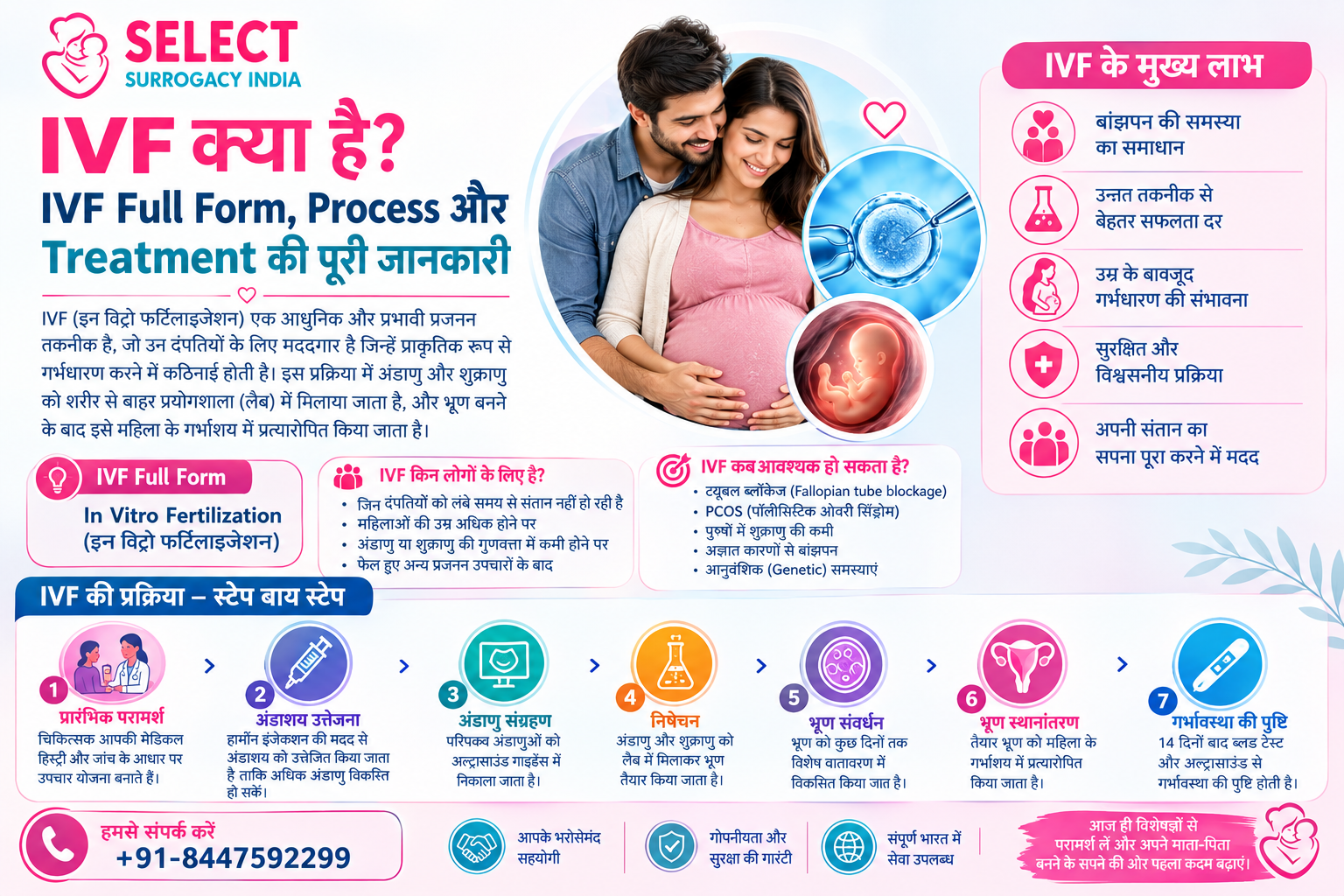
IVF क्या है? IVF Full Form, Process और Treatment की पूरी जानकारी
IVF क्या है? IVF की प्रक्रिया, जरूरत और Treatment की पूरी जानकारी अगर आप या आपका पार्टनर लंबे समय से pregnancy की कोशिश कर रहे हैं और गर्भधारण नहीं हो पा रहा है, तो डॉक्टर IVF treatment की सलाह दे सकते हैं। ऐसे में सबसे पहला सवाल अक्सर यही होता है—IVF क्या है, IVF कैसे होता है और क्या IVF से pregnancy की guarantee होती है? IVF यानी In Vitro Fertilization एक assisted reproductive technology (ART) है। इसमें महिला के egg और पुरुष के sperm को शरीर के बाहर laboratory में fertilization के लिए इस्तेमाल किया जाता है। Fertilization के बाद विकसित हुए embryo को महिला के uterus में transfer किया जा सकता है, जहां pregnancy आगे develop हो सकती है। सरल शब्दों में समझें तो IVF में egg को ovaries से retrieve किया जाता है, sperm को laboratory में prepare किया जाता है और दोनों की मदद से embryo बनाया जाता है। इसके बाद suitable embryo को uterus में transfer किया जाता है। लेकिन IVF केवल egg और sperm को laboratory में मिलाने तक सीमित नहीं है। इसमें fertility evaluation, ovarian stimulation, monitoring, egg retrieval, fertilization, embryo development और embryo transfer जैसे कई stages शामिल हो सकते हैं। हर patient का IVF treatment plan अलग होता है। Age, ovarian reserve, egg quality, sperm quality, medical history और previous fertility treatment जैसे factors के आधार पर fertility specialist treatment की planning करता है। IVF का Full Form क्या है? IVF का full form In Vitro Fertilization है। “In Vitro” का अर्थ है शरीर के बाहर laboratory conditions में और “fertilization” का अर्थ है egg और sperm के मिलने से fertilization की प्रक्रिया। Natural conception में egg और sperm का मिलन महिला के reproductive system के अंदर होता है। IVF में fertilization का यह महत्वपूर्ण stage laboratory में किया जाता है। Fertilization के बाद embryo को uterus में transfer किया जा सकता है। इसलिए अगर आप Google पर “IVF full form in Hindi”, “IVF का मतलब क्या है” या “IVF kya hai” search कर रहे हैं, तो इन सभी का संबंध In Vitro Fertilization से है। IVF क्या होता है? आसान भाषा में समझें IVF को एक आसान उदाहरण से समझ सकते हैं। Natural pregnancy में ovary से egg release होता है और sperm के साथ fertilization reproductive system के अंदर होता है। IVF में doctor eggs को ovaries से retrieve करते हैं और laboratory में sperm के साथ fertilization की प्रक्रिया कराते हैं। अगर fertilization के बाद embryo develop होता है और transfer के लिए suitable माना जाता है, तो fertility specialist उसे uterus में transfer कर सकता है। इसके बाद embryo implantation और pregnancy development की प्रक्रिया शरीर के अंदर होती है। इसलिए IVF को केवल “test tube baby” कहकर समझना पर्याप्त नहीं है। यह एक planned fertility treatment है जिसमें कई medical और laboratory stages शामिल होती हैं। IVF Treatment कैसे होता है? IVF treatment कई stages में पूरा होता है। हर patient में medicines, timing और treatment protocol अलग हो सकता है। आमतौर पर IVF process में ये प्रमुख stages शामिल हो सकती हैं: अब इन्हें थोड़ा विस्तार से समझते हैं। 1. Fertility Consultation और Tests IVF शुरू करने से पहले fertility specialist महिला और पुरुष दोनों की medical history समझता है। Doctor previous pregnancy, infertility duration, menstrual history, previous fertility treatments, surgeries, medical conditions और उपलब्ध reports के बारे में जानकारी ले सकता है। महिला के लिए जरूरत के अनुसार ultrasound, hormone testing और ovarian reserve assessment जैसे tests किए जा सकते हैं। पुरुष partner के लिए आमतौर पर semen analysis किया जाता है। इसमें sperm count, movement और morphology जैसे parameters देखे जा सकते हैं। हर patient के लिए tests की list एक जैसी नहीं होती। Doctor individual medical history और available reports के आधार पर आवश्यक tests decide करता है। 2. Ovarian Stimulation क्या होती है? Natural menstrual cycle में आमतौर पर एक dominant follicle mature होकर egg release करता है। IVF में medicines की मदद से एक से अधिक follicles develop करने की कोशिश की जाती है। इस stage को ovarian stimulation कहा जाता है। Stimulation के दौरान doctor ultrasound और जरूरत के अनुसार blood tests से follicles और hormone levels monitor कर सकता है। Monitoring के आधार पर medicines की dose या timing में बदलाव किया जा सकता है। कुछ patients को stimulation के दौरान bloating, abdominal heaviness, breast tenderness या mood changes जैसे symptoms महसूस हो सकते हैं। Severe या unusual symptoms होने पर fertility clinic से संपर्क करना चाहिए। 3. Trigger Injection क्या होता है? जब follicles appropriate stage तक develop हो जाते हैं, तो doctor egg retrieval की timing तय करता है। इसके लिए एक trigger medication दी जा सकती है। इसका exact timing बहुत important होता है क्योंकि egg retrieval निर्धारित समय के अनुसार किया जाता है। Trigger medication और egg retrieval के बीच का समय patient के treatment protocol पर depend करता है। 4. Egg Retrieval क्या होता है? Egg retrieval यानी egg collection वह procedure है जिसमें ovaries से mature eggs collect किए जाते हैं। यह procedure आमतौर पर ultrasound guidance के साथ किया जाता है और patient को comfort के लिए sedation या anaesthesia दिया जा सकता है। Doctor specialised needle की मदद से follicles से fluid collect करता है। यह fluid laboratory में भेजा जाता है, जहां embryology team eggs identify करती है। Egg retrieval के बाद कुछ समय तक clinic में observation किया जा सकता है। हल्का cramping, bloating या spotting हो सकता है, लेकिन symptoms हर patient में अलग हो सकते हैं। यह भी जरूरी है कि retrieved eggs की संख्या पहले से exact predict नहीं की जा सकती। ज्यादा eggs retrieve होना अपने आप successful pregnancy की guarantee नहीं है। 5. IVF में Fertilization कैसे होता है? Egg retrieval के बाद eggs को embryology laboratory में भेजा जाता है। Male partner का sperm sample भी laboratory में prepare किया जाता है। Patient की medical situation के अनुसार conventional IVF या ICSI जैसी fertilization technique इस्तेमाल की जा सकती है। Conventional IVF Conventional IVF में prepared sperm और eggs को laboratory

IVF Texas: Cost, Process, Clinics & Success Rates
IVF in Texas: Treatment Process, Cost, Clinics & What to Expect If you are considering IVF in Texas, understanding the treatment process, potential costs, clinic options, and factors that can affect treatment outcomes can make the decision easier to approach. In vitro fertilization (IVF) is an assisted reproductive technology in which eggs are retrieved from the ovaries and fertilized with sperm in a laboratory. The resulting embryo or embryos may then be transferred to the uterus. IVF may be recommended for different fertility conditions, including blocked or damaged fallopian tubes, ovulation disorders, endometriosis, male-factor infertility, diminished ovarian reserve, unexplained infertility, or previous unsuccessful fertility treatment. Every IVF treatment plan is individualized. Your age, ovarian reserve, reproductive history, sperm parameters, previous treatments, medical conditions, and the type of family-building treatment being considered can all influence the recommended approach. This guide explains how IVF works in Texas, what treatment may involve, how much IVF can cost, and what patients should consider when evaluating fertility treatment options. What Is IVF? In vitro fertilization (IVF) is a fertility treatment in which eggs and sperm are combined in a laboratory to create embryos. A typical IVF cycle may include: Not every patient will require every additional procedure. For example, some patients may need ICSI, donor eggs, donor sperm, embryo freezing, or genetic testing, while others may not. The appropriate treatment should be determined by a qualified fertility specialist after reviewing the patient’s medical and reproductive history. Why Do Patients Consider IVF in Texas? People may consider IVF when pregnancy has not occurred naturally or when a fertility specialist believes IVF may provide an appropriate treatment option. Some situations in which IVF may be considered include: The reason for considering IVF is different for every patient. A fertility evaluation is therefore an important first step before deciding on a treatment protocol. IVF Treatment Process in Texas Although individual protocols vary, an IVF cycle generally follows several stages. 1. Initial Fertility Consultation The process usually begins with a consultation with a fertility specialist. During the consultation, the physician may review: The specialist may recommend additional testing before developing an IVF treatment plan. Patients can make the first consultation more productive by bringing previous medical records, laboratory reports, imaging results, surgical records, and details of earlier fertility treatments. 2. Fertility Testing Testing varies according to age, medical history, symptoms, and previous treatment. Depending on the individual situation, evaluation may include: There is no single testing protocol that applies to every IVF patient. The fertility specialist determines which tests are appropriate for the individual case. 3. Ovarian Stimulation During a conventional IVF cycle, fertility medications are used to stimulate the ovaries so that multiple follicles can develop. The response to medication is monitored using ultrasound examinations and, when appropriate, blood tests. Patients can respond differently to ovarian stimulation. Medication doses and treatment timing may therefore be adjusted according to the patient’s response. The purpose of monitoring is to help the fertility team determine when the follicles are ready for the next stage of treatment. 4. Trigger Medication When the follicles have reached the appropriate stage of development, the fertility specialist may prescribe a final maturation or “trigger” medication. The timing of this medication is important because egg retrieval is scheduled according to the timing of the trigger. Patients should follow the clinic’s instructions carefully and contact their treatment team if they are uncertain about when or how the medication should be administered. 5. Egg Retrieval Egg retrieval is a procedure used to collect mature eggs from the ovaries. The physician uses ultrasound guidance to identify the follicles and retrieve the follicular fluid containing the eggs. The embryology laboratory then identifies and evaluates the retrieved eggs. Egg retrieval is generally performed with sedation or anesthesia according to the clinic’s protocol. Some patients experience temporary cramping, pelvic discomfort, bloating, or light spotting after the procedure. Patients should follow their clinic’s instructions regarding recovery and when to seek medical attention. 6. Fertilization and Embryo Development After egg retrieval, the eggs are prepared for fertilization in the embryology laboratory. Depending on the patient’s circumstances, fertilization may occur through conventional IVF or through intracytoplasmic sperm injection (ICSI). With conventional IVF, eggs and sperm are placed together in the laboratory to allow fertilization. With ICSI, an embryologist injects a single sperm directly into an egg. ICSI may be considered in certain situations involving sperm-related fertility concerns or previous fertilization problems. After fertilization, embryos are monitored as they develop. 7. Embryo Transfer If an embryo is selected for transfer, the fertility specialist prepares the patient according to the treatment protocol. During embryo transfer, a thin catheter is passed through the cervix and the embryo is placed inside the uterus. Embryo transfer is generally less invasive than egg retrieval. Depending on the treatment plan, an embryo may be transferred during the same treatment cycle or after embryos have been frozen for later use. 8. Pregnancy Test After embryo transfer, the fertility clinic will provide instructions about when to perform a pregnancy test. A blood test may be used to measure human chorionic gonadotropin (hCG). If the test is positive, additional blood tests and an ultrasound may be scheduled to monitor early pregnancy development. If the test is negative, the fertility specialist may review the cycle and discuss whether another treatment approach or additional embryo transfer may be appropriate. One unsuccessful IVF cycle does not necessarily mean that future treatment will be unsuccessful. Treatment outcomes depend on multiple biological and clinical factors. IVF With ICSI in Texas ICSI is an additional laboratory procedure that may be performed during IVF. Instead of allowing sperm and eggs to fertilize together in the laboratory, an embryologist injects one sperm directly into an egg. ICSI may be considered when there are specific sperm-related concerns or when fertilization has not occurred successfully in a previous IVF cycle. However, ICSI is not automatically necessary for every IVF patient. Patients should ask their fertility specialist why ICSI is being recommended and whether there is

What Is Reciprocal IVF? Process, Cost, Success Rate
What Is Reciprocal IVF? Complete Guide to the Process, Cost & Success Rate Reciprocal IVF is a type of in vitro fertilization (IVF) in which one partner provides the eggs and the other partner carries the pregnancy. The eggs are fertilized with donor sperm in a laboratory to create embryos, and an embryo is then transferred to the uterus of the partner who will carry the pregnancy. This approach allows both partners to participate in different biological stages of family building. The partner providing the eggs has a genetic connection to the child, while the partner carrying the pregnancy experiences pregnancy and birth. Reciprocal IVF is also known as shared motherhood IVF, co-IVF, partner-assisted IVF, or ROPA (Reception of Oocytes from Partner) in some countries and clinics. What Is Reciprocal IVF? Reciprocal IVF uses the same basic medical principles as conventional IVF, but the reproductive roles are shared between two partners. In a typical reciprocal IVF cycle: The main difference between reciprocal IVF and traditional IVF is who provides the eggs and who carries the pregnancy. In conventional IVF, these roles are generally performed by the same person. In reciprocal IVF, they are performed by two partners. How Does Reciprocal IVF Work? Reciprocal IVF follows several stages. The exact treatment plan can vary depending on the health, fertility history, age and reproductive circumstances of both partners. 1. Fertility Consultation and Testing The process usually begins with a consultation with a fertility specialist. Both partners may undergo medical and fertility assessments. The fertility team may review: The purpose of the evaluation is to understand which partner may be better suited to provide eggs and which partner may be better suited to carry the pregnancy. The decision should be based on individual medical circumstances rather than assuming that one partner must always take a particular role. 2. Choosing the Egg Provider and Pregnancy Carrier One of the important decisions in reciprocal IVF is determining who will provide the eggs and who will carry the pregnancy. A fertility specialist may consider factors such as age, ovarian reserve, egg quality, uterine health, previous pregnancy history and other medical considerations. Some couples may already know which partner wants to carry the pregnancy. In other cases, medical factors can influence the decision. There is no single approach that is appropriate for every couple. 3. Ovarian Stimulation The partner providing the eggs usually takes fertility medications to stimulate the ovaries. During a natural menstrual cycle, the body generally develops a limited number of mature eggs. IVF medications are used to encourage the development of multiple follicles so that several eggs may be available for retrieval. The fertility clinic monitors the response using blood tests and ultrasound examinations. Medication doses may be adjusted depending on how the ovaries respond. 4. Egg Retrieval When the follicles have developed appropriately, the fertility specialist schedules egg retrieval. Egg retrieval is usually performed using ultrasound guidance with sedation or anesthesia according to the clinic’s protocol. The retrieved eggs are taken to the embryology laboratory, where they are assessed and prepared for fertilization. Some temporary symptoms such as cramping, bloating or spotting may occur after the procedure. 5. Fertilization With Donor Sperm In reciprocal IVF, donor sperm is generally used to fertilize the eggs. The fertility laboratory may use conventional IVF or intracytoplasmic sperm injection (ICSI), depending on the clinical circumstances and the treatment plan. Not every retrieved egg will necessarily fertilize, and not every fertilized egg will develop into an embryo suitable for transfer. 6. Embryo Development After fertilization, embryos are cultured and monitored in the embryology laboratory. The embryology team evaluates embryo development before the fertility specialist determines the next step. Depending on the treatment plan, an embryo may be transferred during the same treatment cycle or frozen for transfer at a later time. 7. Preparing the Partner Who Will Carry the Pregnancy While embryos are being created, the partner who will carry the pregnancy may undergo treatment to prepare the uterine lining. Hormonal medication may be used to help prepare the uterus for embryo implantation. Ultrasound examinations and other monitoring may be used to assess the uterine lining and determine when the embryo transfer should take place. 8. Embryo Transfer Embryo transfer is generally less invasive than egg retrieval. A thin catheter is passed through the cervix and into the uterus. The selected embryo is then transferred into the uterus. The procedure generally does not require surgery or general anesthesia. After embryo transfer, the patient follows the fertility clinic’s instructions regarding medications and follow-up. 9. Pregnancy Test The clinic will provide a specific date for pregnancy testing. A blood test can measure human chorionic gonadotropin (hCG) to determine whether pregnancy has occurred. If the test is positive, additional monitoring may include repeat blood tests and an ultrasound. If the test is negative, the fertility specialist can review the treatment cycle and discuss possible next steps. Who May Consider Reciprocal IVF? Reciprocal IVF may be considered by couples in which one partner can provide eggs and the other partner can carry a pregnancy. It is commonly discussed as a family-building option for female same-sex couples, although individual eligibility depends on the patient’s reproductive anatomy, fertility health, medical history and the laws and regulations applicable to the treatment location. Both partners should have an appropriate medical evaluation before treatment. Factors that may affect treatment planning include: A fertility specialist should determine whether reciprocal IVF is medically appropriate for each individual situation. Why Do Couples Choose Reciprocal IVF? One reason couples consider reciprocal IVF is that it allows both partners to participate biologically in the family-building process. One partner contributes the eggs, while the other partner carries the pregnancy. This division of roles can be meaningful for couples who want both partners to have a direct physical role in the journey. The decision may also be influenced by medical factors. For example, one partner may have better ovarian reserve while the other may be better suited to carry a pregnancy. The choice

Best Surrogacy Centre in Texas: Clinics, Costs & Guide
Best Surrogacy Centre in Texas: How to Choose the Right Clinic and Care Team Choosing a surrogacy centre in Texas is an important decision for intended parents. Many families begin this journey after experiencing infertility treatments, IVF cycles, financial commitments, and years of trying to build their family. For some intended parents, gestational surrogacy may become an important family-building option. When searching for the best surrogacy centre in Texas, it is important to look beyond a clinic’s website or a simple list of providers. Intended parents should understand the fertility clinic’s medical services, IVF and embryology capabilities, experience with gestational surrogacy, communication process, financial structure, and relationships with other professionals involved in the journey. A surrogacy journey can involve several independent professionals, including a fertility specialist, embryology laboratory, gestational carrier, surrogacy agency, reproductive attorney, insurance professionals, obstetric providers, and hospital staff. Understanding how these professionals work together can help intended parents plan their journey more effectively. This guide explains what intended parents should consider when researching surrogacy in Texas, how gestational surrogacy generally works, what questions to ask a fertility clinic, potential costs, and several Texas fertility and reproductive-care providers that families may wish to research. Important: This article provides general educational information and is not medical or legal advice. Texas surrogacy law can depend on the circumstances of the intended parents, gestational carrier, agreement, and other factors. Intended parents should consult a qualified Texas reproductive-law attorney before entering into a gestational agreement. What Is Gestational Surrogacy? Gestational surrogacy is a form of assisted reproduction in which the person carrying the pregnancy is not the genetic mother of the child. Typically, an egg from an intended parent or donor is fertilized with sperm from an intended parent or donor through in vitro fertilization (IVF). The resulting embryo is then transferred to a gestational carrier. The medical process can involve: The exact treatment plan is different for every family. Some intended parents may use their own eggs and sperm, while others may require donor eggs, donor sperm, previously created embryos, or additional fertility treatment. Is Surrogacy Legal in Texas? Texas has specific statutory provisions governing qualifying gestational agreements under Chapter 160 of the Texas Family Code. Among other requirements, Texas law provides conditions concerning the intended parents, the gestational mother, the source of the egg used in assisted reproduction, and validation of the agreement. For example, Section 160.754 states that intended parents entering a qualifying gestational agreement must be married to each other and that the eggs used must come from an intended parent or donor rather than the gestational mother. Because the legal requirements can be detailed and circumstances differ between families, intended parents should obtain independent advice from a qualified Texas reproductive-law attorney before starting the legal process. How to Choose the Best Surrogacy Centre in Texas There is no single fertility clinic that is automatically the best choice for every family. Instead, intended parents should compare providers according to their own medical, financial, geographic, legal, and family-building requirements. Here are some of the most important factors to evaluate. 1. Experience With IVF and Gestational Surrogacy Ask how frequently the clinic works with intended parents pursuing gestational surrogacy. A clinic may provide excellent IVF treatment but still have a different level of experience coordinating care involving a gestational carrier. Questions to ask include: 2. Embryology Laboratory Embryo development is a major part of an IVF-based surrogacy journey. Ask about the clinic’s laboratory capabilities, including: The right questions depend on the individual treatment plan, so intended parents should discuss laboratory options directly with their fertility specialist. 3. Medical Team and Communication Clear communication can make a complicated fertility journey easier to understand. Before selecting a provider, intended parents should find out who will answer questions during treatment and how quickly patients can expect communication. A good consultation should help patients understand: 4. Financial Transparency Cost is another major consideration when choosing a surrogacy centre in Texas. The fertility clinic’s fee is only one part of the overall surrogacy budget. Depending on the circumstances, intended parents may also have expenses involving: Ask every provider to explain what is included in the quoted price and what is billed separately. 10 Texas Fertility and Surrogacy Providers to Research The following providers are examples of fertility and reproductive-care organizations that intended parents may encounter while researching Texas. This is not a ranking or endorsement, and families should independently evaluate each provider according to their medical and personal circumstances. 1. Select IVF India Select IVF India provides information and fertility-treatment services for families considering assisted reproduction and international fertility treatment. For intended parents researching surrogacy in Texas, information about IVF, ICSI, donor eggs, embryo-related procedures, and fertility evaluation can help them understand which medical services may be relevant to their situation. Families should distinguish between fertility treatment and the broader surrogacy process. A fertility provider may manage IVF and embryo transfer, while separate professionals may handle surrogate matching, legal agreements, pregnancy care, insurance, and case management. Select IVF India can also help families understand different fertility-treatment options and prepare questions for their medical consultation. 2. Fertility Specialists of Texas Fertility Specialists of Texas provides fertility care across several North Texas locations, including Dallas and surrounding areas. Its official information describes individualized fertility treatment plans and services including IVF and other reproductive treatments. For families researching a surrogacy clinic in Texas, an important question is how the fertility clinic coordinates IVF and embryo-transfer treatment with the other professionals involved in a gestational-surrogacy journey. Intended parents should ask about the clinic’s IVF process, laboratory services, embryo transfer procedures, communication protocols, and expected costs. 3. Texas Fertility Center Texas Fertility Center is a fertility provider serving the Austin area. Families considering IVF and gestational surrogacy should discuss their medical history and treatment goals with the fertility team before determining which treatment approach is appropriate. Important questions may include whether the clinic provides the laboratory and IVF services required for the family’s treatment plan and how care is

Surrogacy Cost in Texas 2026: Complete Cost Guide
Surrogacy Cost in Texas: Complete 2026 Guide for Intended Parents If you are researching the cost of surrogacy in Texas, one of the first questions you are likely to have is: How much does surrogacy cost in Texas? There is no single fixed price because every gestational surrogacy journey is different. The total cost can depend on whether you already have embryos, whether IVF is required, surrogate compensation, agency and matching fees, legal services, insurance, medical care, embryo transfers, travel and other pregnancy-related expenses. For planning purposes, current published estimates commonly place a complete U.S. surrogacy journey in the range of approximately $100,000 to $200,000 or more. Texas programs can fall within or above this range depending on what is included in the program and the individual circumstances of the journey. The most important thing to understand is that an advertised surrogacy price is not always an all-inclusive price. Two programs may advertise very different starting prices while ultimately producing similar total costs because one package includes more services than the other. This guide explains the major expenses involved in surrogacy in Texas, what can increase the final cost, how IVF and insurance affect your budget, and what intended parents should ask before signing a surrogacy agreement. Quick Answer: How Much Does Surrogacy Cost in Texas? For many intended parents, a realistic planning range for a complete gestational surrogacy journey in Texas is approximately: $100,000–$200,000+ Some journeys may cost less, while others can exceed $200,000 depending on medical treatment, surrogate compensation, insurance, additional embryo transfers, donor eggs, legal requirements, travel and other circumstances. If you already have viable embryos and do not need additional IVF or egg donation, your costs may be different from those of a family that needs to create embryos from the beginning. The best way to estimate your actual surrogacy cost in Texas is to request a detailed written cost estimate showing: What Is Gestational Surrogacy? Gestational surrogacy is a form of assisted reproduction in which a gestational carrier carries a pregnancy created through IVF but has no genetic relationship to the child. An embryo may be created using the eggs and sperm of the intended parents, donor eggs, donor sperm, or a combination of these sources. The embryo is then transferred to the uterus of the gestational carrier. This is different from traditional surrogacy, in which the carrier’s own egg is used. Modern gestational carrier arrangements involve medical, psychological, financial and legal considerations. Professional guidance emphasizes informed consent, appropriate medical and psychological support and independent legal counsel for the gestational carrier. Because several professionals and services may be involved, the total cost can be significantly higher than the cost of IVF alone. Why Does Surrogacy Cost So Much in Texas? A surrogacy journey involves much more than an embryo transfer. Depending on the circumstances, the process may involve: Not every family needs every service, and not every program includes the same services in its advertised price. That is why comparing the total expected cost is more useful than comparing the initial agency fee alone. Surrogacy Cost in Texas: 2026 Breakdown The following is a planning framework rather than a fixed quote. Expense Approximate Planning Range Surrogacy agency / matching services $25,000–$60,000+ Gestational carrier compensation $50,000–$70,000+ IVF and fertility treatment $12,000–$30,000+ Medications and embryo transfer $5,000–$15,000+ Legal services $8,000–$15,000+ Insurance and pregnancy-related medical expenses $5,000–$30,000+ Medical and psychological screening $1,000–$5,000+ Escrow / administrative expenses $1,500–$7,000+ Travel and pregnancy-related expenses $3,000–$10,000+ Potential overall journey $100,000–$200,000+ These figures are not a guaranteed Texas package price. Published program costs vary substantially based on what is included, and some programs publish separate fees for services that others bundle together. For this reason, intended parents should always ask for a written itemized cost estimate before committing to a program. Surrogate Mother Cost in Texas One of the largest components of a surrogacy budget is compensation and expenses for the gestational carrier. Current Texas program information shows that base compensation can start around $50,000, with additional benefits, allowances and pregnancy-related expenses potentially increasing the total compensation package. Some current programs publish total compensation structures of $70,000 or more when standard benefits are included. The actual amount can depend on factors such as: The important point is that base compensation is not necessarily the same as total surrogate-related cost. Before signing an agreement, intended parents should request the complete compensation schedule and ask which expenses are included separately. IVF Cost for Surrogacy in Texas IVF is generally central to gestational surrogacy because the embryo is created before it is transferred to the gestational carrier. IVF expenses may include: Some intended parents may need only one IVF cycle, while others may require additional treatment to obtain enough embryos. The final IVF cost therefore depends heavily on the individual’s medical circumstances and the fertility clinic’s pricing. Does IVF Include Embryo Transfer? Not necessarily. This is one of the questions intended parents should ask when comparing surrogacy programs. A program may advertise an IVF price that covers embryo creation but charges separately for: Always ask: “Is the embryo transfer included in the quoted IVF or surrogacy price?” Also ask what happens financially if the first transfer does not result in pregnancy. What Happens If the First Embryo Transfer Fails? An unsuccessful embryo transfer can increase the overall cost of surrogacy. If suitable frozen embryos are available, the fertility specialist may recommend another transfer. Additional costs can include: If there are no suitable embryos remaining, another IVF cycle may be necessary. This is why intended parents should understand the program’s policy for additional embryo transfers before starting treatment. Ask: Surrogacy Agency Fees in Texas A surrogacy agency can coordinate many aspects of the journey. Depending on the program, an agency may assist with: Published Texas and U.S. program pricing shows that agency and matching fees can vary widely. Some current programs list agency fees around $25,000–$60,000 or more depending on the service model. A lower advertised agency fee does not necessarily mean a lower overall cost.

Egg Donor Cost in Texas: 2026 Pricing Guide
Egg Donor Cost in Texas: 2026 Pricing Guide If you are researching egg donor cost in Texas, understanding the total expenses involved can help you plan your fertility treatment budget. The cost of using an egg donor can vary depending on the donor program, fertility clinic, donor compensation, medical screening, medications, IVF treatment, and other services included in your treatment plan. In Texas, egg donation costs are not always presented as one fixed price. Some programs quote donor-related expenses separately, while others may provide packages that include several donor services. Additional expenses such as IVF, fertility medications, laboratory procedures, embryo testing, freezing, and embryo transfer may also apply. In this guide, we explain egg donation costs in Texas in 2026, what is typically included in a donor program, which expenses may be charged separately, and the factors that can affect your overall budget. How Much Does Egg Donation Cost in Texas? The cost of egg donation in Texas can vary depending on the donor program, fertility clinic, services included, and the treatment plan. Based on published Texas program pricing, donor-related costs may be around $18,000 to $28,000 or more, while the total cost can increase when IVF treatment, medications, laboratory services, embryo testing, freezing, and embryo transfer are added. It is important to understand that egg donor cost and total donor-egg IVF cost are not always the same. Some programs quote donor-related expenses separately, while other packages may include multiple services. Egg Donation Cost in Texas at a Glance Cost Category What It May Include Donor program Donor selection and program-related services Donor compensation Compensation paid to the egg donor Medical screening Medical, genetic and fertility-related testing Donor medications Medications used during the donor cycle Egg retrieval Medical procedure to retrieve eggs IVF treatment Fertilization and laboratory treatment ICSI Additional laboratory procedure when recommended Embryo testing PGT or other testing, when selected Embryo freezing & storage Freezing and ongoing storage Embryo transfer Transfer of an embryo to the intended mother Important: These are planning figures, not a guaranteed quote. Actual costs vary by clinic, donor program, treatment plan and services included. Ask for an itemized estimate before starting treatment. What is Donor Egg IVF? Donor egg IVF is a fertility treatment in which eggs from a donor are fertilized with sperm to create embryos. An embryo is then transferred to the intended mother’s uterus or, when medically appropriate, to a gestational carrier. The donor provides the eggs, but does not carry the pregnancy. Women may consider donor egg IVF when they have diminished ovarian reserve, reduced egg quality, advanced maternal age, primary ovarian insufficiency, or repeated unsuccessful IVF cycles. Donor eggs may also be considered when there is a significant risk of passing certain genetic conditions to a child. Using donor eggs can provide another treatment option when a patient’s own eggs are unlikely to result in a successful pregnancy. Every woman considers this process very cautiously. Women may take a long time to emotionally accept the use of donor eggs. Women have described a long process of dealing with grief for the genetically related children they would not be able to carry. They may need to find ways to identify new paths to fulfill their desire to have children. A fertility clinic should take into account the fact that patients need time to process the emotional and logistical consequences of donor conception. Egg Donor Medical Screening in Texas Before an egg donor can undergo treatment, medical testing is done to evaluate if there are any medical or genetic conditions that may put the donor or intended parent at risk. It is also done to ensure that the donor is a good candidate for the process. Based on the results of the screening, treatment may be adjusted to ensure safety of all parties. Screening involves a number of different processes such as taking a medical history, physical exams, blood tests, and more. Screening processes also vary between fertility clinics. Some, but not all, clinics also screen donors for genetic conditions. Being an Egg Donor is a lengthy and costly process due to screening. Some of the money paid to donors goes toward the costs of screening. There are also a number of medical personnel and support staff required to perform tests, monitoring, and administrative work. Genetic Testing for Egg Donors Before IVF There are several genetic conditions that may run in a family. Genetic testing of a potential donor may help identify potential conditions a child may be at risk of inheriting. It is important to understand that no testing can eliminate the possibility of a child inheriting a genetic condition. Genetic testing may also identify if a donor is a carrier of a genetic condition. Intended parents may also elect to be genetically tested to assess their condition and the donor’s condition in combination. A fertility specialist or genetic counselor may be able to provide additional information. There are numerous factors to consider in these situations and it can become very overwhelming. Don’t hesitate to reach out and seek the help of a medical professional. Psychological and Emotional Considerations in Egg Donation Egg donation is a medical journey, but there are emotional components of the process that deserve recognition. Some women are able to conceive and carry a pregnancy to term using their own eggs; therefore, an egg donation diagnosis is often unexpected. Some women experience relief knowing alternative options exist. Others experience sadness, uncertainty, and even guilt. Some potential egg donor recipients are concerned about how they will bond with a child who is biologically unrelated to them. It is important for women considering egg donation to be aware of the possible emotions they may experience as a result of this meaningful decision. Counseling may assist women in working through these emotions. The focus of the counseling is to clarify emotions, and to set appropriate expectations about treatment. Preparing the Egg Donor for IVF The egg donor undergoes a series of examinations to ensure she is medically appropriate to donate.

Best IVF Centres in Texas (2026): Clinics, Cost & How to Choose
10 Best IVF Centres in Texas: Clinics, Costs & How to Choose Choosing the right IVF centre is an important decision for individuals and couples considering fertility treatment in Texas. The state has fertility clinics in major cities including Houston, Dallas, Austin and San Antonio, with different specialists, laboratory facilities, treatment options, costs and insurance policies. In this guide, we look at 10 IVF centres in Texas that patients may want to research and compare. We also explain IVF costs, treatment options, success rates, insurance considerations and the key questions to ask before choosing a fertility clinic. The goal is to help you compare clinics based on factors that matter to your individual fertility needs rather than choosing a centre based only on rankings or advertising claims. 10 Best IVF Centres in Texas to Consider in 2026 When searching for the best IVF centre in Texas, patients should look beyond clinic names, advertised success rates and starting prices. Important factors include the fertility specialist, treatment approach, IVF laboratory, available services, total treatment costs, insurance coverage and the practical requirements of attending appointments. 1. Select IVF India For patients comparing fertility treatment options in India and abroad, Select IVF India provides fertility treatment coordination and support for international patients. International fertility treatment can involve medical evaluations, treatment planning, communication with fertility specialists, travel arrangements and follow-up care. Patients travelling from another country should understand the proposed treatment plan, expected timeline, required tests and estimated costs before making travel arrangements. Before choosing an international fertility provider, patients should review their medical history, previous fertility treatments, age, fertility test results and individual treatment requirements with a qualified fertility specialist. Communication is particularly important for international patients. Before travelling, patients should ask which tests are required, which procedures may be performed during the visit, how long they may need to remain in the country and what services are included in the estimated treatment cost. IVF outcomes can vary depending on factors such as age, ovarian reserve, sperm quality, embryo characteristics and underlying medical conditions. No fertility clinic can guarantee an embryo, pregnancy or successful IVF outcome. Patients comparing IVF treatment in Texas with treatment options in India should independently evaluate the fertility specialist, laboratory facilities, treatment plan, total expected cost, travel requirements, communication process and follow-up arrangements before making a decision. 2. Houston Fertility Institute Houston Fertility Institute is a fertility practice serving patients in the Houston area and providing a range of fertility evaluation and treatment services. Patients considering this clinic can discuss their fertility history, previous treatments and recommended testing with a fertility specialist before deciding on a treatment approach. Depending on individual circumstances, fertility treatment may include options such as ovulation-related treatment, intrauterine insemination (IUI), IVF and other assisted reproductive procedures when medically appropriate. For patients considering IVF, it is useful to ask about the fertility specialist who will manage the treatment, available laboratory and embryology services, monitoring requirements, expected treatment timeline and total cost. Patients should also ask for a detailed explanation of which services are included in the quoted treatment cost and whether medications, ICSI, embryo freezing, storage or other laboratory procedures involve additional charges. As with any fertility clinic, patients should review the clinic’s current treatment information and discuss their individual circumstances with a qualified fertility specialist before beginning treatment. 3. CCRM Houston CCRM Houston is a fertility treatment provider in Houston offering reproductive medicine and assisted reproductive services. Patients considering IVF can evaluate the clinic based on its fertility specialists, treatment options, laboratory services and approach to individual fertility conditions. When comparing IVF centres, patients should look beyond general clinic statistics. IVF outcomes can vary significantly depending on factors such as age, diagnosis, ovarian reserve, sperm quality, embryo characteristics and previous treatment history. During a consultation, patients can ask which treatment approach is recommended for their circumstances and what fertility testing may be required before treatment begins. It is also important to request a detailed estimate of the expected treatment costs. Patients should clarify whether the quoted price includes medications, ICSI, embryo freezing, genetic testing, frozen embryo transfer and other services that may be recommended during treatment. Comparing these details can help patients understand the differences between IVF clinics and make a decision based on their individual medical and financial circumstances. 4. Texas Fertility Center Texas Fertility Center provides fertility care for patients in Austin and surrounding areas. Patients considering IVF can compare the centre based on its fertility specialists, available treatments, laboratory services, location, costs and insurance options. For patients living in Austin or nearby communities, location can be an important consideration because IVF treatment generally involves several appointments for consultations, monitoring and procedures. During an initial consultation, patients should discuss their fertility history, previous treatments, pregnancy history, test results and sperm analysis where relevant. The fertility specialist can then explain which treatment approach may be appropriate based on the individual circumstances. Patients should also request a detailed cost estimate before beginning treatment. Ask which services are included in the quoted IVF price and which expenses—such as medications, embryo freezing, genetic testing or additional procedures—may be charged separately. Comparing the complete treatment plan rather than focusing on clinic reputation or a single success-rate figure can give patients a clearer basis for evaluating their IVF options in Texas. 5. Dallas IVF Dallas IVF is a fertility care provider serving patients in the Dallas–Fort Worth area. Patients researching IVF in North Texas can evaluate the clinic based on its fertility specialists, treatment options, laboratory services, location, costs and insurance coverage. For patients living in the Dallas–Fort Worth region, convenient access to the clinic can be an important consideration because IVF may require multiple appointments for monitoring, procedures and follow-up. Before beginning treatment, patients should request a written estimate of the total expected cost. An IVF treatment plan may involve expenses beyond the basic treatment fee, including medications, ICSI, embryo freezing, genetic testing, embryo storage or a future frozen embryo transfer. Patients should also ask who will monitor