What Is Reciprocal IVF? Complete Guide to the Process, Cost & Success Rate
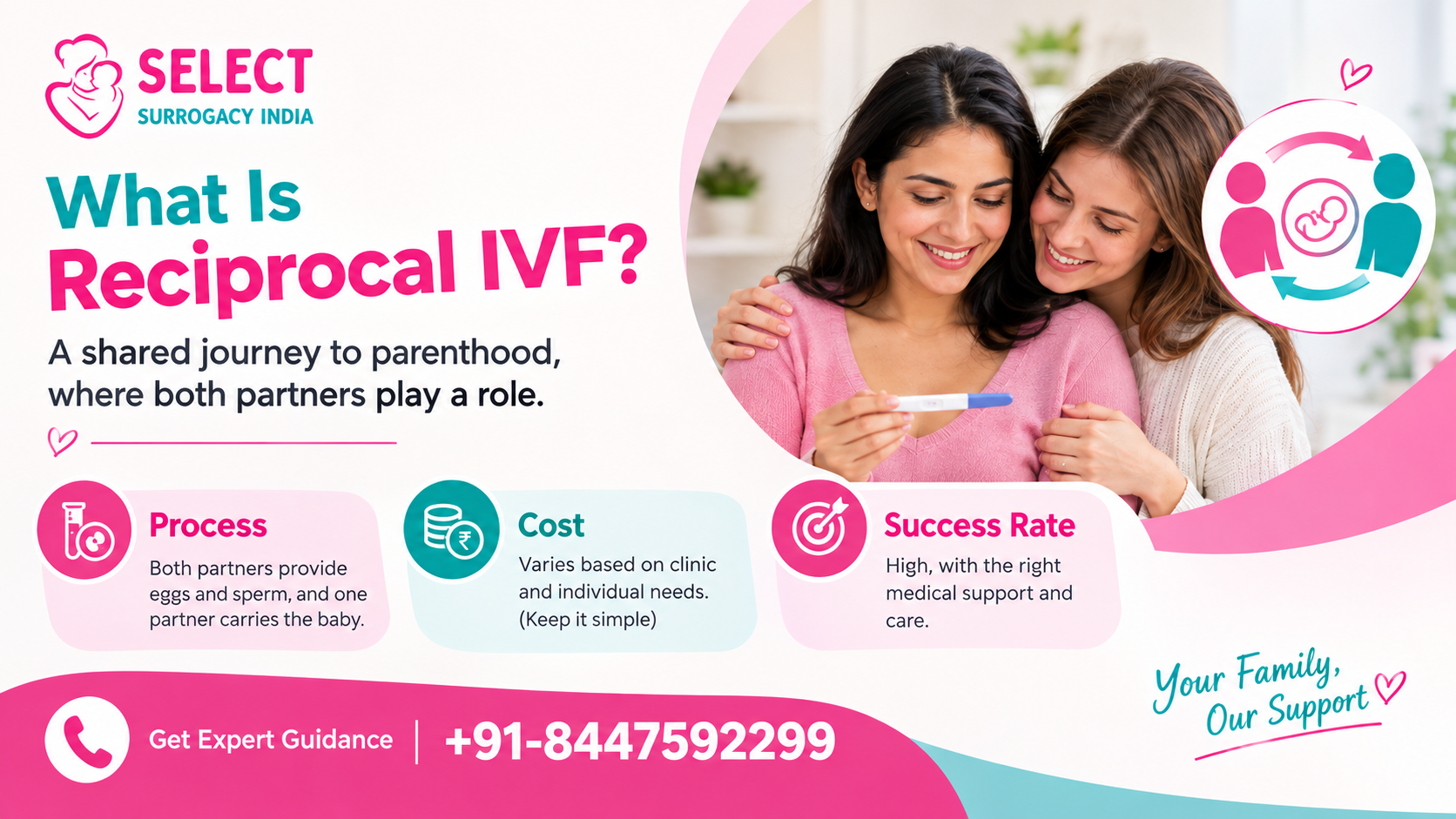
Reciprocal IVF is a type of in vitro fertilization (IVF) in which one partner provides the eggs and the other partner carries the pregnancy. The eggs are fertilized with donor sperm in a laboratory to create embryos, and an embryo is then transferred to the uterus of the partner who will carry the pregnancy.
This approach allows both partners to participate in different biological stages of family building. The partner providing the eggs has a genetic connection to the child, while the partner carrying the pregnancy experiences pregnancy and birth.
Reciprocal IVF is also known as shared motherhood IVF, co-IVF, partner-assisted IVF, or ROPA (Reception of Oocytes from Partner) in some countries and clinics.

What Is Reciprocal IVF?
Reciprocal IVF uses the same basic medical principles as conventional IVF, but the reproductive roles are shared between two partners.
In a typical reciprocal IVF cycle:
- Partner A provides the eggs.
- The eggs are retrieved after ovarian stimulation.
- The eggs are fertilized with donor sperm in the laboratory.
- Embryos are developed and monitored by the embryology team.
- Partner B’s uterus is prepared for embryo transfer.
- An embryo is transferred to Partner B’s uterus.
- Partner B carries the pregnancy if implantation and pregnancy occur.
The main difference between reciprocal IVF and traditional IVF is who provides the eggs and who carries the pregnancy. In conventional IVF, these roles are generally performed by the same person. In reciprocal IVF, they are performed by two partners.
How Does Reciprocal IVF Work?
Reciprocal IVF follows several stages. The exact treatment plan can vary depending on the health, fertility history, age and reproductive circumstances of both partners.
1. Fertility Consultation and Testing
The process usually begins with a consultation with a fertility specialist.
Both partners may undergo medical and fertility assessments. The fertility team may review:
- Previous pregnancies
- Previous fertility treatments
- Menstrual and reproductive history
- Ovarian reserve
- Uterine health
- Previous surgeries
- Existing medical conditions
- Medications
- General health
The purpose of the evaluation is to understand which partner may be better suited to provide eggs and which partner may be better suited to carry the pregnancy.
The decision should be based on individual medical circumstances rather than assuming that one partner must always take a particular role.
2. Choosing the Egg Provider and Pregnancy Carrier
One of the important decisions in reciprocal IVF is determining who will provide the eggs and who will carry the pregnancy.
A fertility specialist may consider factors such as age, ovarian reserve, egg quality, uterine health, previous pregnancy history and other medical considerations.
Some couples may already know which partner wants to carry the pregnancy. In other cases, medical factors can influence the decision.
There is no single approach that is appropriate for every couple.
3. Ovarian Stimulation
The partner providing the eggs usually takes fertility medications to stimulate the ovaries.
During a natural menstrual cycle, the body generally develops a limited number of mature eggs. IVF medications are used to encourage the development of multiple follicles so that several eggs may be available for retrieval.
The fertility clinic monitors the response using blood tests and ultrasound examinations.
Medication doses may be adjusted depending on how the ovaries respond.
4. Egg Retrieval
When the follicles have developed appropriately, the fertility specialist schedules egg retrieval.
Egg retrieval is usually performed using ultrasound guidance with sedation or anesthesia according to the clinic’s protocol.
The retrieved eggs are taken to the embryology laboratory, where they are assessed and prepared for fertilization.
Some temporary symptoms such as cramping, bloating or spotting may occur after the procedure.
5. Fertilization With Donor Sperm
In reciprocal IVF, donor sperm is generally used to fertilize the eggs.
The fertility laboratory may use conventional IVF or intracytoplasmic sperm injection (ICSI), depending on the clinical circumstances and the treatment plan.
Not every retrieved egg will necessarily fertilize, and not every fertilized egg will develop into an embryo suitable for transfer.
6. Embryo Development
After fertilization, embryos are cultured and monitored in the embryology laboratory.
The embryology team evaluates embryo development before the fertility specialist determines the next step.
Depending on the treatment plan, an embryo may be transferred during the same treatment cycle or frozen for transfer at a later time.
7. Preparing the Partner Who Will Carry the Pregnancy
While embryos are being created, the partner who will carry the pregnancy may undergo treatment to prepare the uterine lining.
Hormonal medication may be used to help prepare the uterus for embryo implantation.
Ultrasound examinations and other monitoring may be used to assess the uterine lining and determine when the embryo transfer should take place.
8. Embryo Transfer
Embryo transfer is generally less invasive than egg retrieval.
A thin catheter is passed through the cervix and into the uterus. The selected embryo is then transferred into the uterus.
The procedure generally does not require surgery or general anesthesia.
After embryo transfer, the patient follows the fertility clinic’s instructions regarding medications and follow-up.
9. Pregnancy Test
The clinic will provide a specific date for pregnancy testing.
A blood test can measure human chorionic gonadotropin (hCG) to determine whether pregnancy has occurred.
If the test is positive, additional monitoring may include repeat blood tests and an ultrasound.
If the test is negative, the fertility specialist can review the treatment cycle and discuss possible next steps.
Who May Consider Reciprocal IVF?
Reciprocal IVF may be considered by couples in which one partner can provide eggs and the other partner can carry a pregnancy.
It is commonly discussed as a family-building option for female same-sex couples, although individual eligibility depends on the patient’s reproductive anatomy, fertility health, medical history and the laws and regulations applicable to the treatment location.
Both partners should have an appropriate medical evaluation before treatment.
Factors that may affect treatment planning include:
- Age
- Ovarian reserve
- Egg quality
- Uterine health
- Previous pregnancies
- Previous fertility treatment
- Fibroids or endometriosis
- Hormonal or reproductive conditions
- Previous surgery
- General health
- Medications
A fertility specialist should determine whether reciprocal IVF is medically appropriate for each individual situation.
Why Do Couples Choose Reciprocal IVF?
One reason couples consider reciprocal IVF is that it allows both partners to participate biologically in the family-building process.
One partner contributes the eggs, while the other partner carries the pregnancy.
This division of roles can be meaningful for couples who want both partners to have a direct physical role in the journey.
The decision may also be influenced by medical factors. For example, one partner may have better ovarian reserve while the other may be better suited to carry a pregnancy.
The choice should be discussed with a qualified fertility specialist after evaluating both partners.
Reciprocal IVF vs Traditional IVF
The basic IVF laboratory process is similar, but the roles are different.
| Traditional IVF | Reciprocal IVF |
|---|---|
| One person generally provides the eggs | One partner provides the eggs |
| The same person generally carries the pregnancy | The other partner carries the pregnancy |
| Eggs are fertilized in the laboratory | Eggs are fertilized in the laboratory |
| Embryo is transferred to the egg provider | Embryo is transferred to the other partner |
| One person undergoes the main reproductive procedures | Both partners may undergo different parts of treatment |
In reciprocal IVF, the egg provider has the genetic connection to the child, while the partner who carries the pregnancy has the gestational connection.
Is Reciprocal IVF the Same as ROPA?
ROPA stands for Reception of Oocytes from Partner.
The term ROPA is commonly used in some countries and clinics to describe a form of reciprocal IVF in which one partner provides the eggs and the other partner receives the resulting embryo.
Other terms include:
- Reciprocal IVF
- Shared motherhood
- Shared parenthood
- Partner-assisted IVF
- Co-IVF
Terminology can vary between clinics and countries, so couples should confirm exactly what a clinic means when using a particular term.
What Is the Cost of Reciprocal IVF?
The cost of reciprocal IVF varies significantly depending on the clinic, location, medications, donor sperm, laboratory procedures and the number of treatment cycles required.
Potential costs may include:
- Initial consultations
- Fertility testing
- Ovarian stimulation medications
- Ultrasound and blood-test monitoring
- Egg retrieval
- Laboratory fertilization
- Embryo culture
- Donor sperm
- Embryo freezing
- Embryo storage
- Frozen embryo transfer
- Genetic testing when medically indicated
- Additional IVF cycles
- Travel and accommodation when treatment is performed away from home
Not every clinic includes the same services in its advertised IVF price.
For this reason, couples should ask the fertility clinic for a detailed treatment estimate and clarify exactly what is included.
What Is the Success Rate of Reciprocal IVF?
There is no single success rate that applies to every reciprocal IVF cycle.
Treatment outcomes can be affected by several factors, including:
- Age of the egg provider
- Ovarian reserve
- Egg quality
- Sperm quality
- Number and quality of embryos
- Uterine health
- Previous fertility treatment
- Embryo transfer factors
- Overall reproductive health
The American Society for Reproductive Medicine notes that data specific to reciprocal IVF are limited and reports that overall success rates can be high, while emphasizing appropriate clinical decision-making.
A clinic should therefore avoid presenting one percentage as a guaranteed result for every patient.
Instead, couples should ask their fertility specialist about the factors that may affect their individual chances of pregnancy and live birth.
What Are the Benefits of Reciprocal IVF?
Potential benefits of reciprocal IVF include:
Both partners can participate
One partner provides the eggs while the other carries the pregnancy.
A genetic connection for the egg provider
The partner providing the eggs contributes the genetic material to the embryo.
A gestational connection for the pregnancy carrier
The second partner carries the pregnancy and gives birth.
Individualized treatment planning
The medical team can consider the reproductive health of both partners when developing the treatment plan.
Shared family-building experience
Some couples value the opportunity to participate in different stages of conception and pregnancy together.
What Are the Risks of Reciprocal IVF?
Reciprocal IVF involves many of the same medical procedures and considerations associated with IVF.
Potential risks can include complications related to ovarian stimulation, egg retrieval, anesthesia or sedation, embryo transfer and pregnancy.
Ovarian stimulation can sometimes result in ovarian hyperstimulation syndrome (OHSS).
Egg retrieval can also carry risks such as bleeding or infection, although serious complications are uncommon.
Pregnancy itself can involve medical risks, which vary depending on the individual’s age, medical history and pregnancy-related factors.
Emotional stress can also be significant during fertility treatment, particularly when couples are waiting for embryo development, embryo transfer or pregnancy-test results.
Patients should discuss the potential benefits, risks and alternatives with their fertility specialist before starting treatment.
Fresh vs Frozen Embryo Transfer in Reciprocal IVF
An embryo can sometimes be transferred during the same treatment cycle in which the eggs are retrieved and fertilized. This is known as a fresh embryo transfer.
Alternatively, embryos may be frozen and transferred during a later cycle. This is known as a frozen embryo transfer.
The choice depends on the clinical circumstances and the treatment plan developed by the fertility team.
The fertility specialist will explain which approach is appropriate for each couple.
Can Embryos From Reciprocal IVF Be Frozen?
Yes. Suitable embryos can often be frozen for future use.
Embryo freezing may allow a couple to preserve embryos for a later transfer without repeating egg retrieval during every cycle.
Storage policies, costs and legal requirements vary by clinic and location.
Couples should ask about:
- Embryo storage fees
- Storage duration
- Future transfer costs
- Consent requirements
- What happens to unused embryos
- Applicable local laws
What Happens If the First Embryo Transfer Does Not Work?
An unsuccessful embryo transfer does not automatically mean that future treatment will be unsuccessful.
The fertility specialist may review factors such as:
- Embryo development
- Embryo quality
- Uterine lining
- Transfer procedure
- Hormonal preparation
- Previous treatment history
Depending on the circumstances, the clinic may recommend another frozen embryo transfer, additional testing or another IVF cycle.
The appropriate next step should be individualized rather than based on a single failed transfer.
Reciprocal IVF vs IUI
Reciprocal IVF and IUI are different fertility treatments.
With IUI, prepared sperm is placed directly into the uterus around the time of ovulation. The eggs are not retrieved and fertilized in a laboratory.
With reciprocal IVF, eggs are retrieved from one partner, fertilized in the laboratory with donor sperm, and an embryo is transferred to the other partner.
Because reciprocal IVF involves ovarian stimulation, egg retrieval, laboratory fertilization and embryo transfer, it is a more complex treatment process than IUI.
Can Donor Sperm Be Used in Reciprocal IVF?
Yes. Donor sperm is generally required to fertilize the eggs in reciprocal IVF.
Couples may have different donor options depending on the clinic, sperm bank, treatment location and applicable regulations.
Before treatment, couples should ask about:
- Donor screening
- Available donor information
- Sperm storage
- Sperm transport
- Legal requirements
- Consent requirements
- Regulations in the treatment country
Donor-sperm rules can vary between jurisdictions, particularly when treatment involves international travel.
Can Genetic Testing Be Used With Reciprocal IVF?
Genetic testing of embryos may be considered in some IVF treatment plans, depending on the medical circumstances.
Whether testing is appropriate depends on factors such as the couple’s medical history, reproductive history, age and the advice of the fertility specialist.
Genetic testing does not guarantee that an embryo will result in a live birth.
The fertility team should explain the possible benefits, limitations and implications of any genetic test before it is performed.
How Long Does Reciprocal IVF Take?
The overall timeline can vary.
Treatment may involve:
- Initial consultation
- Fertility testing
- Donor sperm arrangements
- Ovarian stimulation
- Egg retrieval
- Fertilization
- Embryo development
- Preparation of the pregnancy carrier
- Embryo transfer
- Pregnancy testing
Some couples may need more than one treatment cycle, which can extend the overall timeline.
Your fertility clinic can provide a more accurate schedule based on your individual treatment plan.
Legal Considerations for Reciprocal IVF
The legal aspects of reciprocal IVF vary by country and, in some cases, by state or region.
Legal questions can include:
- Recognition of legal parenthood
- Donor-sperm regulations
- Embryo ownership and consent
- Storage and future use of embryos
- Birth-certificate requirements
- Cross-border treatment
- Rights and responsibilities of the intended parents
Medical information available online should not be treated as legal advice.
If treatment involves more than one country, couples should obtain appropriate legal guidance in the relevant jurisdictions before starting treatment.
How to Choose a Reciprocal IVF Clinic
Choosing a fertility clinic involves more than comparing an advertised IVF price.
Couples may want to ask:
- Who will be responsible for the medical care of each partner?
- How are both partners evaluated before treatment?
- What fertility laboratory facilities are available?
- What is included in the treatment cost?
- What donor-sperm options are available?
- How are embryos stored?
- What happens if the first embryo transfer is unsuccessful?
- What counselling or emotional support is available?
- How are treatment risks explained?
- What are the clinic’s policies regarding unused embryos?
- Which legal requirements apply to the treatment?
A good treatment plan should be clearly explained before medication or procedures begin.

Emotional Considerations During Reciprocal IVF
Reciprocal IVF is not only a medical process. It can also involve significant emotional decisions.
The partner providing the eggs and the partner carrying the pregnancy experience different parts of the treatment.
Couples may want to discuss:
- Why they prefer reciprocal IVF
- Which partner wants to carry the pregnancy
- How medical responsibilities will be shared
- How they will handle unsuccessful treatment
- How they will support each other during pregnancy
- How they feel about the different biological roles
- What additional emotional support they may need
Fertility counselling can be useful for couples who want additional support before or during treatment.
Frequently Asked Questions About Reciprocal IVF
Reciprocal IVF is an IVF treatment in which one partner provides the eggs and the other partner carries the pregnancy. The eggs are fertilized with donor sperm, embryos are created in the laboratory and an embryo is transferred to the partner who will carry the pregnancy.
One partner undergoes ovarian stimulation and egg retrieval. The eggs are fertilized with donor sperm in the laboratory. The resulting embryo is then transferred into the uterus of the other partner.
Either partner may provide the eggs, depending on medical factors, fertility assessment, personal preferences and the treatment plan recommended by the fertility specialist.
The partner who receives the embryo carries the pregnancy if implantation occurs and the pregnancy progresses.
Donor sperm is generally used because the eggs must be to create embryos.
The core IVF laboratory process is similar, but the roles are different. In reciprocal IVF, one partner provides the eggs and the other partner carries the pregnancy.
ROPA means Reception of Oocytes from Partner. It is a term used for a form of reciprocal IVF in which one partner provides the eggs and the other partner receives the resulting embryo.
The cost depends on the clinic, treatment location, medications, donor sperm, laboratory procedures, embryo storage, embryo transfer and whether more than one cycle is required.
Age, ovarian reserve, egg quality, embryo quality, uterine health, sperm factors and other individual medical circumstances can affect treatment outcomes.
Yes. Suitable embryos can often be frozen and stored for future embryo transfer, depending on the clinic’s procedures and applicable regulations.
It may be possible to undergo additional reciprocal IVF cycles or frozen embryo transfers if medically appropriate. The fertility specialist will determine the next step based on the results of previous treatment.
Reciprocal IVF involves the same general medical procedures and risks associated with IVF, including risks related to ovarian stimulation, egg retrieval and pregnancy. A fertility specialist should explain the risks specific to each patient.
Final Thoughts
Reciprocal IVF gives couples an opportunity to share different biological roles in the process of building a family.
One partner provides the eggs, donor sperm is used to create embryos, and the other partner carries the pregnancy.
Although the basic treatment follows the principles of IVF, reciprocal IVF requires careful coordination between both partners, the fertility specialist and the embryology laboratory.
The cost, timeline, treatment plan and expected outcome can vary from one couple to another.
If you are considering reciprocal IVF, the best first step is a consultation with a qualified fertility specialist who can evaluate both partners and explain the available options.
The information in this article is for general educational purposes and should not replace individualized medical or legal advice.
Read Also:-
- IVF Cost in Ajman – Affordable & Transparent Treatment Options
- Best IVF Centre in Ajman: Trusted Fertility Care
- IVF Cost at Lapaz – Affordable & Transparent Treatment Pricing
- Best Herbal Fertility Clinic in Ghana: Natural Care
- Egg Donor Cost in Ajman: Affordable & Transparent Options
- Free IVF Treatment in Dubai: Hope for Parenthood

Medically Reviewed By: Select Surrogacy India Medical Team (Fertility Experts & IVF Specialists)
Our content is reviewed by experienced fertility specialists and IVF professionals associated with Select Surrogacy India, ensuring accurate, up-to-date, and reliable information for intended parents.
✔ IVF Treatment Guidance✔ Surrogacy Consultation✔ Egg Donation Support
👉 Content reviewed for accuracy and latest IVF & surrogacy laws in India