
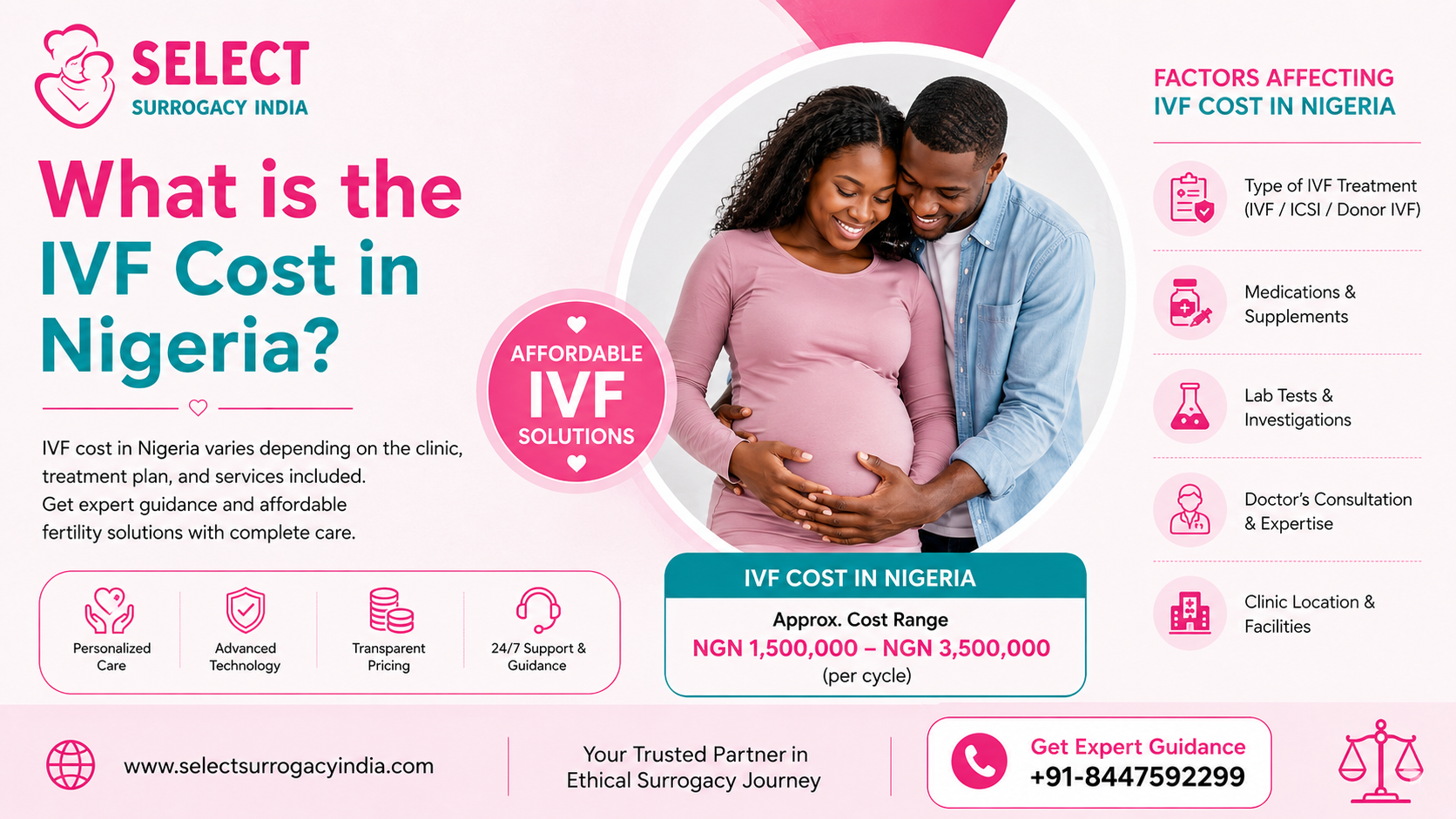
Starting a family is a dream shared by many couples. While some people conceive naturally, others may need medical support because of infertility or other reproductive health conditions. Thanks to advancements in fertility treatment, In Vitro Fertilization (IVF) has become one of the most effective options for couples who are struggling to achieve pregnancy. Nigeria has seen significant growth in fertility care over the past few years. Many fertility centres now offer advanced IVF treatments using modern laboratory technology and experienced fertility specialists. As a result, both local and international patients choose Nigeria for fertility treatment. One of the first questions couples usually ask is “What is the IVF Cost in Nigeria?“ The answer depends on several factors, including the fertility clinic, medications, laboratory procedures, doctor’s experience, and any additional treatments required during the IVF cycle. In general, the IVF Cost in Nigeria may range from ₦1,200,000 to ₦3,000,000 or more per cycle, while the final amount may increase if procedures such as ICSI, embryo freezing, donor eggs, donor sperm, or genetic testing are required. This complete guide explains everything you need to know about IVF Cost in Nigeria, including the treatment process, cost breakdown, factors affecting the price, benefits, success rate, risks, and tips for choosing the right fertility centre. What is IVF? In Vitro Fertilization (IVF) is an advanced fertility treatment in which eggs and sperm are combined in a laboratory to create embryos. Once healthy embryos develop, one or more are transferred into the woman’s uterus with the goal of achieving pregnancy. IVF is recommended when other fertility treatments are not suitable or have not been successful. The treatment has helped millions of couples around the world become parents and continues to be one of the most widely used assisted reproductive technologies. Who May Need IVF? Doctors may recommend IVF for individuals or couples experiencing fertility challenges such as: The decision to proceed with IVF is always based on a complete fertility evaluation. IVF Cost in Nigeria The IVF Cost in Nigeria varies depending on the fertility centre, treatment protocol, medications, and additional procedures. Below is an approximate cost breakdown. Treatment Cost (NGN) Initial Consultation ₦50,000 – ₦150,000 Fertility Tests ₦100,000 – ₦400,000 Fertility Medicines ₦400,000 – ₦1,200,000 IVF Procedure ₦1,200,000 – ₦2,500,000 ICSI (if required) Additional charges may apply Embryo Freezing ₦150,000 – ₦500,000 Frozen Embryo Transfer ₦300,000 – ₦800,000 Factors Affecting IVF Cost in Nigeria Several factors determine the overall cost of IVF treatment. 1. Fertility Centre Each fertility clinic has its own pricing structure. Clinics with experienced fertility specialists, advanced embryology laboratories, and comprehensive patient care may charge higher fees. 2. Fertility Medications Medication is one of the biggest contributors to the total IVF cost. The amount of medicine required depends on: Some patients require fewer medications, while others need higher doses. 3. Laboratory Procedures The IVF laboratory is responsible for: Modern laboratories with advanced equipment and experienced embryologists may increase treatment costs but also play an important role in maintaining high-quality laboratory standards. 4. ICSI Treatment Some couples require Intracytoplasmic Sperm Injection (ICSI) in addition to IVF. ICSI is often recommended for: Since ICSI is an additional laboratory procedure, it usually increases the total treatment cost. 5. Embryo Freezing If healthy embryos remain after the first embryo transfer, they may be frozen for future use. Embryo freezing may reduce the need for repeating the complete IVF process in a future treatment cycle. However, freezing and storage involve additional charges. 6. Additional Fertility Treatments Some patients may also require: Each of these procedures adds to the overall treatment cost. Why Understanding the Cost is Important Before beginning IVF treatment, ask your fertility centre for a detailed breakdown that clearly includes: Understanding the complete cost helps couples plan their treatment more confidently and avoid unexpected expenses during the IVF journey. IVF Process in Nigeria Understanding the IVF process can help couples feel more prepared before starting their fertility journey. Although every patient’s treatment plan is different, the basic steps of IVF remain similar. The complete IVF cycle usually takes around 4 to 6 weeks, depending on the patient’s response to medications and the treatment protocol recommended by the fertility specialist. Step 1: Initial Fertility Consultation The IVF journey begins with a detailed consultation with a fertility specialist. During the first appointment, the doctor evaluates: The doctor may recommend additional tests to understand the exact cause of infertility. After reviewing all reports, the specialist prepares a personalized IVF treatment plan. Step 2: Ovarian Stimulation In this stage, fertility medications are given to stimulate the ovaries. Normally, a woman produces one mature egg during a menstrual cycle. IVF medications help the ovaries develop multiple eggs, increasing the chances of creating healthy embryos. During ovarian stimulation, doctors regularly monitor: Monitoring helps doctors adjust medication doses according to the patient’s condition. Step 3: Egg Retrieval Once the eggs reach the required maturity, the fertility specialist performs egg retrieval. During this procedure: The collected eggs are immediately transferred to the IVF laboratory for fertilization. Step 4: Sperm Collection and Preparation On the day of egg retrieval, a sperm sample is collected from the male partner. The laboratory team prepares the sperm by selecting the healthiest and most active sperm cells. In cases of male infertility, doctors may recommend advanced procedures such as ICSI. Step 5: Fertilization and Embryo Development The collected eggs and sperm are combined in the laboratory. Depending on the patient’s condition, fertilization may be performed through: After fertilization, embryos are carefully monitored by embryologists for several days. The embryology team evaluates: Step 6: Embryo Transfer After selecting the healthiest embryo, it is transferred into the uterus. The embryo transfer procedure is usually simple and does not require surgery. A thin catheter is used to place the embryo into the uterus. After transfer, the patient receives medications to support implantation. Step 7: Pregnancy Test Around 10 to 14 days after embryo transfer, a blood test is performed to confirm pregnancy. If the result is positive, the doctor