
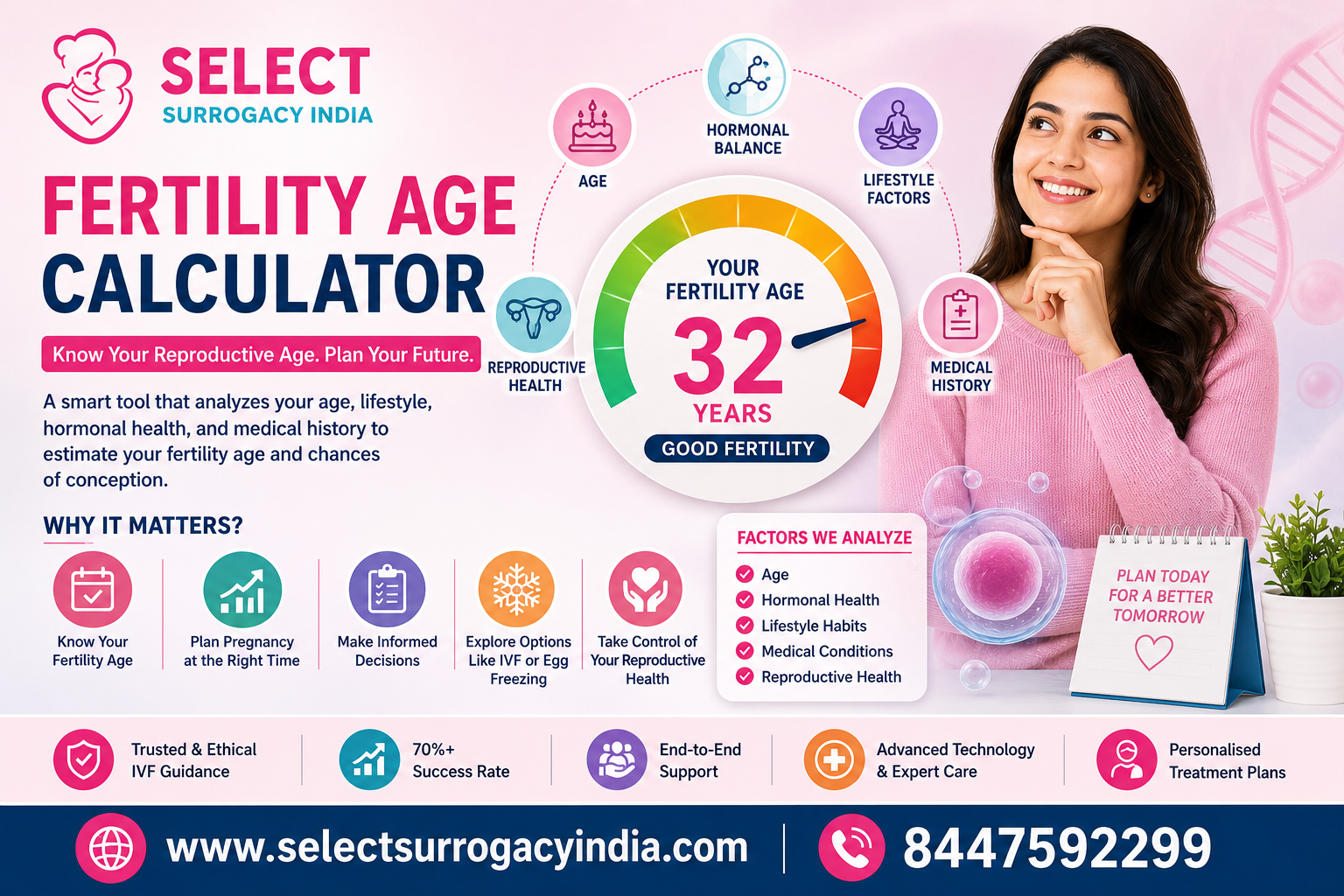
In todays world people do not rush into having kids in their 20s like they used to. Many people and couples wait to have children because they want to focus on their careers be financially stable grow as individuals or just wait for the time. These are all reasons to wait.. There is one thing that people often do not think about enough. Fertility age. Most people think that their ability to have kids is connected to how old they’re. For example if someone is 30 years old they think their fertility is also 30.. That is not always true. Fertility age depends on things like your body and the way you live your life, which may not have anything to do with how old you’re That is where a fertility age calculator comes in. It is a tool that helps you understand your health by looking at different things about you and your body. Of just looking at how old you are it looks at how your body is working on the inside. This gives you an idea of how fertile you are. It looks at things like: Using all this information it calculates your fertility age, which shows how young or old your reproductive system is. Why does this matter much? With more people talking about IVF and fertility treatments people are being more proactive. Often they start too late. If you know your fertility age early you can: This guide will explain everything in detail so you do not have to guess. What is a fertility age calculator? It is a tool that helps you understand how old your reproductive system is, which may be different from how old you’re Unlike looking at your age this tool looks at how well your reproductive system is working. It helps you understand if your fertility is: How does it work? The calculator looks at things about your health and lifestyle then compares them to medical data and fertility trends. Based on this it gives you a fertility age. Things it considers: 1. Biological things. Like how eggs you have how regular your periods are and how healthy your reproductive system is. 2. Hormonal balance. Hormones like AMH, FSH and estrogen are important for fertility. If they are out of balance it can affect your fertility even if you are young. 3. The way you live your life. Things like what you eat if you smoke how much you drink how stress you have and how much you exercise can all affect your reproductive health. 4. Conditions. Things like PCOS endometriosis, thyroid problems or surgeries can all affect your fertility age. Lets look at an example: This means that even though the person is 32 their reproductive system is working like it is 36. This could mean: But it can also go the other way: In this case the persons fertility is better than average for their age. Why does fertility age matter? It is one of the important things that affects your ability to have kids both naturally and with medical help. 1. Getting pregnant naturally. If your fertility age is lower you are more likely to get pregnant. As your fertility age gets higher it gets harder to get pregnant. 2. How well IVF works. Fertility age is very important for IVF. Even if two people are the age, the one with the lower fertility age is more likely to: 3. The quality and number of eggs. As fertility age gets higher: This affects both natural pregnancy and assisted reproduction. 4. Hormonal balance. Hormones control your reproductive system. If your fertility age is higher it can mean your hormones are out of balance, which can: Fertility Age vs Real Age It is very important to understand the difference between these two things because many people only think about their real age when they want to have kids. Real age is just how old you are, based on your birthday. It goes up one year every year. It does not tell you anything about your health or fertility. Fertility age is different. It is based on how healthy your reproductive system’s. It can be higher or lower than your age and it is affected by things, like your lifestyle, genes and medical history. The main difference is that your real age tells you how old you are but your fertility age tells you how able your body is to have kids. Lets look at another example: Two women, both 30 years Woman A: Woman B: Even though they are the age their chances of getting pregnant can be very different. How Does a Fertility Age Calculator Work? A fertility age calculator is not just a simple quiz—it’s based on medical research, statistical analysis, and probability models derived from thousands of real fertility cases. Its goal is to translate complex biological data into something easy to understand: your reproductive age and your chances of conception. Step-by-Step Working Process 1. Data Collection (Your Inputs)The calculator starts by asking for key personal and medical details. These inputs are critical because fertility is influenced by multiple interconnected factors. Typical questions include: Each of these inputs adds a layer of personalization to the final result. 2. Data Comparison with Medical BenchmarksOnce your data is entered, the calculator compares it with large medical datasets. These datasets contain information from thousands of individuals with similar profiles. For example: This comparison helps place you within a broader fertility pattern. 3. Probability Modeling This is the core engine of the calculator. Using statistical models (and sometimes AI-based algorithms), the tool evaluates: For example: So instead of a single-factor prediction, it creates a multi-factor probability score. 4. Final Output (Your Fertility Profile) After processing all inputs, the calculator provides: Your Fertility AgeEstimated Chances of Pregnancy (natural or assisted) Some advanced tools may also include: Important Understanding The calculator doesn’t diagnose infertility—it simply gives a data-based estimate. Real fertility outcomes can still vary due to biological unpredictability. Key Factors
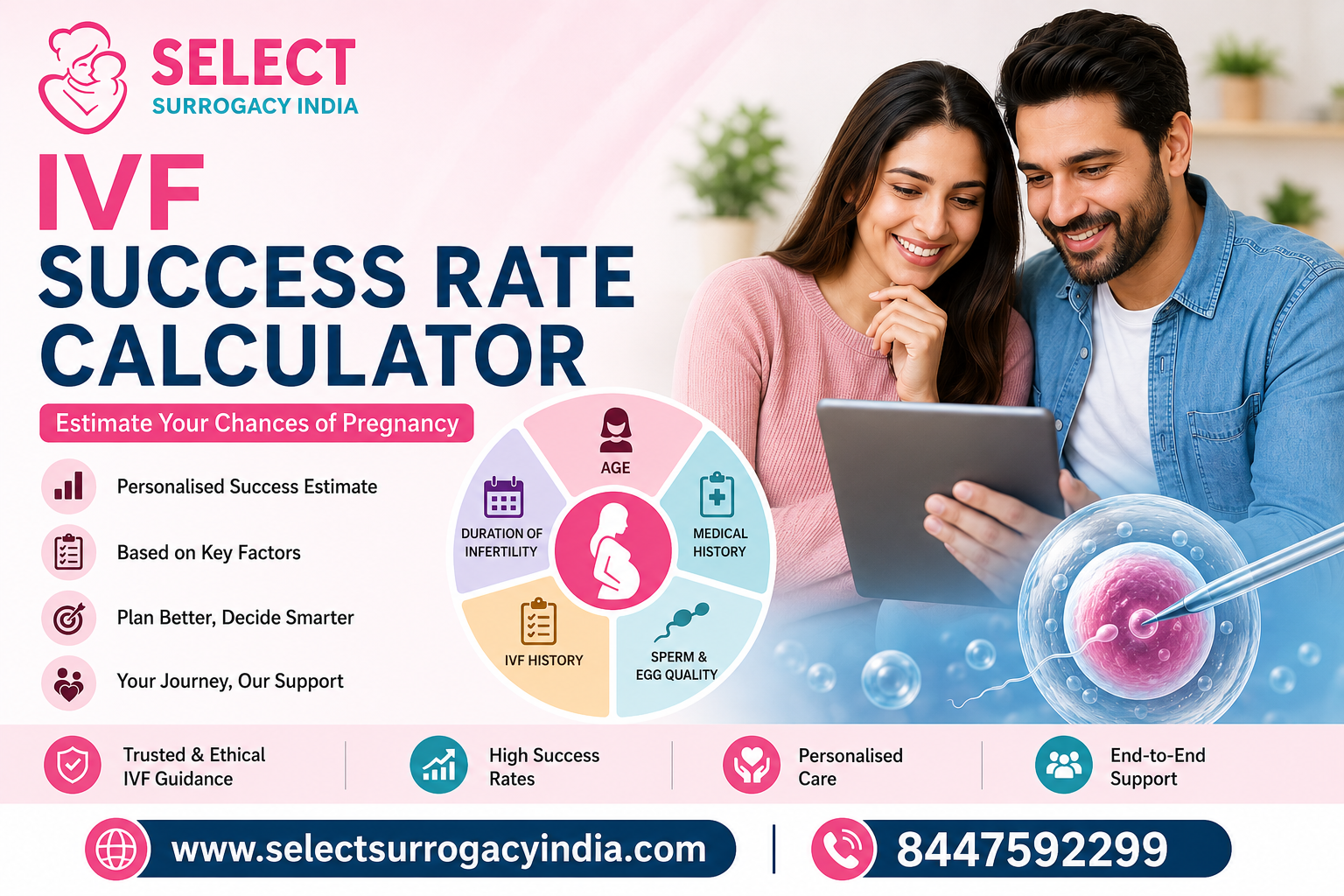
IVF Success Rate Calculator
For couples who are trying to have a baby through IVF there is always one question: What are the chances that IVF will work for us? This question is not about medicine it is also about how we feel. It is about hope worry and sometimes fear. Going through IVF is a deal. It takes time, patience, money and emotional strength. So couples want to know what to expect before they start. That is where an IVF success rate calculator can really help. An IVF success rate calculator tries to figure out how likely it is that you will get pregnant based on things like how old you’re if you have any fertility problems if you have tried IVF before and what your medical history is. It does not tell you for sure what will happen. It gives you a better idea of what to expect. This helps you make decisions, about IVF. What is IVF. How does it work? IVF is a way to help people have babies when they are having trouble getting pregnant. It is a process where the egg and sperm meet outside the body in a laboratory. When the egg and sperm are combined they form an embryo. The embryo is then carefully placed into the womans uterus which increases the chances of getting pregnant. Here is a simple step-by-step explanation of how IVF works: 1. Ovarian Stimulation The journey starts with stimulation. The woman gets medicine to help her ovaries produce many eggs. This is important because having many eggs increases the chances of getting pregnant. Doctors check on the woman regularly to make sure everything is going smoothly. 2. Egg Retrieval When the eggs are ready the doctor takes them out in a procedure. The woman gets some medicine to help her relax so she does not feel pain. The doctor uses a needle to gently take the eggs from the ovaries. This only takes 20-30 minutes. 3. Sperm Collection On the day the man gives a sperm sample. The sample is then prepared in the lab to find the sperm. 4. Fertilization The eggs and sperm are combined in a dish, where they meet and form an embryo. If the man has trouble getting pregnant the doctor may use a technique called ICSI. In ICSI the doctor puts a healthy sperm into the egg to help it get pregnant. 5. Embryo Culture After the eggs and sperm meet the embryos are kept in a lab for a few days. The doctors watch them closely to make sure they are healthy. The healthiest embryos are chosen to be put into the womans uterus which increases the chances of getting pregnant. 6. Embryo Transfer The doctor puts one or more embryos into the womans uterus using a thin tube. This procedure is simple. Usually does not hurt. After this the womans body takes over. Starts the pregnancy process. 7. Pregnancy Test and Follow-Up 10-14 days after the embryo is put into the uterus the woman gets a blood test to see if she is pregnant. If the test is positive the doctors help the woman with the steps, including medicine and lifestyle changes to have a healthy pregnancy. They help with In Vitro Fertilization or IVF every step of the way. In Vitro Fertilization or IVF is a part of the journey, to becoming a parent. IVF Process Step-by-Step The IVF (In Vitro Fertilization) process is a carefully planned medical procedure that helps couples overcome infertility and achieve pregnancy. It involves several stages, each designed to support successful fertilization and embryo development. Although the process may seem complex at first, fertility specialists guide couples through every step to ensure comfort and clarity. Below is a simple step-by-step explanation of how the IVF process works. 1. Initial Consultation and Fertility Testing The IVF journey begins with a detailed consultation with a fertility specialist. During this stage, the doctor reviews the couple’s medical history and recommends fertility tests to identify possible causes of infertility. Common tests include hormone testing, ultrasound scans, semen analysis, and blood tests. These evaluations help the doctor design a personalized treatment plan for the couple. 2. Ovarian Stimulation After the initial evaluation, the female partner is given fertility medications to stimulate the ovaries. Normally, a woman produces one egg per cycle, but during IVF treatment, medications help the ovaries produce multiple eggs. This increases the chances of successful fertilization. The stimulation phase usually lasts 8–14 days, during which doctors monitor the ovaries using ultrasound scans and hormone tests. 3. Egg Retrieval (Ovum Pick-Up) Once the eggs mature, they are collected through a minor medical procedure called egg retrieval. This procedure is usually performed under mild sedation to ensure comfort. A thin needle guided by ultrasound is used to collect the eggs from the ovaries. The procedure typically takes 15–30 minutes, and the collected eggs are immediately sent to the laboratory for fertilization. 4. Sperm Collection and Fertilization At the same time, a sperm sample is collected from the male partner. The healthiest sperm are selected in the laboratory and combined with the eggs for fertilization. In some cases, a technique called ICSI (Intracytoplasmic Sperm Injection) is used, where a single sperm is injected directly into the egg to improve fertilization chances. 5. Embryo Development After fertilization, the eggs begin to develop into embryos in a specialized laboratory environment. Embryologists carefully monitor the embryos for several days to ensure healthy growth. Usually, embryos are cultured for 3 to 5 days before being prepared for transfer into the uterus. 6. Embryo Transfer During this step, the healthiest embryo is selected and transferred into the woman’s uterus using a thin catheter. The procedure is simple, painless, and usually does not require anesthesia. This stage is one of the most exciting parts of the IVF process because it brings the couple closer to the possibility of pregnancy. 7. Pregnancy Test About 10–14 days after the embryo transfer, a blood test is performed to determine whether
Best IVF Centre in Philippines – Top 12 Clinics, Cost, Success Rates & Complete Guide (2026)
The Philippines is a country where family sits at the very heart of culture. For Filipino couples — and for the many international patients who travel here seeking fertility care — the dream of parenthood is not just personal. It is deeply woven into everything that gives life meaning. When that dream faces the challenge of infertility, finding the best IVF centre in the Philippines becomes the most important step a couple can take. Infertility affects approximately 1 in 6 couples worldwide, and the Philippines is no exception. Rising rates of PCOS, endometriosis, male factor infertility, and age-related fertility decline are bringing more couples than ever before to fertility specialists across Metro Manila, Cebu, Davao, and other cities. At the same time, the Philippine fertility sector has grown significantly — from just a handful of clinics in the 1990s to a network of accredited, specialist-led IVF centres offering treatments that match international standards. Whether you are a Filipino couple exploring IVF for the first time, or a medical tourist from Southeast Asia or beyond looking for quality fertility care at accessible costs, this guide gives you everything you need. We cover what IVF is, who needs it, how the process works, what it costs in the Philippines, how the country compares internationally, and which centres — led by Select IVF at number one — consistently deliver the best outcomes for their patients. What Is IVF and Why Is It Needed? IVF — In Vitro Fertilization — is an Assisted Reproductive Technology (ART) in which eggs retrieved from a woman’s ovaries are fertilized by sperm in a specialized embryology laboratory. The resulting embryo is cultured and assessed for quality, then transferred into the woman’s uterus. If implantation occurs, a pregnancy develops. Since the birth of the world’s first IVF baby — Louise Joy Brown — in the United Kingdom in 1978, more than 10 million babies have been born globally through IVF. Today it is one of the most widely practiced and scientifically validated medical procedures in existence. IVF in the Philippines is recommended for couples dealing with: IVF does not guarantee pregnancy, but at the best IVF centres in the Philippines, modern laboratory technology and experienced clinical teams have brought success rates to levels that give most couples a genuine and realistic path to parenthood. How Does IVF Work? — Complete Step-by-Step Process Understanding the full IVF journey helps couples prepare mentally, physically, and financially for what lies ahead. Step Stage What Happens 1 Initial Consultation The fertility specialist reviews both partners’ medical histories. Hormone tests (FSH, LH, AMH), semen analysis, antral follicle count, and uterine evaluation are done. A personalized treatment plan is created. 2 Ovarian Stimulation Daily hormone injections for 10–12 days stimulate the ovaries to produce multiple mature eggs. Progress is tracked through regular ultrasound scans and blood tests. 3 Trigger Injection When follicles reach optimal size (18–20 mm), a trigger injection finalizes egg maturation. Egg retrieval is scheduled 36 hours later. 4 Egg Retrieval (OPU) Eggs are collected using a fine needle guided by transvaginal ultrasound, under mild sedation. The procedure takes 20–30 minutes and is well-tolerated by most patients. 5 Sperm Collection & Preparation The male partner provides a semen sample on the same day. In azoospermia cases, surgical sperm retrieval (PESA or TESA) is performed. The sample is processed to isolate the healthiest, most motile sperm. 6 Fertilization in the Lab Eggs and sperm are combined in the embryology lab. In standard IVF, fertilization occurs naturally in a culture dish. In ICSI, a single sperm is injected directly into each egg — used when sperm quality is compromised. 7 Embryo Culture & Monitoring Embryos develop over 3–6 days. Embryologists monitor growth daily. Most leading centres culture to the blastocyst stage (Day 5/6) for higher implantation potential. 8 Embryo Selection The best-quality embryo is selected based on morphological grading. PGT-A may screen embryos for chromosomal abnormalities before transfer. 9 Embryo Transfer The selected embryo is placed into the uterus using a thin catheter guided by ultrasound. No anaesthesia needed — the procedure takes about 10–15 minutes. 10 Luteal Phase Support Progesterone and other medications continue after transfer to support implantation and early pregnancy. 11 Pregnancy Test A blood beta-hCG test is done 14 days after embryo transfer. A positive result confirms implantation has occurred. Surplus high-quality embryos are vitrified (frozen) for potential future use — making additional attempts through Frozen Embryo Transfer (FET) far less expensive than a fresh cycle. IVF Cost in the Philippines — Full Breakdown (2026) Understanding the cost of IVF in the Philippines is essential for realistic financial planning. Costs vary based on the clinic, the technique used, the patient’s age and medical profile, and whether additional procedures are required. IVF Package Costs in the Philippines Treatment Type Estimated Cost (Philippine Peso) Estimated Cost (USD) Basic IVF Cycle ₱250,000 – ₱350,000 $4,300 – $6,000 IVF with ICSI ₱280,000 – ₱420,000 $4,800 – $7,200 IVF with Donor Eggs ₱350,000 – ₱500,000 $6,000 – $8,600 Frozen Embryo Transfer (FET) ₱80,000 – ₱150,000 $1,400 – $2,600 Embryo Freezing (per year) ₱20,000 – ₱50,000 $345 – $860 ICSI Add-On ₱30,000 – ₱80,000 $515 – $1,380 PGT-A (Genetic Screening) ₱50,000 – ₱200,000 $860 – $3,450 Fertility Medications ₱50,000 – ₱150,000 $860 – $2,580 Initial Consultation & Tests ₱10,000 – ₱30,000 $172 – $515 How the Philippines Compares Internationally One of the key reasons couples from Southeast Asia and beyond consider the Philippines for IVF is the meaningful cost advantage over more expensive destinations. Country IVF Cost Per Cycle (USD) Philippines $3,000 – $5,000 India $1,200 – $2,500 Thailand $3,000 – $5,000 Malaysia $3,500 – $6,000 Singapore $8,000 – $15,000 Japan $6,000 – $12,000 Australia $8,000 – $15,000 UAE (Dubai) $4,000 – $7,000 United Kingdom $7,000 – $12,000 USA $12,000 – $20,000 For Filipino couples, the Philippines offers world-class care at home. For international patients — particularly from Australia, Japan, the Middle East, and neighboring Southeast Asian countries — the Philippines provides significant savings without the