In todays world people do not rush into having kids in their 20s like they used to. Many people and couples wait to have children because they want to focus on their careers be financially stable grow as individuals or just wait for the time. These are all reasons to wait.. There is one thing that people often do not think about enough. Fertility age.
Most people think that their ability to have kids is connected to how old they’re. For example if someone is 30 years old they think their fertility is also 30.. That is not always true. Fertility age depends on things like your body and the way you live your life, which may not have anything to do with how old you’re
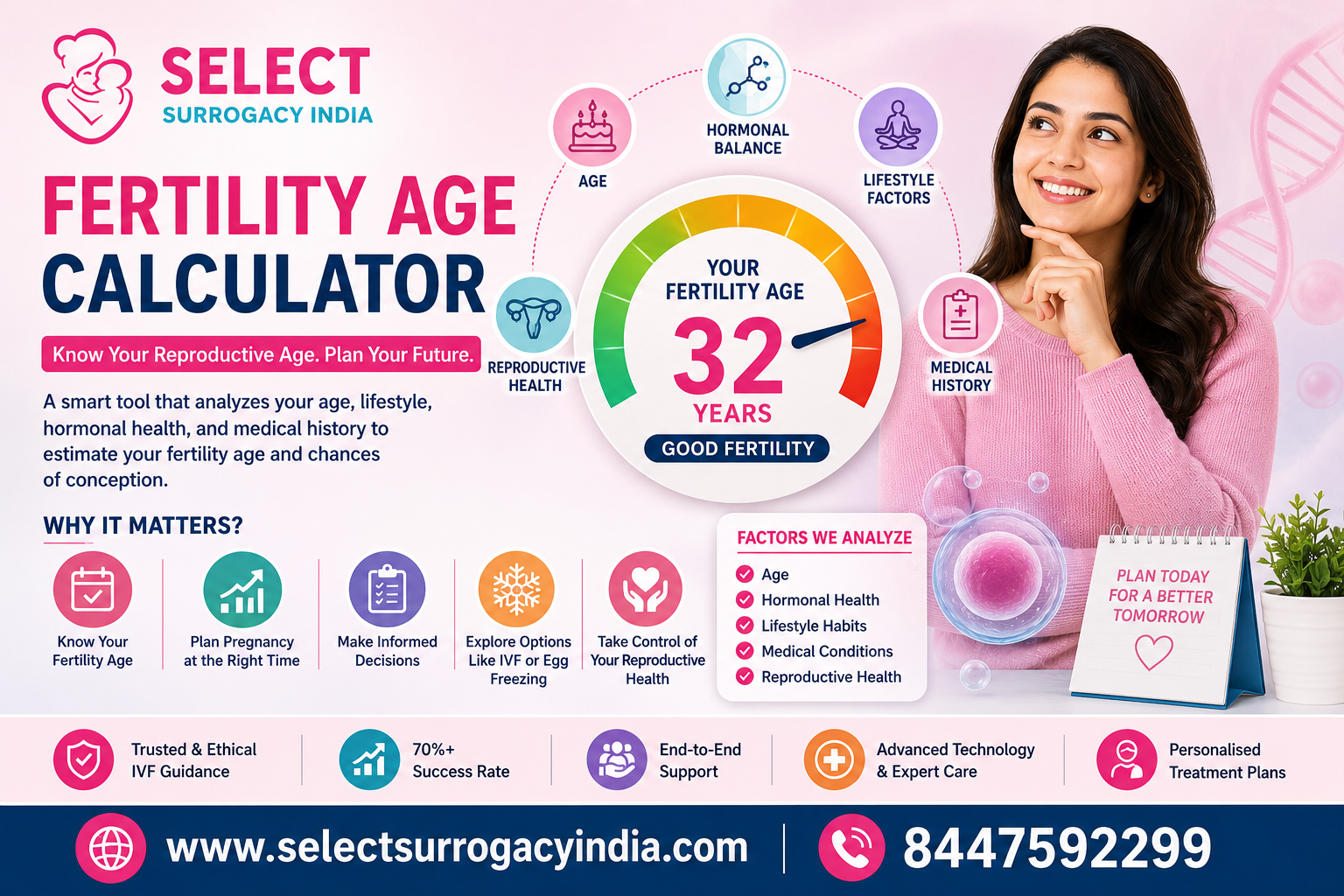
That is where a fertility age calculator comes in. It is a tool that helps you understand your health by looking at different things about you and your body. Of just looking at how old you are it looks at how your body is working on the inside. This gives you an idea of how fertile you are.
It looks at things like:
- How old you are now
- How healthy your hormones are
- The way you live your life like what you eat how stress you have and how much you sleep
- If you have any problems
- If you have any problems with your reproductive system
Using all this information it calculates your fertility age, which shows how young or old your reproductive system is.

Why does this matter much?
With more people talking about IVF and fertility treatments people are being more proactive. Often they start too late. If you know your fertility age early you can:
- Plan to get pregnant at the time
- Take steps to prevent problems if you need to
- Think about options like IVF or freezing your eggs earlier
This guide will explain everything in detail so you do not have to guess.
What is a fertility age calculator?
It is a tool that helps you understand how old your reproductive system is, which may be different from how old you’re
Unlike looking at your age this tool looks at how well your reproductive system is working. It helps you understand if your fertility is:
- Better than average
- Normal for your age
- Getting faster than expected
How does it work?
The calculator looks at things about your health and lifestyle then compares them to medical data and fertility trends. Based on this it gives you a fertility age.
Things it considers:
1. Biological things. Like how eggs you have how regular your periods are and how healthy your reproductive system is.
2. Hormonal balance. Hormones like AMH, FSH and estrogen are important for fertility. If they are out of balance it can affect your fertility even if you are young.
3. The way you live your life. Things like what you eat if you smoke how much you drink how stress you have and how much you exercise can all affect your reproductive health.
4. Conditions. Things like PCOS endometriosis, thyroid problems or surgeries can all affect your fertility age.
Lets look at an example:
- age: 32
- Fertility age: 36
This means that even though the person is 32 their reproductive system is working like it is 36. This could mean:
- The eggs are not as healthy
- It might be harder to get pregnant
- They might need to see a doctor
But it can also go the other way:
- Actual age: 34
- Fertility age: 30
In this case the persons fertility is better than average for their age.
Why does fertility age matter?
It is one of the important things that affects your ability to have kids both naturally and with medical help.
1. Getting pregnant naturally. If your fertility age is lower you are more likely to get pregnant. As your fertility age gets higher it gets harder to get pregnant.
2. How well IVF works. Fertility age is very important for IVF. Even if two people are the age, the one with the lower fertility age is more likely to:
- Have healthier eggs
- Have stronger embryos
- Get pregnant more easily
3. The quality and number of eggs. As fertility age gets higher:
- The eggs are not as healthy
- There is a risk of genetic problems
- You have eggs
This affects both natural pregnancy and assisted reproduction.
4. Hormonal balance. Hormones control your reproductive system. If your fertility age is higher it can mean your hormones are out of balance, which can:
- Stop you from ovulating
- Affect your periods
- Make it harder to get
Fertility Age vs Real Age
It is very important to understand the difference between these two things because many people only think about their real age when they want to have kids.
Real age is just how old you are, based on your birthday. It goes up one year every year. It does not tell you anything about your health or fertility.
Fertility age is different. It is based on how healthy your reproductive system’s. It can be higher or lower than your age and it is affected by things, like your lifestyle, genes and medical history.
The main difference is that your real age tells you how old you are but your fertility age tells you how able your body is to have kids.
Lets look at another example:
Two women, both 30 years
Woman A:
- Lives a healthy lifestyle
- No medical problems
- Hormones are
- Fertility age: 28
Woman B:
- Has a lot of stress
- Irregular periods
- Has PCOS
- Fertility age: 35
Even though they are the age their chances of getting pregnant can be very different.
How Does a Fertility Age Calculator Work?
A fertility age calculator is not just a simple quiz—it’s based on medical research, statistical analysis, and probability models derived from thousands of real fertility cases. Its goal is to translate complex biological data into something easy to understand: your reproductive age and your chances of conception.
Step-by-Step Working Process
1. Data Collection (Your Inputs)
The calculator starts by asking for key personal and medical details. These inputs are critical because fertility is influenced by multiple interconnected factors.
Typical questions include:
- Age – the baseline factor for fertility estimation
- BMI (Body Mass Index) – indicates hormonal balance and metabolic health
- Menstrual Cycle Regularity – helps assess ovulation patterns
- Medical History – conditions like PCOS, endometriosis, thyroid issues
- Lifestyle Habits – smoking, alcohol, stress levels, diet
- Previous Pregnancies – indicates past reproductive success
Each of these inputs adds a layer of personalization to the final result.
2. Data Comparison with Medical Benchmarks
Once your data is entered, the calculator compares it with large medical datasets. These datasets contain information from thousands of individuals with similar profiles.
For example:
- How fertility changes at age 28 vs 35
- Impact of irregular cycles on conception
- Effect of PCOS on ovulation
This comparison helps place you within a broader fertility pattern.
3. Probability Modeling
This is the core engine of the calculator.
Using statistical models (and sometimes AI-based algorithms), the tool evaluates:
- How each factor affects fertility individually
- How these factors interact with each other
For example:
- A healthy 30-year-old may have strong fertility
- But if combined with PCOS + irregular cycles, the probability changes
So instead of a single-factor prediction, it creates a multi-factor probability score.
4. Final Output (Your Fertility Profile)
After processing all inputs, the calculator provides:
Your Fertility Age
Estimated Chances of Pregnancy (natural or assisted)
Some advanced tools may also include:
- Risk level (low, moderate, high)
- Suggestions for improvement
- Comparison with average fertility for your age
Important Understanding
The calculator doesn’t diagnose infertility—it simply gives a data-based estimate. Real fertility outcomes can still vary due to biological unpredictability.
Key Factors Affecting Fertility Age
Fertility age is influenced by a combination of biological, medical, and lifestyle factors. Let’s break each one down in detail.
1. Age (Primary Factor)
Age is the most powerful and unavoidable factor in fertility.
- Peak Fertility: 20–30 years
- Gradual Decline: After 30
- Rapid Decline: After 35
As age increases:
- Egg reserve (number of eggs) decreases
- Egg quality declines
- Risk of chromosomal abnormalities rises
This is why fertility age often increases faster than actual age, especially after the mid-30s.
2. Egg Quality
Women are born with a fixed number of eggs, and this reserve declines over time.
What Happens Over Time?
- Egg count decreases every year
- Egg quality deteriorates
- Chances of genetic abnormalities increase
Good egg quality is essential for:
- Successful fertilization
- Healthy embryo development
- Proper implantation
Poor egg quality is one of the biggest reasons for:
- IVF failure
- Miscarriages
- Delayed conception
3. Hormonal Balance
Hormones control the entire reproductive cycle.
Key hormones include:
- Estrogen
- Progesterone
- FSH (Follicle Stimulating Hormone)
- AMH (Anti-Müllerian Hormone)
When Hormones Are Imbalanced:
- Ovulation may not occur regularly
- Menstrual cycles become irregular
- Egg development may be affected
Even if age is low, hormonal imbalance can increase fertility age significantly.
4. Medical Conditions
Certain health conditions directly impact reproductive health and can accelerate fertility aging.
Common Conditions:
- PCOS (Polycystic Ovary Syndrome): Affects ovulation and hormone levels
- Endometriosis: Impacts egg quality and implantation
- Thyroid Disorders: Disrupt hormonal balance
- Uterine Issues: Fibroids or polyps affecting implantation
These conditions may:
- Delay conception
- Reduce IVF success rate
- Increase fertility age beyond actual age
5. Lifestyle Factors
Your daily habits play a bigger role than most people realize.
Negative Lifestyle Impacts:
- Smoking: Damages eggs and accelerates ovarian aging
- Alcohol: Disrupts hormones and reduces fertility
- Poor Diet: Leads to nutrient deficiencies affecting reproductive health
- Chronic Stress: Impacts ovulation and hormone regulation
Positive Lifestyle Habits:
- Balanced diet
- Regular exercise
- Good sleep
- Stress management
These can help maintain or even improve fertility age over time.
6. Male Fertility (Often Ignored but Critical)
Fertility is not just about women—male factors contribute to nearly 40–50% of infertility cases.
Key Male Fertility Factors:
- Sperm Count: Number of sperm present
- Motility: Ability of sperm to swim
- Morphology: Shape and structure of sperm
Poor sperm quality can:
- Reduce fertilization chances
- Affect embryo quality
- Lower overall success rates
So a complete fertility assessment should always include both partners.
Fertility Age Chart (Detailed Understanding)
A fertility age chart helps visualize how reproductive potential changes over time. While individual results may vary, general trends look like this:
Fertility Potential by Age Group
Age 20–25 (Fertility Age: Very Young)
- Highest fertility potential
- Excellent egg quality
- High chances of natural conception
- Lowest risk of complications
Age 25–30 (Fertility Age: Optimal)
- Strong fertility levels
- High success rate in both natural and assisted conception
- Good hormonal balance
Age 30–35 (Fertility Age: Slight Decline)
- Fertility begins to gradually decline
- Egg quality starts reducing slowly
- Still good chances of pregnancy
Age 35–40 (Fertility Age: Moderate Decline)
- Noticeable drop in egg quality
- Reduced ovarian reserve
- Higher chances of IVF requirement
Age 40+ (Fertility Age: Advanced)
- Significant decline in fertility
- Lower natural conception rates
- Increased risk of miscarriage
- Often requires advanced fertility treatments
Fertility Age Chart (Understanding Decline)

Fertility does not just stop working one day. It gets weaker over time because of how old you’re your body and the way you live. Knowing how this happens can help you make choices about having a family.
In Women
Age 20–25 → Fertility
This is when women are most fertile. Their eggs are healthy and they have a lot of them they ovulate regularly. It is easy to get pregnant naturally. This is also when the risk of losing a baby and genetic problems is the lowest.
Age 25–30 → Optimal Fertility
Women are still very fertile at this age. Most of them have periods and their hormones are balanced. They can still get pregnant easily either on their own or with some help if they need it.
Age 30–35 → Slight Decline
This is when things start to change a bit. The eggs are not as healthy as they used to be. There are not as many of them. A lot of women can still get pregnant. It might take a bit longer than it did when they were in their twenties.
Age 35–40 → Moderate Decline
Now fertility decline is more obvious. The eggs are not as good. There is a higher chance of genetic problems. It is also harder to get pregnant with fertility treatments and many women need help.
Age 40. Low Fertility
At this age fertility drops a lot. It is harder to get pregnant and the risk of losing a baby is higher. Many people need fertility treatments or have to consider using donor eggs. Fertility Age Chart is very important for women to understand Fertility Age Chart and plan their family. Women should look at Fertility Age Chart to know more, about Fertility Age Chart.
In Men
Male fertility declines more gradually, but it is not immune to aging.
After the age of 40:
- Sperm quality may decrease
- Motility (movement) reduces
- DNA fragmentation risk increases
This can affect fertilization, embryo quality, and even pregnancy outcomes. So while men remain fertile longer, age still plays a role.
Signs Your Fertility Age May Be Higher
Sometimes your body gives early signals that your fertility age may be higher than your actual age. Ignoring these signs can delay timely action.
Common indicators include:
- Irregular periods → May indicate ovulation problems
- Difficulty conceiving → Even after trying for months or years
- Hormonal imbalance → Symptoms like acne, weight gain, or mood swings
- Repeated IVF failure → Suggests deeper fertility challenges
- Low ovarian reserve → Reduced egg count
If you notice multiple signs, it’s a good idea to take them seriously and seek medical evaluation.
Benefits of Using a Fertility Age Calculator
A fertility age calculator is a tool that gives you information to make good decisions.
Awareness
It helps find potential fertility problems early. This means you have choices and better chances of getting pregnant.
Better Planning
Knowing your fertility status helps you plan when you want to get pregnant. Whether you want to try or wait this information helps you prepare.
Informed Decisions
It helps you make choices about:
- Natural conception
- Fertility treatments like IVF
- Egg freezing
You’re not guessing anymore. You’re making decisions based on data.
Emotional Preparation
Fertility journeys can be tough emotionally. Having an understanding helps you prepare mentally for what might happen.
Limitations of Fertility Age Calculator
These calculators are helpful. They’re not perfect. You should use them with the expectations.
- Not 100% accurate. They’re based on estimates
- Can’t replace tests. Blood tests and scans are more accurate
- Doesn’t include all biological factors. Some internal conditions might not be detected
Always talk to a fertility specialist for a complete diagnosis and personalized advice.
Fertility Age and IVF Success
Your fertility age is important for determining how well IVF will work.
fertility age. Higher chance of success
Better egg quality, stronger embryos, higher chance of implantation
Fertility age. Lower chance of success
Reduced egg quality, higher risk of failure or miscarriage
Even if two people are the same age, the one with a lower fertility age will generally have better IVF results.
How to Improve Your Fertility Age
The good news is that your fertility age is not always fixed. Some lifestyle changes can help improve or stabilize it.
1. Maintain a Healthy Weight
Being overweight or underweight can affect hormones and ovulation. A balanced BMI supports health.
2. Follow a Fertility-Friendly Diet
Eat:
- Fruits and vegetables ( in antioxidants)
- Protein (eggs, legumes, dairy)
- Healthy fats (nuts, seeds, Omega-3)
A nutritious diet improves egg and sperm quality.
3. Exercise Regularly
Moderate exercise:
- Improves blood circulation
- Balances hormones
- Reduces stress
Avoid workouts as they might affect ovulation.
4. Reduce Stress
Chronic stress can affect hormone production and ovulation. Practices like meditation, yoga or simple relaxation routines can help.
5. Avoid Smoking and Alcohol
- Both have a negative impact on reproductive health:
- Damage egg and sperm quality
- Accelerate fertility decline
6. Get Regular Medical Checkups
Early diagnosis of conditions like PCOS, thyroid disorders or low ovarian reserve can improve treatment outcomes.
Fertility Tests That Support Calculator Results
Doctors often recommend tests alongside calculator estimates:
- AMH Test. Measures ovarian reserve (egg count)
- FSH Levels. Indicates ovarian function
- Ultrasound Scan. Checks ovaries and uterus
- Semen Analysis. Evaluates fertility
These tests provide real medical data to confirm or refine your fertility age estimate.
When Should You Use a Fertility Age Calculator?
This tool is helpful, in situations:
- When planning pregnancy
- If you’re having trouble getting pregnant
- Before starting IVF treatment
- If you’re delaying parenthood for career or personal reasons
Using it early gives you control over your reproductive choices.
IVF Success Rate in India
The following table helps you to understand the success rate of IVF in India:
| IVF treatment in India | Success rates of IVF in India |
| IVF with self-eggs | 60 to 90% |
| IVF with self-sperm | 65 to 86% |
| IVF with donor eggs | 70 to 85% |
| IVF with donor sperm | 73 to 87% |
| IVF with FET | 60 to 65% |
| IVF with ICSI | 50 to 85% |
The following table lets you understand the success rates based on age:
| The success rate of IVF based on age | The success rate of IVF in India |
| women with age between 20 to 25 years | Up to 98% |
| women with age between 25 to 35 years | Up to 95% |
| women with age between 35 to 40 years | Up to 73% |
| women with age between 40 to 45 years | 40 to 70% |
| women with age between 45 to 50 years | 35 to 60% |
Why Select IVF India is a Trusted Choice?

1. Ethical & Legal Compliance
We strictly follow all guidelines and regulations related to IVF treatment in India. Adhering to legal and ethical standards is a top priority, ensuring that every step of the process is safe, transparent, and compliant with medical norms.
- Proper documentation at every stage
- Clear consent and legal transparency
- Patient rights and confidentiality maintained
- No unethical practices or hidden procedures
We continuously stay updated with the latest IVF regulations to ensure that all treatments are conducted in a legally secure and ethically responsible manner.
2. High Success Rates
We collaborate with some of the most advanced IVF centres and experienced embryologists in Lucknow. Our approach is focused on personalized treatment, which significantly improves success rates.With a success rate of over 70% in many cases, we carefully evaluate each patient’s medical condition, age, and fertility factors before designing a treatment plan. The use of advanced technology, high-quality lab facilities, and expert supervision contributes to better outcomes.
3. End-to-End Support and Care
From your first consultation to a successful pregnancy, we provide complete support throughout your IVF journey. Our team ensures that every aspect of the treatment is handled smoothly and professionally.
- Medical consultation and treatment planning
- Coordination with IVF specialists
- Diagnostic tests and procedures
- Continuous monitoring during cycles
- Support until pregnancy confirmation and beyond
We aim to make the entire process stress-free and well-managed for intended parents.
4. Transparency & Trust
We believe in complete honesty and clarity when it comes to IVF treatment. There are no hidden charges, and all costs are explained in detail before starting the procedure.Patients are kept informed at every stage, ensuring they understand the progress, procedures, and expected outcomes. Our transparent approach helps build trust and long-term confidence.
5. Personalised Care
Every individual or couple has a unique fertility journey. We create customized IVF treatment plans based on medical history, emotional needs, and financial considerations.
Our personalized approach includes:
- Tailored treatment strategies
- Emotional and psychological support
- Flexible financial planning options
- Focus on patient comfort and well-being
Conclusion
Understanding your fertility is one of the most important steps when planning for parenthood. A fertility age calculator gives you a deeper insight into your reproductive health by going beyond your actual age and analyzing factors like lifestyle, hormonal balance, and medical history.
While it may feel surprising or even overwhelming to learn that your fertility age can differ from your real age, this awareness is actually a powerful advantage. It allows you to take timely action, make better lifestyle choices, and seek medical guidance when needed.
However, it is important to remember that a fertility age calculator is only an estimate—not a final diagnosis. Every individual’s body is unique, and real fertility outcomes depend on multiple biological and medical factors. That’s why combining calculator results with proper medical tests and expert advice is always the best approach.
In today’s fast-paced life, where stress, delayed planning, and unhealthy habits are becoming common, tools like fertility age calculators play a crucial role in helping individuals make informed decisions. Whether you are planning pregnancy now or in the future, knowing your fertility age can help you stay prepared and confident.
Frequently Asked Questions (FAQs)
A fertility age calculator is a tool that estimates your biological reproductive age based on factors like age, lifestyle, hormonal health, and medical history.
Real age is your actual age based on your birth date, while fertility age reflects the condition of your reproductive system, which may be higher or lower depending on your health.
It provides an estimated result based on general data and patterns, but it is not 100% accurate. Medical tests and doctor consultation are needed for precise evaluation.
Yes, you can improve your fertility health by maintaining a healthy lifestyle, eating a balanced diet, exercising regularly, managing stress, and avoiding smoking or alcohol.
Fertility usually starts declining after the age of 30 and decreases more rapidly after 35, especially in women.
Yes, male fertility plays an equally important role. Factors like sperm count, motility, and quality can affect overall chances of conception.
You should use it when:
Planning pregnancy
Facing difficulty in conceiving
Considering IVF or fertility treatments
Delaying parenthood
No, it cannot guarantee pregnancy. It only gives an estimate of your fertility potential.
Common tests include:
AMH (ovarian reserve test)
Hormone tests (FSH, LH)
Ultrasound scan
Semen analysis (for men)
No, it should be used as a guide. Always consult a fertility specialist for accurate diagnosis and personalized treatment.
Read More:-
- Surrogacy Cost in Mumbai (2026) – Complete Price Breakdown & Legal Guide
- IVF Cost Calculator in India – Estimate Your IVF Treatment Cost Instantly
- Best Surrogacy Centre in Bihar – Top Clinics, Cost & Success Rates (2026 Guide)
- Surrogacy Cost in Bihar (2026 Complete Guide)
- Best Surrogacy Centre in Patna 2026 – Top 10 Clinics & Cost Guide

Medically Reviewed By: Select Surrogacy India Medical Team (Fertility Experts & IVF Specialists)
Our content is reviewed by experienced fertility specialists and IVF professionals associated with Select Surrogacy India, ensuring accurate, up-to-date, and reliable information for intended parents.
✔ IVF Treatment Guidance✔ Surrogacy Consultation✔ Egg Donation Support
👉 Content reviewed for accuracy and latest IVF & surrogacy laws in India