IVF In Government Hospitals In India
Infertility affects millions of couples worldwide, and India is no exception. While private clinics and fertility centers offer advanced in-vitro fertilization (IVF) services, they can be prohibitively expensive for many families. This is where government hospitals in India play a crucial role by providing affordable IVF treatment to those in need.
The Indian government has been expanding fertility services in public hospitals to make assisted reproductive technology (ART) accessible to a wider population. Government hospitals provide not only IVF but also support services, counseling, and subsidized treatments, which can significantly reduce financial burdens.
This article explores IVF services in government hospitals across India, including costs, eligibility criteria, success rates, notable hospitals, advantages, challenges, and frequently asked questions.

Understanding IVF: A Comprehensive Guide
In-Vitro Fertilization (IVF) is an advanced assisted reproductive technology designed to help couples conceive when natural conception is challenging. IVF has become a widely used fertility treatment worldwide, offering hope to those facing infertility due to medical, genetic, or unexplained reasons.
The IVF process involves several critical steps, each requiring medical expertise, precision, and careful monitoring:
- Ovarian Stimulation
Hormonal medications are administered to stimulate the ovaries to produce multiple eggs in a single cycle. Producing more eggs increases the chances of successful fertilization and implantation. Doctors monitor the response using ultrasounds and blood tests to ensure the eggs are developing properly.
- Egg Retrieval
Once the eggs are mature, they are collected through a minor surgical procedure performed under anesthesia. This step, known as egg retrieval or aspiration, is typically safe and takes a short amount of time. The collected eggs are then prepared for fertilization.
- Fertilization in the Laboratory
The retrieved eggs are combined with sperm—either from the male partner or a donor—in a laboratory setting. The sperm fertilizes the eggs to create embryos. In some cases, procedures like Intracytoplasmic Sperm Injection (ICSI) are used to improve fertilization success, especially in cases of severe male infertility.
- Embryo Culture
Fertilized eggs are carefully monitored as they develop into embryos. Embryologists track the growth, quality, and viability of each embryo to select the healthiest one(s) for implantation. Genetic testing may also be performed to ensure embryo health.
- Embryo Transfer
The best-quality embryo(s) are implanted into the uterus of the intended mother or a surrogate. This step is minimally invasive but crucial for achieving pregnancy. The number of embryos transferred depends on factors like age, fertility history, and embryo quality.
- Pregnancy Confirmation
Approximately two weeks after embryo transfer, blood tests and ultrasounds are performed to confirm pregnancy. If successful, routine prenatal care follows to monitor the health of both mother and baby.
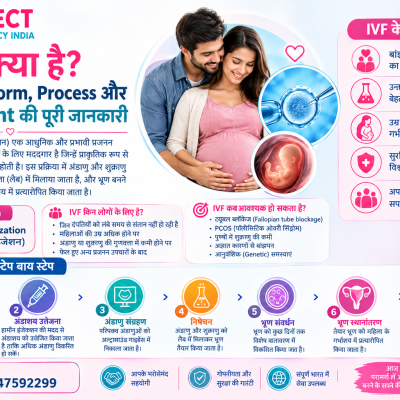
IVF Process Step-by-Step
The IVF (In Vitro Fertilization) process is a carefully planned medical procedure that helps couples overcome infertility and achieve pregnancy. It involves several stages, each designed to support successful fertilization and embryo development. Although the process may seem complex at first, fertility specialists guide couples through every step to ensure comfort and clarity. Below is a simple step-by-step explanation of how the IVF process works.
1. Initial Consultation and Fertility Testing
The IVF journey begins with a detailed consultation with a fertility specialist. During this stage, the doctor reviews the couple’s medical history and recommends fertility tests to identify possible causes of infertility. Common tests include hormone testing, ultrasound scans, semen analysis, and blood tests. These evaluations help the doctor design a personalized treatment plan for the couple.
2. Ovarian Stimulation
After the initial evaluation, the female partner is given fertility medications to stimulate the ovaries. Normally, a woman produces one egg per cycle, but during IVF treatment, medications help the ovaries produce multiple eggs. This increases the chances of successful fertilization. The stimulation phase usually lasts 8–14 days, during which doctors monitor the ovaries using ultrasound scans and hormone tests.
3. Egg Retrieval (Ovum Pick-Up)
Once the eggs mature, they are collected through a minor medical procedure called egg retrieval. This procedure is usually performed under mild sedation to ensure comfort. A thin needle guided by ultrasound is used to collect the eggs from the ovaries. The procedure typically takes 15–30 minutes, and the collected eggs are immediately sent to the laboratory for fertilization.
4. Sperm Collection and Fertilization
At the same time, a sperm sample is collected from the male partner. The healthiest sperm are selected in the laboratory and combined with the eggs for fertilization. In some cases, a technique called ICSI (Intracytoplasmic Sperm Injection) is used, where a single sperm is injected directly into the egg to improve fertilization chances.
5. Embryo Development
After fertilization, the eggs begin to develop into embryos in a specialized laboratory environment. Embryologists carefully monitor the embryos for several days to ensure healthy growth. Usually, embryos are cultured for 3 to 5 days before being prepared for transfer into the uterus.
6. Embryo Transfer
During this step, the healthiest embryo is selected and transferred into the woman’s uterus using a thin catheter. The procedure is simple, painless, and usually does not require anesthesia. This stage is one of the most exciting parts of the IVF process because it brings the couple closer to the possibility of pregnancy.
7. Pregnancy Test
About 10–14 days after the embryo transfer, a blood test is performed to determine whether the IVF cycle was successful. If the test result is positive, the pregnancy will continue to be monitored with regular checkups and ultrasound scans.
Top 10 IVF In Government Hospitals In India
1. All India Institute of Medical Sciences (AIIMS), Delhi
All India Institute of Medical Sciences (AIIMS), Delhi, is one of the most prestigious government institutions in India offering IVF in Government Hospitals in India. AIIMS has a dedicated infertility and reproductive medicine department, providing advanced assisted reproductive technologies to patients from across the country. The hospital is renowned for combining high-quality medical care with affordability, making IVF accessible to middle- and lower-income groups who might not be able to afford private fertility clinics.
The IVF program at AIIMS includes ovarian stimulation, egg retrieval, laboratory fertilization, embryo monitoring, and embryo transfer. The hospital follows international protocols, ensuring patient safety, optimal outcomes, and ethical treatment practices. Experienced gynecologists, reproductive endocrinologists, and embryologists work together to guide couples through every stage of the IVF process.
Patients at AIIMS also benefit from counseling services, helping them manage the emotional and psychological aspects of infertility and IVF treatment. The hospital is highly transparent with its procedures and costs, making it one of the most trusted destinations for IVF in Government Hospitals in India. Its reputation for medical excellence, ethical standards, and cost-effective fertility care makes AIIMS Delhi a top choice for couples seeking safe and reliable IVF treatment.
2. Government Medical College & Hospital (GMCH), Chandigarh
Government Medical College & Hospital (GMCH) in Chandigarh is a leading public institution providing IVF in Government Hospitals in India. GMCH has a dedicated reproductive medicine unit that offers advanced infertility treatments at affordable rates, making it accessible to a wide range of patients. The hospital is equipped with modern IVF laboratories, monitoring systems, and a team of skilled reproductive specialists.
The IVF services at GMCH cover ovarian stimulation, egg retrieval, fertilization in the lab, embryo culture, and embryo transfer. Experienced doctors and embryologists ensure that all procedures follow strict safety protocols and medical guidelines. GMCH also provides emotional support and counseling services to guide couples through the physical and emotional aspects of IVF, helping them manage stress and anxiety during the treatment cycle.
As a government hospital, GMCH emphasizes transparency in procedures and affordability, ensuring that couples seeking IVF in Government Hospitals in India can access high-quality fertility care without the high costs of private clinics. Its combination of advanced technology, ethical standards, and patient-focused care has established GMCH Chandigarh as one of the top public IVF centers in northern India.
3. Jawaharlal Institute of Postgraduate Medical Education and Research (JIPMER), Puducherry
JIPMER in Puducherry is a premier government medical institution providing IVF in Government Hospitals in India. Known for its advanced infrastructure and research-oriented approach, JIPMER offers comprehensive infertility treatments at affordable rates. The hospital’s reproductive medicine department is equipped with modern IVF laboratories, embryology facilities, and experienced gynecologists specializing in assisted reproductive technologies.
Patients at JIPMER benefit from a structured IVF process, including ovarian stimulation, egg retrieval, laboratory fertilization, embryo culture, and embryo transfer. The hospital emphasizes patient counseling, emotional support, and education to ensure couples understand every step of the procedure. JIPMER follows strict ethical and medical protocols, making it a safe and reliable choice for IVF.
As a government hospital, JIPMER offers cost-effective treatment without compromising on quality. Its combination of affordability, advanced technology, and patient-centered care has made it a trusted destination for couples seeking IVF in Government Hospitals in India, particularly those from southern India and neighboring regions.
4. K.E.M. Hospital, Mumbai
K.E.M. Hospital in Mumbai is one of the most respected government institutions providing IVF in Government Hospitals in India. The hospital has a dedicated reproductive medicine unit with modern IVF laboratories, advanced monitoring equipment, and highly trained fertility specialists. Its IVF program is designed to offer quality care at minimal cost, making fertility treatments accessible to a larger population.
The hospital provides comprehensive IVF services, including ovarian stimulation, egg retrieval, fertilization in the laboratory, embryo culture, and embryo transfer. Experienced embryologists and gynecologists closely monitor each step to ensure safety, effectiveness, and high success rates. K.E.M. Hospital also provides patient counseling to guide couples emotionally through the IVF journey.
With transparent processes, ethical practices, and affordable care, K.E.M. Hospital has become a top choice for couples seeking IVF in Government Hospitals in India, especially in Mumbai and western India. The hospital’s reputation for reliability, medical expertise, and cost-effective services makes it a key destination for public fertility care.
5. Safdarjung Hospital, Delhi

Safdarjung Hospital, a major government hospital in Delhi, offers IVF in Government Hospitals in India. The hospital’s infertility department provides advanced reproductive technologies at affordable rates, catering to patients who cannot access expensive private clinics. Safdarjung Hospital combines technical expertise with compassionate care to guide couples through the entire IVF process.
The IVF program includes ovarian stimulation, egg retrieval, laboratory fertilization, embryo culture, and embryo transfer. Experienced gynecologists and embryologists ensure that all procedures follow strict safety protocols. Safdarjung Hospital also provides counseling services, helping couples manage the emotional challenges of IVF and make informed decisions.
By offering affordable, ethical, and high-quality fertility care, Safdarjung Hospital ensures that couples seeking IVF in Government Hospitals in India receive reliable medical support. Its focus on transparency, advanced technology, and patient well-being makes it a preferred choice for public infertility treatment in Delhi.
6. Petlaburj Hospital, Hyderabad
Petlaburj Hospital in Hyderabad provides IVF in Government Hospitals in India for couples struggling with infertility. As a government-run facility, the hospital focuses on making fertility care accessible, ethical, and affordable. It offers a full range of IVF treatments, including ovarian stimulation, egg retrieval, laboratory fertilization, embryo culture, and embryo transfer.
The hospital’s reproductive specialists, including gynecologists and embryologists, monitor each step carefully to ensure safety, effectiveness, and high success rates. Petlaburj Hospital also offers patient counseling and emotional support, helping couples manage stress and expectations throughout the IVF journey.
With modern labs, advanced technology, and transparent procedures, Petlaburj Hospital has become a trusted center for couples seeking IVF in Government Hospitals in India. Its affordable and reliable services make it an essential option for patients from Hyderabad and surrounding regions.
7. SSKM Hospital (IPGMER), Kolkata
SSKM Hospital, also known as IPGMER, is a leading government hospital in Kolkata offering IVF in Government Hospitals in India. It provides state-of-the-art infertility treatments at affordable rates, making advanced reproductive care accessible to a wider population. SSKM Hospital combines modern IVF laboratories with experienced gynecologists, embryologists, and counseling staff to support patients throughout the IVF process.
The IVF program includes ovarian stimulation, egg retrieval, fertilization in the lab, embryo culture, and embryo transfer. Patients are guided with counseling sessions to manage expectations, emotional stress, and medical procedures. SSKM Hospital emphasizes ethical practices, transparency, and high-quality patient care, ensuring a safe and effective IVF journey.
As a government hospital, SSKM remains one of the most reliable options for couples seeking IVF in Government Hospitals in India, particularly in eastern India. Its commitment to affordability, patient support, and advanced technology makes it a leading choice.
8. Lok Nayak Hospital (LNJP), Delhi
Lok Nayak Hospital (LNJP), affiliated with Maulana Azad Medical College, is a premier government facility offering IVF in Government Hospitals in India. The hospital provides advanced infertility treatments at affordable costs, serving patients from Delhi and neighboring states. Its reproductive medicine unit is equipped with modern IVF laboratories, monitoring systems, and experienced specialists.
The IVF services at LNJP cover all stages of treatment, including ovarian stimulation, egg retrieval, laboratory fertilization, embryo culture, and embryo transfer. Counseling and emotional support are integral to the process, helping couples cope with the physical and psychological challenges of IVF.
By maintaining transparency, ethical standards, and high-quality medical care, LNJP Hospital has established itself as a trusted destination for IVF in Government Hospitals in India. Its combination of affordability, expertise, and patient-centered services makes it one of Delhi’s top public fertility care centers.
9. Guru Teg Bahadur (GTB) Hospital, Delhi
Guru Teg Bahadur (GTB) Hospital, located in Dilshad Garden, Delhi, is a prominent government hospital providing IVF in Government Hospitals in India. The hospital is known for its cost-effective fertility treatments and commitment to quality care. GTB Hospital has a specialized gynecology and reproductive medicine department, equipped with modern IVF laboratories, embryology facilities, and experienced fertility specialists.
The IVF program at GTB includes ovarian stimulation, egg retrieval, fertilization in the laboratory, embryo culture, and embryo transfer. Patients benefit from close monitoring, counseling support, and guidance from experienced embryologists and gynecologists, ensuring the best possible outcomes. The hospital also provides transparent procedures, helping couples understand costs, treatment timelines, and success rates.
GTB Hospital’s emphasis on affordability, ethical practices, and comprehensive patient care makes it a trusted option for couples seeking IVF in Government Hospitals in India, particularly for residents of Delhi and surrounding areas. Its dedication to accessibility and patient-centered fertility care ensures that high-quality IVF services are available to all socio-economic groups.
10. Cama & Albless Hospital, Mumbai
Cama & Albless Hospital in Mumbai is a renowned government hospital offering IVF in Government Hospitals in India. The hospital has a specialized infertility and reproductive medicine unit, providing affordable IVF treatments to a diverse patient population. Cama & Albless combines advanced laboratory technology, skilled fertility specialists, and ethical practices to deliver high-quality IVF services.
Patients undergo a structured IVF program, including ovarian stimulation, egg retrieval, fertilization in the lab, embryo culture, and embryo transfer. The hospital also offers counseling services and emotional support to help couples manage the stress and uncertainty associated with fertility treatments. Experienced embryologists and gynecologists monitor every step, ensuring safety and maximizing success rates.
Cama & Albless Hospital’s transparent procedures, affordability, and patient-focused approach make it one of the most reliable destinations for couples seeking IVF in Government Hospitals in India. Its strong reputation, government backing, and commitment to ethical reproductive care make it a top choice for infertility treatment in Mumbai.
Cost of IVF in Government Hospitals in India
IVF treatment in government hospitals offers a cost-effective alternative to private fertility clinics, making assisted reproductive technology (ART) accessible to middle- and low-income families across India. While private clinics often charge anywhere between ₹1.5 lakh to ₹4 lakh per IVF cycle, government hospitals provide significantly subsidized treatments, with costs ranging from ₹25,000 to ₹1,50,000 per cycle. Some hospitals even provide fully funded IVF programs under state health schemes, making high-quality fertility care available to patients who may not afford private treatments.
The reduced cost does not compromise quality. Most government IVF centers maintain modern laboratory facilities, experienced embryologists, and well-trained reproductive specialists, ensuring that patients receive safe and effective treatment comparable to private institutions. Additionally, government hospitals often provide counseling services, follow-up care, and support for multiple cycles, allowing couples to undergo IVF with both financial relief and medical confidence.
Eligibility Criteria for IVF in Government Hospitals in India
To ensure that limited resources are allocated effectively, government IVF centers follow specific eligibility criteria. These include:
- Married Couples: IVF programs in public hospitals generally require legally married couples. Single individuals or unmarried partners are usually ineligible.
- Proof of Infertility: Couples must provide medical documentation showing infertility for at least 2–5 years, depending on the hospital’s regulations.
- Age Limit: Women are usually required to be under 40 years of age, while men must typically be under 50.
- Health Assessment: Couples undergo thorough medical evaluations to determine their suitability for IVF, ensuring safety and higher chances of success.
- Residency Requirement: Some government hospitals prioritize patients who are residents of the state, particularly for subsidized programs.
These criteria help prioritize those who genuinely need ART while maintaining ethical and medical standards.
IVF Success Rates in Government Hospitals India

IVF success rates depend on multiple factors:
- Age of the woman: Younger women generally have higher success rates.
- Quality of embryos: High-quality embryos increase the chance of pregnancy.
- Experience of medical staff: Trained specialists improve outcomes.
- Lifestyle and health: General health, weight, and habits affect success.
Success rates in government hospitals are often comparable to private clinics for eligible patients, typically ranging from 35% to 50% per cycle, depending on individual circumstances and age.
Steps to Avail IVF in Government Hospitals
- Initial Consultation: Visit the infertility clinic to assess eligibility.
- Medical Evaluation: Blood tests, ultrasound, and other diagnostic procedures.
- Approval and Registration: Submit documents for government treatment programs.
- Treatment Planning: Doctors design a personalized IVF plan.
- IVF Procedure: Hormonal stimulation, egg retrieval, fertilization, and embryo transfer.
- Follow-Up: Monitoring pregnancy progress and post-IVF support.
Benefits of IVF in Government Hospitals
- Cost-Effective: Substantially lower than private clinics.
- Transparency: Clear eligibility and treatment protocols.
- Comprehensive Care: Includes counseling and follow-up.
- Regulated Quality: Treatment adheres to government standards.
- Multiple Attempts: Some hospitals allow more than one cycle at subsidized costs.
Challenges and Limitations
While government IVF programs offer many advantages, challenges remain:
- Limited awareness among the public
- High patient load leading to longer waiting times
- Some hospitals may lack modern equipment
- Accessibility for remote populations may be limited
- Emotional and psychological support may not be sufficient in all centers
How to Improve IVF Services in Government Hospitals
- Increase infrastructure and modern lab facilities
- Expand regional IVF programs for better accessibility
- Enhance awareness campaigns about eligibility and cost
- Offer dedicated counseling services
- Reduce waiting times with better scheduling and resource allocation
Conclusion
IVF in government hospitals in India is a game-changer for couples who cannot afford private treatment. With affordable costs, trained specialists, and comprehensive care, government IVF programs offer hope to thousands struggling with infertility.
While challenges like limited awareness and infrastructure constraints exist, ongoing government initiatives aim to make IVF accessible nationwide.
Couples seeking fertility treatment should explore government hospitals in their region for cost-effective and regulated IVF services, ensuring safe and supportive paths to parenthood.
By providing affordable IVF options, government hospitals in India help bridge the gap between medical technology and accessibility, empowering couples to achieve their dream of parenthood without financial strain.
FAQs
IVF in government hospitals is a subsidized fertility treatment where eggs are fertilized outside the body, helping couples conceive at low costs.
Costs range from ₹25,000 to ₹1,50,000 per cycle, depending on hospital and state subsidies, making it significantly cheaper than private IVF centers.
Eligible couples must be legally married, medically infertile, within age limits, and often residents of the state offering the program.
The full IVF process can take 3–6 months per cycle, including evaluation, stimulation, fertilization, embryo transfer, and monitoring.
No, success rates (35–50%) are comparable to private clinics if patients meet eligibility criteria and receive proper medical care.
Yes, government programs subsidize IVF, making it affordable for low-income couples who might otherwise be unable to afford treatment.
Services include IVF, ICSI, counseling, pre-treatment evaluation, embryo culture, transfer, follow-up care, and sometimes subsidized medications.
Couples must schedule an initial consultation, provide medical records, submit residency proofs, and register under the hospital’s IVF program.
Read Also:
- Surrogacy Cost in Gujarat (2026) – Ahmedabad Price, Cost Breakdown & Legal Guide
- Best Surrogacy Centre in Bihar – Top Clinics, Cost & Success Rates (2026 Guide)
- Guaranteed Surrogacy Program in India – Cost, Process & Success Rate (2026 Guide)
- Surrogacy Cost in Delhi (2026) – Complete Price Breakdown, Legal Process & FAQs
- Best Fertility Centre in Accra, Ghana (Review, IVF Cost & Success Rate Guide)

Medically Reviewed By: Select Surrogacy India Medical Team (Fertility Experts & IVF Specialists)
Our content is reviewed by experienced fertility specialists and IVF professionals associated with Select Surrogacy India, ensuring accurate, up-to-date, and reliable information for intended parents.
✔ IVF Treatment Guidance✔ Surrogacy Consultation✔ Egg Donation Support
👉 Content reviewed for accuracy and latest IVF & surrogacy laws in India