When couples begin an IVF journey, they often hear many new medical terms. IVF, ICSI, embryo freezing, blastocyst culture and genetic testing can all sound complicated, especially when you are already dealing with the emotional side of infertility.
One term that frequently raises questions is PGD.
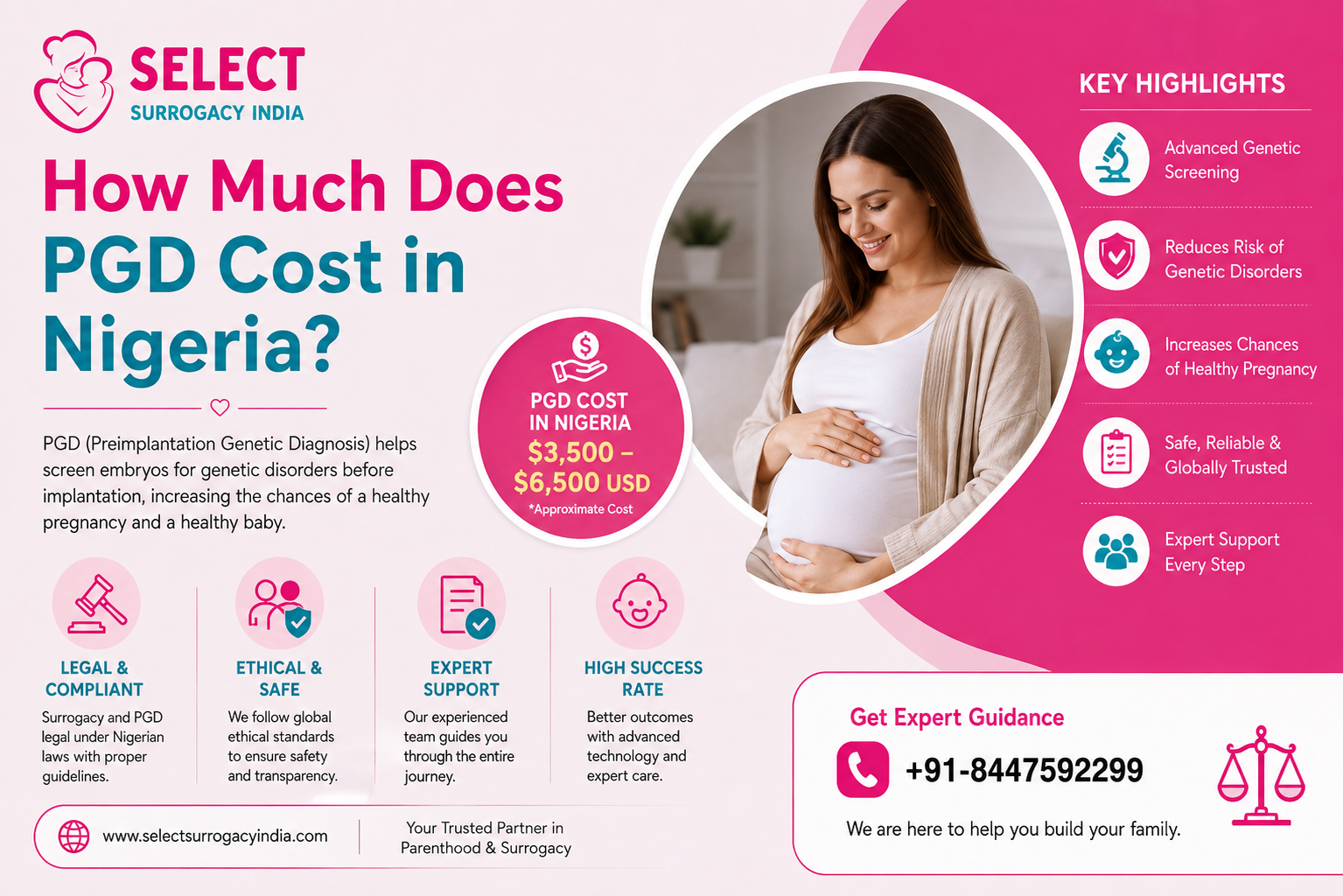
Many intended parents ask, “What exactly is PGD?”, “Do we really need it?”, and, of course, “How much does PGD Cost in Nigeria?”
The answer depends on the type of genetic testing required, the number of embryos being tested, the laboratory used, and whether additional genetic work is needed for a particular inherited condition.
It is also worth noting that medical terminology has changed. What was traditionally called PGD (Preimplantation Genetic Diagnosis) is now commonly discussed under the broader term PGT (Preimplantation Genetic Testing). PGT-M is generally used when testing embryos for a specific inherited single-gene disorder, while PGT-A looks for chromosome-number abnormalities.
For couples considering IVF in Nigeria, understanding these differences is important because the cost and purpose of testing can be very different.
Current Nigerian cost information suggests that PGT can add a substantial amount to an IVF budget. One 2026 Nigeria fertility-cost guide estimates PGT-A/PGT-M at approximately ₦7 million to ₦10.5 million, excluding the underlying IVF treatment. These are planning figures rather than universal clinic prices.
So, before you make a financial decision, it is important to understand exactly what the testing includes.

What Is PGD?
PGD stands for Preimplantation Genetic Diagnosis.
In simple terms, it is a genetic testing approach used during an IVF cycle to examine embryos for certain genetic conditions before an embryo is transferred to the uterus.
Today, the terminology is more commonly grouped under Preimplantation Genetic Testing (PGT).
For example:
- PGT-M – testing for a specific monogenic or single-gene disorder
- PGT-A – testing for chromosome-number abnormalities
- PGT-SR – testing for certain structural chromosome rearrangements
The exact test recommended depends on the medical and genetic situation of the couple.
This is why a fertility specialist or genetic counsellor should determine whether testing is appropriate rather than choosing it simply because it is available.
Why Is PGD Used During IVF?
Imagine that a couple is known to carry a particular inherited genetic condition.
During IVF, several embryos may be created. Without genetic testing, doctors may not know whether an embryo carries the specific condition being investigated.
With an appropriate PGT approach, cells from embryos can be tested in a specialized laboratory before a suitable embryo is considered for transfer.
The goal is to provide additional genetic information that can help doctors and intended parents make informed decisions about embryo selection.
However, PGD/PGT does not guarantee a pregnancy or a healthy baby. It is a testing tool, not a guarantee of outcome.
PGD Cost in Nigeria
The PGD Cost in Nigeria varies considerably depending on the type of test and the laboratory performing it.
For 2026 planning purposes, one Nigerian fertility-cost guide estimates PGT-A/PGT-M at approximately ₦7,000,000–₦10,500,000, with IVF costs excluded.
Other Nigerian sources give lower estimates for some forms of PGT, demonstrating how widely prices can vary between providers and testing arrangements.
Therefore, it would be misleading to tell every patient that PGD has one fixed price in Nigeria.
Does PGD Cost Include IVF?
Usually, you should not assume that it does.
This is one of the most important things to understand when calculating the total treatment budget.
PGT/PGD is performed on embryos created through IVF. Therefore, the complete treatment may involve separate costs for:
- Fertility consultation
- Medical testing
- Ovarian stimulation
- Egg retrieval
- Sperm preparation
- Fertilization
- Embryo culture
- Embryo biopsy
- Genetic laboratory testing
- Embryo freezing
- Future frozen embryo transfer
So if a clinic tells you that genetic testing costs a particular amount, ask whether that figure covers only the genetic laboratory component or also includes embryo biopsy and related laboratory procedures.

What Factors Affect PGD Cost in Nigeria?
1. Type of Genetic Test
The type of PGT required can significantly affect the price.
Testing for a specific inherited disorder may require a different laboratory process from chromosome screening.
For example, PGT-M is designed around a particular single-gene condition, while PGT-A examines chromosome number.
2. Number of Embryos Tested
Another major factor is the number of embryos requiring testing.
If more embryos are biopsied and tested, the laboratory cost may increase depending on the provider’s pricing model.
This is why couples should ask whether their quotation is:
- Per embryo
- Per group of embryos
- Per IVF cycle
- A fixed laboratory package
3. Genetic Condition Being Investigated
If the family has a known inherited disorder, the genetic laboratory may need specific information about the condition before testing can begin.
The complexity of the test can therefore influence the overall price and preparation time.
4. Laboratory Used
PGT requires specialized genetic laboratory facilities.
Some fertility centres may coordinate testing with an external genetics laboratory.
This can affect:
- Testing fees
- Transportation of samples
- Turnaround time
- Communication between clinic and laboratory
How Does PGD Work?
The process usually begins with IVF because embryos need to be created before they can undergo embryo biopsy and genetic testing.
Step 1: Fertility Consultation
The fertility specialist reviews your reproductive history and determines whether genetic testing may be appropriate.
Step 2: Genetic Assessment
If there is a known inherited condition, genetic counselling may be recommended to understand the condition and determine which test is appropriate.
Step 3: IVF
Eggs are collected and fertilized in the laboratory.
Step 4: Embryo Development
The resulting embryos are monitored as they develop.
Step 5: Embryo Biopsy
A small number of cells are carefully removed from an embryo for genetic analysis.
Step 6: Genetic Testing
The sample is sent for the appropriate genetic test.
Step 7: Embryo Freezing
In many PGT programmes, embryos are frozen while genetic testing is completed.
Step 8: Results
The genetic laboratory provides a report indicating the findings relevant to the test performed.
Step 9: Embryo Transfer
Based on the medical plan and available results, an appropriate embryo may later be selected for frozen embryo transfer.
Is PGD Necessary for Every IVF Patient?
No.
This is an important point.
PGD or PGT is not automatically required for everyone undergoing IVF.
A fertility specialist may recommend genetic testing when there is a specific medical reason.
For example, PGT-M may be considered when one or both genetic parents are known to carry a particular inherited condition.
PGT-A is a different test with a different purpose and should not simply be described as the same thing as traditional PGD.
The decision should be individualized.
Benefits of PGD/PGT
Genetic testing can provide useful information in selected IVF cases.
Helps Identify Certain Genetic Findings
When the appropriate test is used, embryos can be assessed for the genetic condition being investigated.
Supports Treatment Planning
Genetic information can help doctors and intended parents make more informed decisions about which embryos may be suitable for transfer.
Useful for Families With Known Genetic Conditions
PGT-M can be particularly relevant when there is a known inherited single-gene disorder in the family.
May Reduce Uncertainty
For some couples, receiving additional information about embryos provides reassurance during an already emotionally difficult fertility journey.
Limitations of PGD
It is equally important to understand what PGD cannot do.
PGT cannot guarantee:
- Pregnancy
- Implantation
- Live birth
- A genetically “perfect” baby
- Absence of every possible medical condition
Genetic testing examines specific characteristics or conditions that the test is designed to detect. It does not replace prenatal care or comprehensive pregnancy screening.
PGD vs PGT-A: What Is the Difference?
Many fertility articles use PGD and PGT interchangeably, but technically they are not exactly the same.
PGD / PGT-M
This is generally associated with testing embryos for a specific genetic disorder caused by a change in a single gene.
PGT-A
This looks at whether embryos have the expected number of chromosomes.
So, if a couple has a known inherited condition, the doctor may discuss PGT-M.
If the concern is chromosome number, PGT-A may be discussed.
The correct test depends on the medical situation.
Is PGD Worth the Cost?
This is probably the most personal question in the entire article.
The answer depends on why your doctor is recommending it.
If a couple has a known risk of passing on a serious inherited disorder, genetic testing may provide valuable information that can influence reproductive decision-making.
However, if someone is simply considering PGT because they believe it guarantees IVF success, they should have a detailed conversation with their fertility specialist first.
The test has a cost, and it is not appropriate for every patient.
A good doctor should explain both the potential benefits and limitations before recommending it.
How to Reduce Unexpected PGD Expenses
Before beginning treatment, ask the fertility centre for a written estimate.
Specifically ask:
- Is IVF included?
- Are medications included?
- Is embryo biopsy included?
- Is genetic laboratory testing included?
- Is embryo freezing included?
- How many embryos are included?
- Is storage included?
- Is frozen embryo transfer included?
- Are genetic counselling fees separate?
These questions can make the financial picture much clearer.

Final Thoughts on PGD Cost in Nigeria
The PGD Cost in Nigeria can be substantial, especially when genetic testing is added to the cost of an IVF cycle. Current Nigerian planning data suggests that PGT may cost around ₦7 million to ₦10.5 million, although actual prices vary by clinic, test type, laboratory arrangement, and number of embryos tested.
The most important thing is not to choose a genetic testing programme simply because it sounds advanced.
First understand why the test is being recommended.
Ask your fertility specialist:
What are we testing for?
Will the result change our treatment decision?
What exactly is included in the price?
Are there any additional laboratory or embryo-freezing charges?
Once you have clear answers, you can make a decision that is medically informed as well as financially realistic.
For couples already going through IVF, genetic testing can feel like one more complicated decision. But with proper counselling and a clear explanation from the fertility team, the process becomes much easier to understand.
The goal of fertility medicine is not simply to perform more procedures. It is to choose the right procedure for the right patient at the right time.
FAQs About PGD Cost in Nigeria
The cost can vary widely depending on the type of genetic testing, number of embryos tested, laboratory used, and clinic. Current planning estimates place PGT/PGD at around ₦7 million to ₦10.5 million in some Nigerian fertility-cost guides. This may be separate from the IVF treatment itself.
Usually, PGD/PGT is charged separately from the basic IVF package. Always ask the clinic whether embryo biopsy, genetic laboratory testing, embryo freezing, and transfer are included in the quoted price.
PGD is the older term commonly used for testing embryos for a specific inherited genetic condition. Today, these tests are generally discussed under Preimplantation Genetic Testing (PGT). PGT-M is used for specific single-gene disorders, while PGT-A evaluates chromosome number.
PGT may be recommended for couples who have a known risk of passing a specific inherited genetic disorder to their child. Whether testing is appropriate depends on the couple’s medical and genetic history.
No. PGD/PGT is not required for every IVF patient. A fertility specialist should determine whether there is a medical reason for genetic testing.
The number depends on how many suitable embryos are created during IVF and the testing programme offered by the laboratory. Some laboratories charge according to the number of embryos tested, while others may offer package pricing.
No. PGD/PGT can provide information about specific genetic or chromosomal findings, but it cannot guarantee a healthy baby, successful implantation, pregnancy, or live birth.
PGT may be useful in selected patients, but it should not be presented as a guaranteed way to increase IVF success. The potential benefit depends on the patient’s age, reproductive history, embryo characteristics, and reason for testing.
The timeline depends on the type of genetic test and laboratory involved. Embryos are often frozen while testing is completed, after which the fertility team discusses the results and plans the next step.
In many PGT programmes, embryos are frozen while genetic testing is being completed. Your fertility centre can explain the specific laboratory protocol used for your treatment.
Read Also:-
- Best IVF Centre in Bangkok: Advanced Fertility Treatment
- What is the IVF cost in Bangkok?
- Best Surrogacy Centre in Thailand: Trusted Fertility Experts
- Surrogacy Cost in Thailand: The Honest, Heart-First Guide You Actually Need
- What is the PGD cost in Thailand?
- Best IVF Cost in Thailand: A Warm, Complete Guide for Hopeful Parents

Medically Reviewed By: Select Surrogacy India Medical Team (Fertility Experts & IVF Specialists)
Our content is reviewed by experienced fertility specialists and IVF professionals associated with Select Surrogacy India, ensuring accurate, up-to-date, and reliable information for intended parents.
✔ IVF Treatment Guidance✔ Surrogacy Consultation✔ Egg Donation Support
👉 Content reviewed for accuracy and latest IVF & surrogacy laws in India