
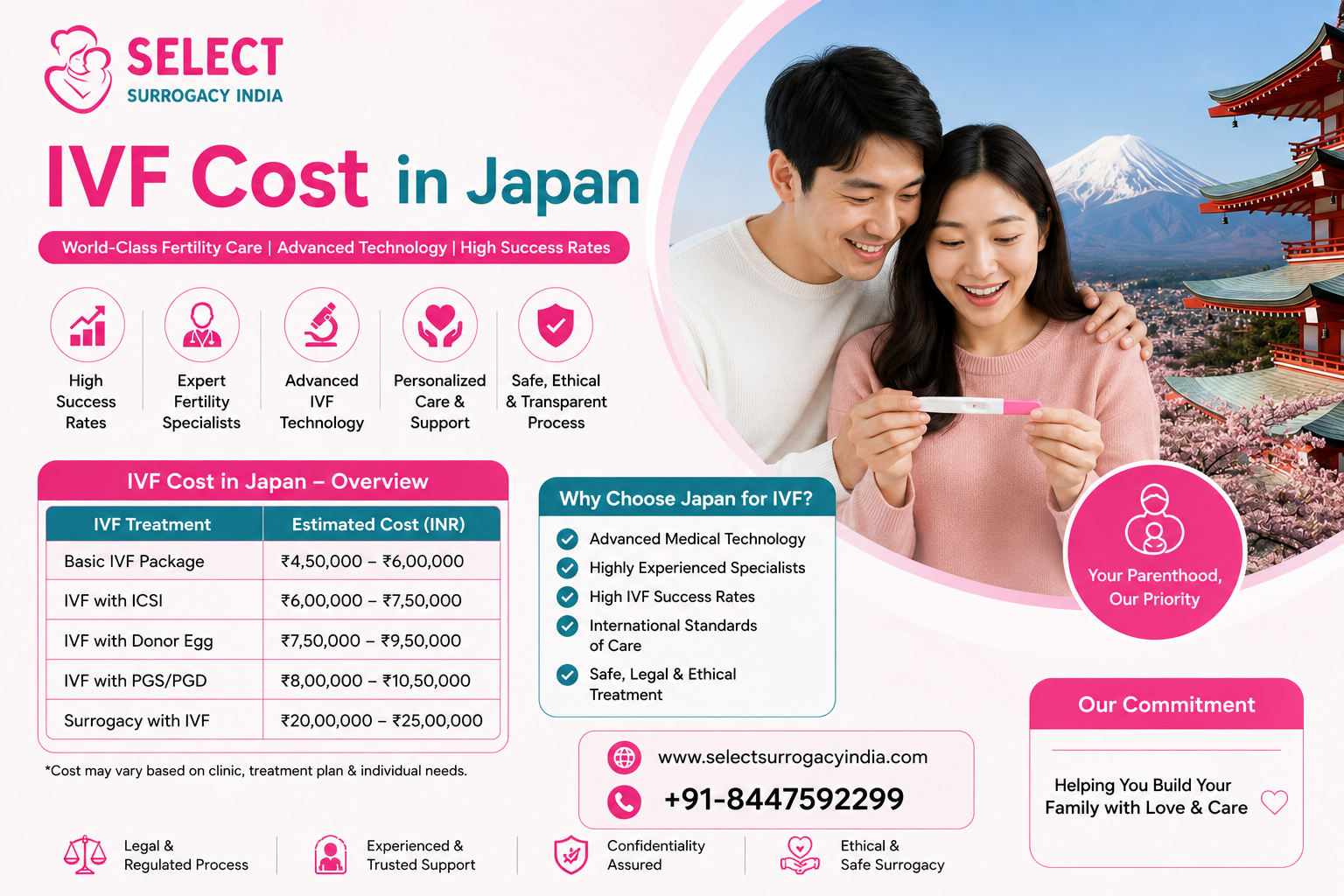
There comes a point in every fertility journey where the questions stop being purely medical and start becoming financial. How much will this actually cost? What does insurance cover? Are there hidden expenses nobody warned us about? And most importantly — can we actually afford this? If you are exploring IVF in Japan — whether as a Japanese resident, an expat living in Tokyo, or an international couple considering Japan as a fertility destination — this guide is written for you. Not as a brochure. Not as a sales pitch. But as an honest, detailed, and genuinely useful breakdown of what IVF in Japan costs in 2026, why it costs what it does, and how to plan your journey without financial surprises. Japan occupies a unique position in the world of fertility treatment. It is one of the most experienced IVF nations on earth — with the first Japanese IVF baby born at Tōhoku University back in 1983, and over 850,000 IVF babies born since. It also performs more IVF cycles per capita than almost any other country in the world. And since April 2022, Japan became one of the few large economies to bring IVF under national health insurance — a landmark shift that changed the financial landscape for couples across the country. Yet despite all of this, the cost of IVF in Japan remains a subject of significant confusion. Insurance covers some things but not others. Local government subsidies exist in some cities but not all. Advanced procedures sit entirely outside the insurance system. And for foreigners, the picture is even less clear. This guide cuts through all of that. Understanding IVF in Japan — The Basics First Before we get into costs, it helps to understand what IVF in Japan actually involves and why the country has become such a significant player in fertility medicine. Gestational IVF — the most common form — involves stimulating the ovaries to produce multiple eggs, retrieving those eggs, fertilising them in a laboratory with sperm, culturing the resulting embryos, and transferring the best-quality embryo back into the uterus. In Japan, frozen embryo transfer (FET) cycles are far more common than fresh transfers — Japanese clinics have long preferred to freeze embryos and transfer them in a separate, more controlled cycle. This approach has contributed to Japan’s reputation for technical precision in embryology. IVF in Japan is appropriate for: Japan’s IVF success rates vary significantly by age — as they do worldwide — but clinics in major cities like Tokyo, Osaka, and Nagoya consistently report competitive success rates, particularly for women under 38. IVF Cost in Japan — The Master Summary (2026) Let’s start with the numbers. Here is a clear overview of what IVF costs in Japan across different scenarios in 2026: Treatment Type Cost in JPY Cost in USD (approx.) Basic IVF Cycle (insurance-covered, patient pays 30%) ¥150,000 – ¥200,000 $1,000 – $1,400 Full IVF Cycle (self-pay, no insurance) ¥400,000 – ¥600,000 $2,700 – $4,100 IVF with ICSI (self-pay) ¥500,000 – ¥750,000 $3,400 – $5,100 Frozen Embryo Transfer (FET) — insurance covered ¥50,000 – ¥80,000 $340 – $540 Frozen Embryo Transfer (FET) — self-pay ¥100,000 – ¥200,000 $680 – $1,350 IVF with Donor Eggs (not covered by insurance) ¥800,000 – ¥1,500,000 $5,400 – $10,100 PGT-A Genetic Testing (advanced, self-pay) ¥300,000 – ¥600,000 $2,000 – $4,050 Cumulative cost (multiple cycles, self-pay) ¥1,500,000 – ¥3,000,000 $10,100 – $20,200 These numbers tell a story that surprises many people — IVF in Japan, particularly under the national insurance system, is among the most affordable in any developed country. The catch, as we will explore below, is what insurance covers and what it does not. The 2022 Insurance Revolution — What Changed and Why It Matters April 1, 2022 is a date that fertility specialists across Japan remember clearly. On that day, the Japanese government brought IVF and other assisted reproductive technologies (ART) under the national health insurance (shakai hoken / kokumin kenko hoken) system for the first time. Before 2022, IVF was almost entirely self-funded. A single cycle cost ¥400,000 to ¥500,000 out of pocket — more than the average Japanese household’s monthly income. The government had provided some subsidies previously, but access was patchy, eligibility was limited, and the financial burden remained substantial. The 2022 reform changed this fundamentally. Under the new system, patients pay only 30% of the cost of standard IVF treatment, with the national insurance covering the remaining 70%. For a ¥500,000 cycle, this means the patient’s out-of-pocket cost drops to roughly ¥150,000 — a dramatic reduction. However, the insurance coverage comes with conditions that every couple must understand: Who is eligible: What is covered: What is NOT covered: This distinction matters enormously in practice. Many couples find that their specific treatment needs — particularly if they have had repeated implantation failure, recurrent miscarriage, or are older — require precisely the add-ons that fall outside the insurance system. The result is a treatment journey that mixes insured and non-insured components, producing a total cost that can be significantly higher than the basic insurance figures suggest. Component-by-Component Cost Breakdown Understanding the total IVF cost in Japan requires looking at each stage of treatment individually. Here is how the costs break down in practice. 1. Initial Consultations and Diagnostic Testing Before IVF begins, both partners require a series of diagnostic tests to establish their baseline fertility profile and identify the cause of infertility. Diagnostic Component Estimated Cost (JPY) Initial fertility consultation ¥3,000 – ¥8,000 AMH (ovarian reserve) blood test ¥5,000 – ¥15,000 Antral follicle count (ultrasound) ¥3,000 – ¥8,000 Hormone panel (FSH, LH, E2, prolactin) ¥8,000 – ¥20,000 Semen analysis ¥5,000 – ¥15,000 Hysteroscopy or HSG (uterine assessment) ¥15,000 – ¥40,000 Infectious disease screening (both partners) ¥10,000 – ¥25,000 Total diagnostics (estimated) ¥50,000 – ¥130,000 Many of these basic diagnostic tests are covered under the national insurance system, particularly those that fall under standard infertility workup. The costs above reflect the 30% patient co-payment after insurance. 2. Ovarian Stimulation and Medications