What is IVF and Why Laws Are Important
IVF laws in India are governed by regulations that ensure ethical fertility treatments, patient safety, and legal compliance. This guide explains the legal framework, eligibility criteria, rules for clinics, and important guidelines for intended parents undergoing IVF in India.
In Vitro Fertilization, or IVF, is one of the most amazing miracles of modern medicine. It allows eggs and sperm to meet outside the body, creating embryos that can give couples the chance to become parents. Millions of people have benefited from IVF, but because it involves both medical science and sensitive personal lives, India has put strong legal frameworks in place to protect everyone involved.
Understanding these IVF laws in India is essential for intended parents, donors, and fertility clinics. It ensures that the journey of creating a family is safe, ethical, and legally sound. Let’s take a detailed look at everything you need to know.
What Are IVF Laws in India?

IVF laws are designed to regulate assisted reproductive technologies (ART) and ensure that fertility treatments are carried out ethically, safely, and legally. The main legal and regulatory pillars include:
a) Assisted Reproductive Technology (Regulation) Bill, 2021
- This is the primary law that governs IVF clinics in India.
- It lays down rules for clinic registration, operations, monitoring, and inspections.
- Ensures that IVF treatments follow strict medical and ethical standards.
b) Indian Council of Medical Research (ICMR) Guidelines
- Think of this as the official rulebook for IVF clinics.
- Covers patient care, laboratory procedures, donor selection, embryo handling, and documentation.
- Guides doctors and clinics on best practices, consent protocols, and safety measures.
Together, these laws and guidelines provide a clear framework for everyone involved in IVF treatments in India.
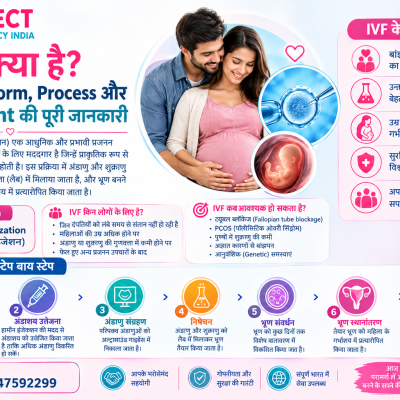
IVF Process Step-by-Step

The IVF (In Vitro Fertilization) process is a carefully planned medical procedure that helps couples overcome infertility and achieve pregnancy. It involves several stages, each designed to support successful fertilization and embryo development. Although the process may seem complex at first, fertility specialists guide couples through every step to ensure comfort and clarity. Below is a simple step-by-step explanation of how the IVF process works.
1. Initial Consultation and Fertility Testing
The IVF journey begins with a detailed consultation with a fertility specialist. During this stage, the doctor reviews the couple’s medical history and recommends fertility tests to identify possible causes of infertility. Common tests include hormone testing, ultrasound scans, semen analysis, and blood tests. These evaluations help the doctor design a personalized treatment plan for the couple.
2. Ovarian Stimulation
After the initial evaluation, the female partner is given fertility medications to stimulate the ovaries. Normally, a woman produces one egg per cycle, but during IVF treatment, medications help the ovaries produce multiple eggs. This increases the chances of successful fertilization. The stimulation phase usually lasts 8–14 days, during which doctors monitor the ovaries using ultrasound scans and hormone tests.
3. Egg Retrieval (Ovum Pick-Up)
Once the eggs mature, they are collected through a minor medical procedure called egg retrieval. This procedure is usually performed under mild sedation to ensure comfort. A thin needle guided by ultrasound is used to collect the eggs from the ovaries. The procedure typically takes 15–30 minutes, and the collected eggs are immediately sent to the laboratory for fertilization.
4. Sperm Collection and Fertilization
At the same time, a sperm sample is collected from the male partner. The healthiest sperm are selected in the laboratory and combined with the eggs for fertilization. In some cases, a technique called ICSI (Intracytoplasmic Sperm Injection) is used, where a single sperm is injected directly into the egg to improve fertilization chances.
5. Embryo Development
After fertilization, the eggs begin to develop into embryos in a specialized laboratory environment. Embryologists carefully monitor the embryos for several days to ensure healthy growth. Usually, embryos are cultured for 3 to 5 days before being prepared for transfer into the uterus.
6. Embryo Transfer
During this step, the healthiest embryo is selected and transferred into the woman’s uterus using a thin catheter. The procedure is simple, painless, and usually does not require anesthesia. This stage is one of the most exciting parts of the IVF process because it brings the couple closer to the possibility of pregnancy.
7. Pregnancy Test
About 10–14 days after the embryo transfer, a blood test is performed to determine whether the IVF cycle was successful. If the test result is positive, the pregnancy will continue to be monitored with regular checkups and ultrasound scans.
IVF Laws Summary Table
| Law | Year | Purpose |
|---|---|---|
| ART Act | 2021 | Regulates IVF clinics |
| Surrogacy Act | 2021 | Governs surrogacy |
Why Do We Need IVF Laws?
IVF is a life-changing procedure, but it comes with medical, emotional, and ethical complexities. Without clear laws, there’s a risk of:
- Exploitation of egg/sperm donors or surrogates
- Unethical or unsafe medical practices
- Confusion about parental rights or embryo ownership
- Hidden costs or lack of transparency
IVF laws ensure:
- Safety First – Patients, donors, and surrogates receive proper medical care.
- Ethical Practice – No one is exploited, and medical protocols are followed.
- Legal Clarity – Parental rights, donor consent, and surrogate agreements are clearly defined.
- Transparency – Clinics follow clear documentation, cost breakdowns, and consent procedures.
In short, these laws make IVF a safe, fair, and stress-free journey for intended parents and donors alike.
Who Enforces IVF Laws in India?

IVF laws are enforced by a combination of medical and legal authorities to ensure compliance:
- ICMR (Indian Council of Medical Research): Monitors ART clinics and ensures that medical and ethical guidelines are followed.
- State & Central Health Authorities: Responsible for licensing clinics, inspecting facilities, and taking action against violations.
- Legal System: Resolves disputes regarding parental rights, donor consent, surrogacy issues, or any misuse of IVF procedures.
This multi-layered system ensures that clinics cannot operate without accountability and that patients’ rights are protected at all times.
Eligibility for IVF in India
Not everyone can access IVF freely in India. Laws and guidelines define who can undergo IVF, who can donate eggs or sperm, and who can act as a surrogate.
For Intended Parents:
- Couples facing infertility due to blocked fallopian tubes, ovulation disorders, male infertility, endometriosis, or repeated IVF failures.
- Individuals or couples with genetic conditions that may risk passing disorders to their child.
- Must be legally married, as single individuals and same-sex couples currently cannot access IVF legally in India.
For Donors:
- Egg and sperm donors must be healthy, free from genetic or infectious diseases, and between specific age limits (usually 21–35 for eggs).
- Full medical and psychological screening is mandatory.
For Surrogates:
- Only close relatives of the intended parents (sister, cousin, or daughter-in-law) can act as surrogates in altruistic surrogacy.
- Age 25–35, with at least one healthy child.
- Must be willing to carry the pregnancy without financial gain, only covering medical expenses.
Average IVF Cost in India

The cost of IVF treatment in India varies significantly depending on multiple factors. On average, a single IVF cycle can cost between INR 90,000 and INR 2,50,000.
However, this is only the base cost. The total expense may increase when additional procedures, medications, and repeated cycles are required.
In many cases, the overall cost per cycle ranges from INR 1,50,000 to INR 4,00,000 when all components are included.
It is important to note that IVF success is not guaranteed in a single cycle. Many patients may require multiple cycles, which further increases the total expenditure.
The following helps you understand the cost of IVF in India:
| Types of IVF treatment in India | The cost of IVF treatment in India (INR) |
| IVF with self-egg and sperm cost in India | INR 1,50,000 |
| IVF with ICSI cost in India | INR 1,65,000-1,85,000 |
| IVF with donor egg cost in India | INR 2,06,000-3,00,000 |
| IVF with donor sperm cost in India | INR 2,10,000 |
| IVF with Laser Assisted Hatching (LAH) cost in India | INR 2,10,000-2,20,000 |
| IVF with donor embryo cost in India | INR 2,05,000-3,00,000 |
| IVF with PGD technique cost in India | INR 3,00,000 |
The following will help you to understand the IVF treatment cost in different states of India:
| States of India | Cost of IVF in different states of India (INR) |
| IVF cost in India | INR 1,50,000 to INR 1,80,000 |
| IVF cost in Raipur | INR 1,40,000 to INR 2,00,000 |
| IVF cost in Delhi | INR 1,40,000 to INR 2,30,000 |
| IVF cost in Mumbai | INR 1,50,000 to INR 2,40,000 |
| IVF cost in Punjab | INR 1,00,008 to INR 2,00,000 |
| IVF cost in Haryana | INR 1,40,000 to INR 2,00,000 |
| IVF cost in Rajasthan | INR 1,50,000 to INR 2,00,000 |
| IVF cost in Uttar Pradesh | INR 1,40,000 to INR 2,10,000 |
| IVF cost in Madhya Pradesh | INR 1,40,000 to INR 2,20,000 |
| IVF cost in Dehradun | INR 1,40,000 to INR 2,00,000 |
| IVF cost in Bihar | INR 1,30,000 to INR 2,00,000 |
| IVF cost in Jharkhand | INR 1,40,000 to INR 2,00,000 |
| IVF cost in Assam | INR 1,20,000 to INR 1,80,000 |
| IVF cost in Gujrat | INR 1,40,000 to INR 2,80,000 |
| IVF cost in Tamil Nadu | INR 1,40,000 to INR 2,30,000 |
| IVF cost in Andhra Pradesh | INR 1,40,000 to INR 2,00,000 |
| IVF cost in Himachal Pradesh | INR 1,40,000 to INR 2,20,000 |
Ethical and Legal Considerations in IVF in India
IVF is a life-changing procedure, but it involves sensitive medical, emotional, and legal aspects. To protect everyone involved—patients, donors, and clinics—India has established a clear ethical and legal framework.
1. Consent is Key
Before any IVF procedure begins, written informed consent is mandatory. This ensures that:
- Patients fully understand the medical procedures, risks, and alternatives.
- Donors (egg or sperm) are aware of their responsibilities, the procedures involved, and legal implications.
- Surrogates know exactly what is expected medically and legally, protecting both them and the intended parents.
Consent is not just a formality—it’s a commitment to clarity, understanding, and ethical practice.
2. Confidentiality Matters
IVF involves sensitive personal and medical information. Ethical practice requires that:
- Donor identities are kept confidential.
- Patient medical histories and fertility details are never shared without permission.
- Clinics maintain secure records to prevent misuse or unauthorized access.
This ensures privacy and trust, which are crucial for such a deeply personal journey.
3. Non-Commercialisation
India only allows altruistic surrogacy under the law. IVF clinics cannot:
- Sell eggs, sperm, or embryos for profit.
- Charge extra for surrogacy beyond medical and pregnancy-related costs.
This rule ensures that fertility treatments are ethical and fair, reducing exploitation risks for donors or surrogates.
4. Medical Safety First
The Indian Council of Medical Research (ICMR) sets strict laboratory and treatment standards. Clinics must follow these guidelines to:
- Ensure embryos are handled safely.
- Use state-of-the-art lab equipment and sterilization procedures.
- Reduce risks of contamination, miscarriage, or medical complications.
Following these rules gives intended parents peace of mind and maximizes the chance of a healthy pregnancy.
5. Dispute Resolution
Despite careful planning, conflicts can arise. India’s legal framework handles disputes about:
- Parental rights over the child.
- Donor claims or misunderstandings.
- Compliance issues with clinics.
Legal clarity ensures that all parties—patients, surrogates, and donors—are protected and treated fairly.
IVF Clinic Regulations in India

To operate legally, IVF clinics must follow strict registration, reporting, and operational rules:
1. ICMR Registration
- Clinics must be officially registered with the Indian Council of Medical Research (ICMR).
- Registration ensures clinics meet professional and ethical standards before offering IVF services.
2. Professional Standards
- Clinics must maintain proper laboratory conditions, modern equipment, and qualified staff.
- Staff includes trained reproductive endocrinologists, embryologists, and counselors.
- Regular audits ensure the clinic adheres to the highest medical and ethical standards.
3. Non-Discrimination
IVF clinics cannot discriminate based on caste, religion, gender, or social status.Every patient and donor is treated equally, ensuring fair and inclusive access to reproductive care.
4. Reporting and Monitoring
- Clinics are required to report all ART procedures to authorities for monitoring.
- This transparency helps the government track IVF success rates, ensure safety, and maintain accountability.
5. Patient-Centered Services
Top IVF clinics go beyond legal requirements by offering:
- Counseling for emotional support during IVF.
- Legal support for documentation and parental rights.
- Clear communication about costs, treatment steps, and success rates.
This combination of legal compliance, ethical practice, and patient-friendly care makes IVF a safe and empowering option for intended parents in India.
IVF Success Rate in India

The following table helps you to understand the success rate of IVF in India:
| IVF treatment in India | Success rates of IVF in India |
| IVF with self-eggs | 60 to 90% |
| IVF with self-sperm | 65 to 86% |
| IVF with donor eggs | 70 to 85% |
| IVF with donor sperm | 73 to 87% |
| IVF with FET | 60 to 65% |
| IVF with ICSI | 50 to 85% |
The following table lets you understand the success rates based on age:
| The success rate of IVF based on age | The success rate of IVF in India |
| women with age between 20 to 25 years | Up to 98% |
| women with age between 25 to 35 years | Up to 95% |
| women with age between 35 to 40 years | Up to 73% |
| women with age between 40 to 45 years | 40 to 70% |
| women with age between 45 to 50 years | 35 to 60% |
Advantages of Legal Compliance in IVF in India
Legal compliance in IVF isn’t just paperwork—it’s a shield of protection for everyone involved in the fertility journey. When clinics, donors, and intended parents follow the law, it creates a safe and fair environment. Here’s why:
1. Patient Safety
The most important advantage of legal compliance is health protection. Clinics must follow strict medical protocols, lab standards, and embryo-handling procedures. This ensures:
- Women undergoing IVF are monitored carefully.
- Donors are protected from unnecessary medical risks.
- Children born through IVF are delivered safely with proper medical supervision.
It’s like a safety net that catches everyone in the IVF process.
2. Legal Clarity
IVF involves embryos, genetic material, and parental rights—all of which can lead to legal disputes if unregulated. Compliance ensures:
- Clear contracts between intended parents, donors, and surrogates.
- Proper documentation of parental rights.
- No confusion over embryo storage, use, or future claims.
This reduces stress for parents and keeps the focus on building a family rather than fighting legal battles.
3. Ethical Practices
IVF laws prevent exploitation of donors and surrogates. Clinics cannot charge extra for gametes or surrogacy, and all parties must give informed consent. This ensures:
- Donors participate voluntarily.
- Surrogates are treated fairly, medically and emotionally.
- Clinics act with honesty and integrity.
Ethics and love for life go hand-in-hand in IVF.
4. Transparency
Legal compliance enforces record-keeping and reporting of ART procedures. This creates:
- Open communication about treatment success rates.
- Accountability if errors occur.
- Trust between patients and fertility clinics.
Transparency helps parents make informed decisions without surprises.
5. International Standards
India’s IVF laws align with global ART guidelines. This ensures that:
- Clinics maintain lab quality, embryology practices, and safety standards recognized worldwide.
- Intended parents, including foreigners where allowed, can trust Indian IVF procedures.
Complying with international standards makes India a safe and respected destination for fertility care.
Why Select Surrogacy India is a Trusted Choice?
1. Ethical & Legal Compliance
We strictly follow all guidelines and regulations related to IVF treatment in India. Adhering to legal and ethical standards is a top priority, ensuring that every step of the process is safe, transparent, and compliant with medical norms.
- Proper documentation at every stage
- Clear consent and legal transparency
- Patient rights and confidentiality maintained
- No unethical practices or hidden procedures
We continuously stay updated with the latest IVF regulations to ensure that all treatments are conducted in a legally secure and ethically responsible manner.
2. High Success Rates
We collaborate with some of the most advanced IVF centres and experienced embryologists in Lucknow. Our approach is focused on personalized treatment, which significantly improves success rates.With a success rate of over 70% in many cases, we carefully evaluate each patient’s medical condition, age, and fertility factors before designing a treatment plan. The use of advanced technology, high-quality lab facilities, and expert supervision contributes to better outcomes.
3. End-to-End Support and Care
From your first consultation to a successful pregnancy, we provide complete support throughout your IVF journey. Our team ensures that every aspect of the treatment is handled smoothly and professionally.
- Medical consultation and treatment planning
- Coordination with IVF specialists
- Diagnostic tests and procedures
- Continuous monitoring during cycles
- Support until pregnancy confirmation and beyond
We aim to make the entire process stress-free and well-managed for intended parents.
4. Transparency & Trust
We believe in complete honesty and clarity when it comes to IVF treatment. There are no hidden charges, and all costs are explained in detail before starting the procedure.Patients are kept informed at every stage, ensuring they understand the progress, procedures, and expected outcomes. Our transparent approach helps build trust and long-term confidence.
5. Personalised Care
Every individual or couple has a unique fertility journey. We create customized IVF treatment plans based on medical history, emotional needs, and financial considerations.
Our personalized approach includes:
- Tailored treatment strategies
- Emotional and psychological support
- Flexible financial planning options
- Focus on patient comfort and well-being
Conclusion
Understanding IVF laws in India and IVF rules in India is essential for couples, donors, and clinics to ensure ethical, legal, and medically safe assisted reproductive procedures. India’s legal framework, guided by the Assisted Reproductive Technology (ART) Regulation Act and ICMR guidelines, ensures patient safety, ethical compliance, and transparency in all IVF processes.
These laws protect the rights of intended parents, gamete donors, and surrogates while regulating IVF clinics to maintain international medical standards. Following these regulations reduces legal risks, prevents exploitation, and provides clarity in parental rights, embryo handling, and donor anonymity.
For couples struggling with infertility, understanding these rules empowers them to make informed decisions, select reputable IVF clinics, and access reliable fertility treatments within a safe, legal framework. By adhering to India’s IVF laws, intended parents can pursue parenthood confidently, knowing that both medical and legal safeguards are in place.
Frequently Asked Questions (FAQ)
IVF laws in India regulate assisted reproductive technologies to ensure ethical practices, patient safety, and clinic accountability. They define eligibility, donor rules, laboratory standards, and parental rights under the ART Regulation Act and ICMR guidelines.
Married Indian couples facing infertility, women with medical complications, and couples at risk of passing genetic disorders are eligible. Single men, foreigners, and same-sex couples have restricted access under Indian IVF laws.
IVF clinics must register with the ICMR, follow laboratory safety and operational standards, maintain records of procedures, ensure ethical practices, and report outcomes. Violations may result in fines, license suspension, or legal action.
Yes, egg and sperm donors can participate with informed consent. Donors receive reimbursement for medical expenses, but commercial payments are prohibited. Donor anonymity is maintained, and they have no parental rights.
Foreign nationals can access IVF for personal fertility treatment but cannot legally participate in surrogacy procedures due to Indian law restrictions, which limit commercial surrogacy to Indian citizens.
IVF costs range from ₹1,50,000 to ₹5,50,000 depending on procedure complexity, donor involvement, medications, and legal documentation.
Read Also:
- Best Surrogacy Centre in Rajasthan (2026 Guide)
- Surrogacy Cost in Mumbai (2026) – Complete Price Breakdown & Legal Guide
- Surrogacy Cost in India (2026) – City-Wise Price, Legal Process & FAQs
- Best Surrogacy Centre in Lucknow (2026 Trusted & Legal Guide)
- Surrogacy Cost in Lucknow (2026 Complete Guide)

Medically Reviewed By: Select Surrogacy India Medical Team (Fertility Experts & IVF Specialists)
Our content is reviewed by experienced fertility specialists and IVF professionals associated with Select Surrogacy India, ensuring accurate, up-to-date, and reliable information for intended parents.
✔ IVF Treatment Guidance✔ Surrogacy Consultation✔ Egg Donation Support
👉 Content reviewed for accuracy and latest IVF & surrogacy laws in India