
There is something quietly powerful about Kazakhstan as a surrogacy destination — and most people who have not researched it closely are surprised when they discover what the country actually offers. It has a clearly defined legal framework for surrogacy that has been in place since 2011. It has experienced fertility clinics in Almaty and Astana operating under Ministry of Health regulation. It names intended parents directly on the birth certificate from birth — no court order required, no secondary adoption procedure. And the surrogacy cost in Kazakhstan sits at a fraction of what the same journey would cost in the United States, Canada, or Western Europe. That combination — legal clarity, clinical quality, and genuine affordability — is why surrogacy in Kazakhstan has attracted growing interest from international intended parents, particularly from Europe, the Middle East, and Asia. This guide gives you the complete financial picture: what the cost of surrogacy in Kazakhstan actually includes, why the numbers vary, what factors push costs higher or lower in your specific case, and how to approach the journey with the financial preparation it deserves. More than a cost guide, this is a complete resource. By the time you finish reading, you will understand the legal framework, the eligibility criteria, the step-by-step process, the realistic total budget, and — critically — the questions you need to ask before committing to any clinic or agency. Why Surrogacy in Kazakhstan Is Worth Understanding Kazakhstan does not always appear on the first shortlist that international couples put together when they begin researching international surrogacy. Georgia, Ukraine (before 2022), and India get most of the early attention. But Kazakhstan deserves to be taken seriously — not as a backup option, but as a genuinely well-structured destination in its own right. Legal foundation. Surrogacy in Kazakhstan is regulated under Chapter 9 (Articles 54–59) of the Code of the Republic of Kazakhstan “On Marriage (Matrimony) and Family,” enacted December 26, 2011. This legislation provides a clear, nationally consistent legal basis for surrogacy arrangements — not a grey area, not a tolerated practice, but a formally regulated process with defined rights and responsibilities for all parties. The surrogacy laws in Kazakhstan are among the most transparent in Central Asia. Parental rights from birth. One of the most significant practical advantages of surrogacy in Kazakhstan is that intended parents are recorded directly on the child’s birth certificate at the time of delivery. No additional post-birth court process is required to establish legal parenthood. For international parents navigating the emotional and logistical complexity of international surrogacy, this administrative efficiency is genuinely valuable. Affordable cost structure. The surrogacy cost in Kazakhstan is significantly lower than in Western countries — typically ranging from $35,000 to $70,000 USD total, depending on the package, clinic, and case complexity, compared to $120,000–$200,000+ in the United States. Ministry of Health regulated clinics. Fertility clinics in Almaty and Astana operate under Kazakhstan’s Ministry of Health oversight for assisted reproductive technologies, providing a regulatory framework that offers baseline quality and accountability. Established surrogate network. Kazakhstan has a developed pool of screened and vetted surrogate mothers, largely concentrated in Almaty — the country’s largest city and main medical hub — and the capital, Astana. Is Surrogacy Legal in Kazakhstan? Yes. Surrogacy is legal in Kazakhstan — and this legal permission is specific and well-defined, not ambiguous. Under Article 54 of the Marriage and Family Code, a surrogacy contract must be made in writing, notarized, and must comply with the civil legislation of Kazakhstan. This formal contract establishes the rights and obligations of all parties before any medical procedure begins. No embryo transfer may proceed without an executed surrogacy agreement. Gestational surrogacy in Kazakhstan — in which the surrogate carries an embryo created from the intended parents’ own gametes (or donor gametes if required) — is the only legally recognized form. The surrogate has no genetic connection to the child. Commercial surrogacy in Kazakhstan — in which the surrogate receives financial compensation beyond medical and pregnancy-related expenses — is permitted. This is a meaningful distinction from India (which banned commercial surrogacy in 2021) and makes Kazakhstan one of the relatively few countries in the region where surrogate compensation is legally above board. Altruistic surrogacy in Kazakhstan — in which the surrogate is a volunteer who receives no financial payment — is also permitted, though less commonly practiced given the commercial framework. The legal process in Kazakhstan does not require a court judgment to establish parenthood. The intended parents’ names are placed on the birth certificate directly — including a Hague Apostille if required for international recognition — which simplifies the post-birth documentation process considerably compared to countries where parentage must be established through a court ruling. Who Is Eligible for Surrogacy in Kazakhstan? Eligibility for surrogacy in Kazakhstan is specifically defined by law. This is important to understand before beginning any process, because not everyone qualifies. For Intended Parents: The surrogacy laws in Kazakhstan currently recognize heterosexual married couples as the only eligible intended parents. Single individuals, same-sex couples, and unmarried partners are not eligible under the current legal framework. At least one of the intended parents must be a genetic parent of the child — meaning either the intended mother’s eggs, the intended father’s sperm, or both, must be used in the IVF procedure. If the intended mother cannot produce viable eggs, donor eggs may be used, but the intended father must still provide sperm. The intended mother must provide documented medical proof that she is unable to carry a pregnancy herself — whether due to uterine abnormalities, recurrent pregnancy loss, a history of failed IVF transfers, or other certified medical conditions. For the Surrogate Mother: Under Article 56 of the Marriage and Family Code, a woman who wishes to become a surrogate mother in Kazakhstan must: If the surrogate is married, her husband’s written consent is also required before the arrangement can proceed. Surrogacy Cost in Kazakhstan: The Complete Financial Breakdown This is the section most people come
Best IVF Centre In Ethiopia – Top 10 Clinics for Fertility Treatment in 2026
If you are looking for the best IVF centre in Ethiopia, you are not alone. Thousands of couples every year struggle with infertility and want a trusted, affordable, and professional fertility clinic. Ethiopia has some good fertility options, but many people also travel abroad to countries like India for better results, lower costs, and world-class technology. In this guide, we will talk about the top 10 IVF centres in Ethiopia and nearby options. We will start with Select IVF India — which is ranked as the No. 1 choice for people from Ethiopia who want high success rates, expert doctors, and affordable IVF treatment. Let’s understand everything step by step. What is IVF and Why Do People Choose It? IVF stands for In Vitro Fertilization. It is a medical process where a woman’s egg is taken out of her body and fertilized with a man’s sperm in a lab. After fertilization, the embryo is placed back into the woman’s uterus so it can grow into a baby. IVF is chosen by couples who: IVF gives real hope to couples who think they can never have a child. With the right clinic and the right doctor, the dream of becoming a parent can come true. Why Choosing the Right IVF Centre Matters Not all IVF clinics are the same. Some clinics have better technology, more experienced doctors, higher success rates, and better support for patients. Choosing the wrong clinic can waste your money, time, and emotional energy. When you look for the best IVF centre in Ethiopia, you should check: Now let’s go through the top 10 best IVF centres, starting with the most recommended one. Top 10 Best IVF Centres in Ethiopia (And Abroad for Ethiopian Patients) 1. Select IVF India — Best IVF Centre for Ethiopian Patients (No. 1 Recommended) Select IVF India is our top recommendation for Ethiopian couples looking for high-quality IVF treatment. Even though it is based in India, it is the most preferred choice for international patients, including those from Ethiopia, Kenya, Nigeria, Tanzania, and other African countries. Why is it No. 1? Because the results speak for themselves. Success Rate: Up to 75–80% per cycle for young patients (under 35 years) This is one of the highest IVF success rates in all of Asia. Many clinics in Ethiopia cannot match this number. Why Ethiopian Couples Choose Select IVF India 1. World-Class Doctors Select IVF India has some of India’s most experienced fertility specialists. The doctors here have helped thousands of couples — including many from Africa — have healthy babies. They are qualified, compassionate, and speak in a way that patients can understand. 2. Advanced Technology The clinic uses the latest IVF technology including: 3. Very Affordable Cost IVF in India costs much less than in Europe, America, or even some African countries. At Select IVF India, the cost of one IVF cycle is approximately INR 80,000 to INR 1,50,000 (roughly $1,000 to $1,800 USD). This is much lower than what you might pay in Ethiopia or other countries for lower success rates. 4. Full International Patient Support Select IVF India has a dedicated team for international patients. They help with: This makes the whole journey stress-free for Ethiopian couples. 5. Multiple Clinics Across India Select IVF India has partner clinics in Delhi, Mumbai, Bangalore, Chennai, Jaipur, and more. So wherever you fly into India, there is a clinic close to you. 6. Donor Programs Available For patients who need donor eggs or donor sperm, Select IVF India has a well-managed, legal, and ethical donor program. The donors are young, healthy, and screened for all diseases. 7. Transparent Process No hidden charges. No false promises. The clinic gives you a complete breakdown of costs from day one. What they say is what you pay. 8. High Patient Satisfaction Hundreds of Ethiopian and African couples have shared their positive stories with Select IVF India. The joy of holding their baby after treatment is something money cannot buy. Who Should Choose Select IVF India? 2. Addis Fertility Center – Addis Ababa, Ethiopia This is one of the oldest and most established IVF clinics in Ethiopia. Located in Addis Ababa, it has been serving Ethiopian couples for many years. The clinic has trained gynecologists and basic IVF infrastructure. Services Offered: Strengths: Limitations: 3. St. Paul’s Hospital Millennium Medical College – Addis Ababa St. Paul’s Hospital is one of Ethiopia’s largest government hospitals and has a reproductive health unit. While it is not a standalone IVF clinic, it handles many fertility-related cases and offers basic assisted reproduction services. Why Patients Visit: Limitations: 4. Tikur Anbessa Specialized Hospital – Addis Ababa Tikur Anbessa (which means “Black Lion” in Amharic) is Ethiopia’s largest referral hospital. It has a gynecology and obstetrics department but offers limited assisted reproduction services. Services: Best For: Patients who need diagnosis and basic fertility workup before deciding to do IVF elsewhere. 5. Ghion Hospital Fertility Unit – Addis Ababa Ghion Hospital has a dedicated fertility department that has helped many Ethiopian couples. The clinic is known for being affordable and accessible for middle-class families. Services: Strengths: 6. Bethzatha General Hospital – Addis Ababa Bethzatha is a private hospital in Addis Ababa that has become popular for its reproductive medicine department. The clinic has modern equipment for fertility diagnostics and basic IVF. Services: Strengths: 7. Mekelle Fertility Clinic – Mekelle, Ethiopia For patients in Northern Ethiopia, Mekelle Fertility Clinic is a known option. It is located in the Tigray region and serves patients who cannot travel to Addis Ababa. Services: Limitations: 8. Hawassa University Comprehensive Specialized Hospital – Hawassa Located in the Southern region of Ethiopia, Hawassa University Hospital is a teaching hospital with a gynecology department. It serves patients in the SNNPR region. Services: Best For: Patients in Southern Ethiopia for initial diagnosis and consultation. 9. Jimma University Medical Center – Jimma Jimma University Medical Center is a well-known teaching hospital in western Ethiopia. It has reproductive health services but like many government hospitals, it
Best Surrogacy Centre in Kazakhstan: Top 10 Clinics You Can Trust 2026
Becoming a parent is one of the most beautiful feelings in the world. But for many couples, the path to parenthood is not straightforward. Infertility, medical conditions, or the inability to carry a pregnancy can make that dream feel out of reach. That is exactly where surrogacy steps in — and Kazakhstan has become one of the most trusted destinations in the world for it. If you are looking for the best surrogacy centre in Kazakhstan, you have come to the right place. In this article, we are going to walk you through the top 10 surrogacy centres in Kazakhstan — starting with the most trusted one at the very top — along with everything you need to know about the process, the costs, the laws, and how to make the right choice for your family. Let’s start from the beginning. Why Kazakhstan for Surrogacy? Before we get into the list, it is important to understand why Kazakhstan has become such a popular destination for surrogacy — not just for local couples, but for intended parents from Europe, the Middle East, South Asia, and beyond. Surrogacy Is Fully Legal Here One of the biggest concerns for any couple considering surrogacy abroad is legality. Kazakhstan has clear, well-established laws that permit both gestational and traditional surrogacy for married couples. The legal framework is designed to protect both the intended parents and the surrogate — and importantly, the baby’s birth certificate lists the intended parents as the legal parents, not the surrogate. This removes a lot of legal stress that couples face in other countries. The Cost Is Much More Affordable Than Western Countries Surrogacy in the USA can cost $120,000 to $200,000 or more. In Kazakhstan, the total cost — including medical treatment, surrogate compensation, legal fees, and clinic charges — typically falls between $35,000 and $65,000. That is a significant difference, and without any compromise on medical quality. High Success Rates The success rate for surrogacy in Kazakhstan is genuinely impressive — up to 86% in top clinics, with some programs reporting outcomes as high as 95% when donor eggs are used alongside surrogacy. This is because Kazakhstan’s fertility clinics use modern reproductive technology and experienced embryologists who have been working in this field for decades. Medical Tourism Is Well-Supported Kazakhstan — particularly the cities of Almaty and Astana — is well-equipped for international medical visitors. Clinics have English-speaking coordinators, translation services, and dedicated packages that include surrogate matching, legal support, accommodation guidance, and post-delivery documentation. Many couples find the entire process smoother than they expected. Internationally Trained Medical Professionals Kazakhstan’s fertility specialists and embryologists have trained at institutions across Russia, Europe, and Asia. The country’s top clinics follow international protocols that are comparable to those in the UK and Singapore. Surrogacy Cost in Kazakhstan — What Does It Actually Include? Understanding the cost structure is essential before making any decisions. Here is a realistic breakdown of what intended parents typically pay: Cost Component Approximate Amount IVF Procedure (egg retrieval, fertilization, embryo transfer) $8,000 – $15,000 Surrogate Compensation $10,000 – $20,000 Surrogate Medical Care During Pregnancy $5,000 – $8,000 Legal Fees (contracts, birth registration, parental rights) $2,500 – $5,000 Clinic/Agency Management Fee $5,000 – $10,000 Diagnostic Tests and Pre-Treatment Consultations $500 – $1,500 Medications and Stimulation Drugs $2,000 – $5,000 Delivery and Hospital Charges $2,000 – $4,000 Total Estimated Cost $35,000 – $65,000 Some clinics offer all-inclusive packages that cover most of the above in a single quoted price. Always ask for a detailed, itemized breakdown rather than relying on a headline package figure — this helps you avoid surprise costs later. Is Surrogacy Legal in Kazakhstan? Understanding the Law Yes — surrogacy is legal in Kazakhstan, and the legal structure is one of the most straightforward in the region. Kazakhstan’s surrogacy laws are governed by the Code of the Republic of Kazakhstan on the Health of the People and the Healthcare System. Key points to know: It is strongly recommended that international intended parents work with a clinic that has an in-house legal team or a partnership with a specialist reproductive law firm. How Does the Surrogacy Process Work in Kazakhstan? The process is more manageable than many people expect. Here is what it typically looks like from start to finish: Step 1 — Initial Consultation You speak with a fertility specialist about your medical history, the cause of infertility, and what type of surrogacy is most appropriate for your situation. This consultation determines whether your own eggs and sperm can be used, or whether a donor is needed. Step 2 — Medical Evaluation Both partners undergo a thorough medical evaluation — ovarian reserve testing, hormone panels, semen analysis, uterine assessment, and infectious disease screening. The surrogate also undergoes a complete medical and psychological evaluation before being approved. Step 3 — Surrogate Matching The clinic matches you with a pre-screened, medically and psychologically cleared surrogate. You can review basic profile information about the surrogate. Most clinics aim to complete matching within 4 to 8 weeks. Step 4 — Legal Agreement Before any medical procedures begin, a comprehensive legal contract is signed between you (the intended parents) and the surrogate. This document covers all rights, responsibilities, and financial terms. Your clinic’s legal team handles the drafting and notarization. Step 5 — IVF and Embryo Creation The intended mother (or egg donor if applicable) undergoes ovarian stimulation. Eggs are retrieved and fertilized with the intended father’s (or donor’s) sperm. Embryos develop in the lab for 3 to 5 days before transfer. Step 6 — Embryo Transfer to Surrogate The best-quality embryo is transferred into the surrogate’s prepared uterus. A pregnancy test is done approximately 14 days after the transfer. Step 7 — Pregnancy and Monitoring The surrogate attends regular prenatal check-ups. The clinic keeps intended parents updated throughout the pregnancy. Many clinics offer video call updates and medical report sharing. Step 8 — Birth and Legal Documentation After delivery, the birth certificate is issued in the names of the intended
IVF Cost in Sri Lanka – Complete Guide to Fertility Treatment Prices in 2025
If you are researching IVF cost in Sri Lanka, you are in the right place. This guide gives you a complete, honest breakdown of what IVF costs in Sri Lanka, what factors affect the price, how it compares to India, and how you can get world-class fertility treatment without breaking the bank. Understanding costs before starting IVF is one of the smartest things you can do. Fertility treatment is a significant financial commitment — and being informed means no surprises along the way. Let us walk through everything. IVF Cost in Sri Lanka — Overview IVF treatment in Sri Lanka typically costs between LKR 4,50,000 and LKR 8,00,000 per cycle at private fertility clinics in Colombo and other cities. However, this is just a baseline figure. The actual amount you pay can be significantly higher depending on: When all costs are added together — including medications, monitoring visits, and any additional procedures — the real cost of a single IVF cycle in Sri Lanka can reach LKR 8,00,000 to 12,00,000 or more. Detailed Breakdown of IVF Costs in Sri Lanka Here is an itemized look at what goes into the total cost of IVF in Sri Lanka: Component IVF Cost (LKR) IVF procedure (basic) 3,50,000 – 5,00,000 Fertility medications and injections 1,00,000 – 2,50,000 Initial diagnostic tests 50,000 – 1,00,000 Monitoring ultrasounds and blood tests 40,000 – 80,000 Embryo freezing (if applicable) 50,000 – 80,000 Frozen embryo transfer (FET) 1,00,000 – 2,00,000 ICSI (if required) 80,000 – 1,50,000 Anesthesia fees 20,000 – 40,000 Embryologist fees Included or 30,000 – 60,000 extra Total (estimated, one full cycle) LKR 6,00,000 – 12,00,000 These are estimates. Always ask your clinic for a written, itemized quote before proceeding. What Factors Affect IVF Cost in Sri Lanka? Several variables influence how much you will ultimately pay for IVF in Sri Lanka: 1. Your Age and Ovarian Reserve Women under 35 with a healthy ovarian reserve typically respond better to stimulation and require lower medication doses — reducing costs. Women over 38 or those with diminished ovarian reserve (low AMH) often need higher doses or more cycles, which increases total costs. 2. Type of IVF Protocol A standard IVF cycle costs less than an advanced cycle with ICSI, PGT, or donor eggs. If your case is complex, expect higher costs. 3. Medications Fertility injections (gonadotropins) are a significant portion of total IVF cost. The dose varies per patient. Some patients require minimal stimulation; others need high doses. Medications alone can account for 30 to 40% of total IVF expenditure. 4. Additional Procedures Required 5. Number of Cycles Not everyone succeeds on the first IVF attempt. If multiple cycles are needed, costs multiply accordingly. This is one of the most important financial considerations when planning for IVF. 6. Clinic Location and Reputation Private fertility clinics in Colombo charge more than clinics in smaller cities. Premium clinics with more advanced technology and experienced doctors also charge higher fees — though this often comes with better outcomes. IVF Cost in Sri Lanka vs India — Side-by-Side Comparison One of the most important decisions Sri Lankan couples face is whether to seek treatment locally or travel to India. Here is a direct cost comparison: Cost Component Sri Lanka India (Select IVF India) Basic IVF cycle LKR 4,50,000 – 6,00,000 INR 80,000 – 1,20,000 Medications LKR 1,00,000 – 2,50,000 INR 40,000 – 80,000 ICSI (if needed) LKR 80,000 – 1,50,000 INR 20,000 – 40,000 FET (frozen embryo transfer) LKR 1,00,000 – 2,00,000 INR 30,000 – 50,000 PGT (genetic testing) LKR 1,50,000 – 3,00,000+ INR 50,000 – 1,00,000 Donor egg IVF LKR 8,00,000 – 15,00,000 INR 1,50,000 – 2,50,000 Total (typical cycle) LKR 6,00,000 – 12,00,000 INR 1,00,000 – 2,00,000 Even when you factor in travel, accommodation, and living expenses in India, the total cost of going to India for IVF is often equal to or less than staying in Sri Lanka — while receiving significantly better technology and higher success rates. Total Cost of IVF in India for Sri Lankan Couples (All-Inclusive Estimate) Here is a realistic all-in budget for Sri Lankan couples traveling to India for IVF at Select IVF India: Item IVF Cost (INR) IVF treatment (full cycle) 1,00,000 – 2,00,000 Return flights (Colombo to India) 30,000 – 50,000 Accommodation (15–20 nights) 30,000 – 60,000 Food and local transport 15,000 – 25,000 Miscellaneous 10,000 – 20,000 Grand Total INR 1,85,000 – 3,55,000 At current exchange rates, INR 3,55,000 is approximately LKR 5,00,000 to 6,00,000 — which is at the lower end of what you would pay in Sri Lanka alone for a basic IVF cycle, with far superior outcomes. Why Select IVF India Offers Better Value for Sri Lankan Couples Cost is only one part of the equation. Value — what you get for what you pay — is what truly matters. Here is why Select IVF India delivers exceptional value: Higher Success Rates Select IVF India achieves IVF success rates of 65 to 70%+ per cycle — compared to 35 to 50% at most Sri Lankan clinics. A higher success rate means fewer cycles needed, which directly reduces your total expenditure. Consider this: Two cycles at Select IVF India might cost the same as one failed cycle in Sri Lanka, but your probability of success is significantly higher. Advanced Technology Included At Select IVF India, advanced technologies like ICSI, blastocyst transfer, and vitrification are part of the standard treatment process — not expensive add-ons. In Sri Lanka, many of these are charged separately. Experienced Specialists Fertility specialists at Select IVF India have 10 to 25 years of dedicated IVF experience. Greater expertise means better protocol design, better embryo selection, and better outcomes. Transparent Pricing At Select IVF India, you receive a complete written quote upfront. There are no hidden charges, no unexpected bills, and no unpleasant financial surprises mid-treatment. Dedicated Support for Sri Lankan Patients From your first WhatsApp message to your pregnancy confirmation, Select IVF India provides end-to-end support — medical guidance, accommodation assistance, airport coordination,
Best IVF Clinics in Kolkata: Top 12 Fertility Centers (2025–2026)
Kolkata — the City of Joy — has earned a new identity in recent years: one of the most trusted destinations for fertility treatment in eastern India. With a rich legacy of medical excellence, world-class hospitals, and some of the country’s finest reproductive specialists, Kolkata is now the first choice for couples from West Bengal, Bihar, Odisha, Jharkhand, Assam, and across the Northeast seeking quality IVF treatment. What makes Kolkata especially compelling for fertility care is the range it offers. From nationally recognized academic institutions with decades of IVF history to modern, technology-forward clinics with premium patient experiences — the city covers the full spectrum. And in terms of cost, Kolkata remains one of the most affordable metro cities for IVF in India, with treatment costs up to 30–40% lower than Delhi or Mumbai. This guide covers the Top 12 Best IVF Clinics in Kolkata — their doctors, services, success rates, costs, and what makes each one stand out. Whether you are beginning your fertility journey for the first time or looking for a second opinion after a previous cycle, this article will help you find the right clinic with confidence. Why Kolkata Is a Top IVF Destination in Eastern India Kolkata’s reputation in reproductive medicine is not a recent development — it goes back decades. The city is home to the Institute of Reproductive Medicine (IRM), founded by the late Professor B. N. Chakravarty, whose clinic delivered India’s third-ever IVF baby. That pioneering legacy has created a culture of clinical excellence in fertility care that continues to grow. Today, Kolkata offers: Experienced Specialists: The city has a deep pool of reproductive endocrinologists, embryologists, and fertility surgeons — many of whom have trained at top national institutions like IRM and at international centers in the UK, Europe, and the USA. Advanced Lab Infrastructure: Leading Kolkata clinics are equipped with time-lapse embryo incubators, AI-based embryo selection systems, PGT (Preimplantation Genetic Testing) labs, vitrification setups for egg and embryo freezing, and electronic witness systems. Affordable Treatment: A standard IVF cycle in Kolkata ranges from ₹1,00,000 to ₹2,50,000 — significantly lower than Delhi or Mumbai. Some clinics offer entry-level packages from as low as ₹55,000 to ₹70,000 (though full cycle costs including medications are higher). Government IVF Program: SSKM Hospital (PG Hospital) offers Eastern India’s first government-funded free IVF program for eligible West Bengal residents — a unique resource that makes fertility treatment accessible to all income groups. Gateway for Eastern India: For couples from Bihar, Jharkhand, Odisha, Northeast India, and Bangladesh, Kolkata is the nearest high-quality fertility hub — easier and cheaper to reach than Delhi or Mumbai. IVF Cost in Kolkata — What to Budget For Treatment Type Approximate Cost in Kolkata Basic IVF (self egg + sperm) ₹1,00,000 – ₹2,00,000 IVF with ICSI ₹1,30,000 – ₹2,50,000 IVF with Donor Egg ₹1,50,000 – ₹3,00,000 IUI (Intrauterine Insemination) ₹8,000 – ₹20,000 Frozen Embryo Transfer (FET) ₹25,000 – ₹55,000 Egg Freezing ₹50,000 – ₹80,000 PGT (Genetic Testing) ₹30,000 – ₹70,000 additional Stimulation Medications ₹40,000 – ₹90,000 additional TESA/PESA (Surgical Sperm Retrieval) ₹15,000 – ₹40,000 Costs vary by clinic tier, technology used, and individual patient requirements. Always ask for a complete itemized estimate before beginning treatment. IVF Success Rates in Kolkata — Realistic Expectations Success rates across Kolkata’s top clinics range from 45% to 74% depending on clinic quality, patient age, and treatment type. Here is what the data shows: Apollo Fertility Kolkata reports up to 72% success; Indira IVF reports 74%; Nova IVF reports 60–70% on standard cycles with cumulative rates reaching 85% over multiple attempts. Top 12 Best IVF Clinics in Kolkata (2025–2026) 1. Select IVF India — Best IVF Clinics In Kolkata When couples in Kolkata search for the most reliable, experienced, and outcome-focused IVF clinic, Select IVF India consistently leads the conversation — and for very good reason. With over 15 years of experience in assisted reproductive technology and a track record of helping thousands of families across India, Select IVF India brings a level of clinical depth and patient-centered care that distinguishes it from every other clinic in the city. The Kolkata center upholds the same high standards that have made Select IVF India a nationally recognized name in fertility medicine. What Sets Select IVF India Apart The headline number is the success rate: Select IVF India reports IVF success rates between 80% and 98% — numbers that reflect the combination of advanced laboratory technology, individualized stimulation protocols, precise embryo selection, and the experience of a team that has managed thousands of complex fertility cases. But the success rate alone does not tell the full story. What truly defines Select IVF India is the approach. Every patient who walks through the door receives a completely personalized treatment plan — designed specifically around their diagnosis, age, ovarian reserve, hormone profile, and reproductive history. There are no standardized protocols applied uniformly; each cycle is built from the ground up for that individual patient. The clinical team at Select IVF India includes fellowship-trained IVF specialists, senior embryologists, andrologists, and dedicated fertility counselors who provide psychological and emotional support throughout the treatment journey. IVF is not just a medical procedure — it is an emotionally charged experience, and Select IVF India’s team is trained to recognize and respond to that human dimension with genuine care. Transparency is a core value. Patients are given clear, itemized cost breakdowns before treatment begins. There are no hidden charges, no unexpected add-ons, and no pressure during consultations. The team explains every step in plain language — what the procedure involves, what the realistic outcomes are, and what happens if the first cycle does not succeed. For couples who have experienced failed IVF cycles at other clinics, Select IVF India offers a specialized recurrent IVF failure management program — a structured diagnostic and treatment protocol that identifies the root cause of past failures and redesigns the approach completely. Many couples who had been told there was little hope have achieved successful pregnancies through this program. Services Offered
IVF Clinic in Jaipur, Rajasthan: Top 12 Best Fertility Centers (2025–2026)
Jaipur — the Pink City of India — is not just a destination for its forts, palaces, and culture. Over the last decade, it has quietly become one of the most trusted cities in India for IVF treatment. Couples from across Rajasthan, neighboring states, and even from abroad now travel to Jaipur specifically for fertility care. And it makes complete sense. Jaipur offers a rare combination: highly qualified fertility specialists, modern laboratory infrastructure, ICMR-registered clinics, and treatment costs that are significantly lower than metro cities like Delhi or Mumbai — all within a warm, accessible, and well-connected city. If you are searching for the best IVF clinic in Jaipur, Rajasthan, this guide is exactly what you need. We have researched and reviewed the top 12 fertility centers in the city — their services, doctors, success rates, costs, and what makes each one worth considering. Let’s start. Why Jaipur Has Become a Leading IVF Destination in India Before we get into the list, it is worth understanding why Jaipur has earned such a strong reputation in reproductive medicine. World-Class Doctors: Jaipur is home to some of India’s finest reproductive endocrinologists, embryologists, and fertility surgeons — many of whom have trained at national and international institutions. The city’s medical ecosystem has matured significantly over the past fifteen years. Advanced Technology: The top IVF clinics in Jaipur are equipped with modern embryology labs, time-lapse incubators, AI-assisted embryo selection tools, PGT (Preimplantation Genetic Testing) facilities, and electronic witness systems — technologies that were, until recently, only available in metro hospitals. Affordable Costs: A standard IVF cycle in Jaipur typically costs between ₹1,00,000 and ₹2,50,000 — considerably less than the same treatment in Delhi, Mumbai, or Bangalore, where costs can touch ₹3,00,000 to ₹4,50,000 per cycle. Regulated and Ethical Practice: Jaipur’s fertility clinics operate under the ART (Assisted Reproductive Technology) Regulation Act, 2021, ensuring that all treatments are conducted ethically, legally, and safely. Many clinics are ICMR-registered and NABH-accredited. Accessibility: Jaipur is extremely well connected by air, rail, and road. Patients from Rajasthan, Gujarat, UP, Madhya Pradesh, and Haryana find it easier and cheaper to travel to Jaipur than to Delhi or Mumbai. IVF Cost in Jaipur, Rajasthan — A Quick Overview Understanding IVF costs before choosing a clinic helps set realistic expectations. Treatment Type Approximate Cost in Jaipur Basic IVF (self egg + sperm) ₹1,00,000 – ₹2,00,000 IVF with ICSI ₹1,50,000 – ₹2,50,000 IVF with Donor Egg ₹1,80,000 – ₹3,00,000 IUI (Intrauterine Insemination) ₹10,000 – ₹25,000 Frozen Embryo Transfer (FET) ₹30,000 – ₹60,000 Egg Freezing ₹50,000 – ₹80,000 PGT (Genetic Testing) ₹30,000 – ₹70,000 additional Stimulation Medications ₹50,000 – ₹1,00,000 additional Note: These are approximate ranges. Actual costs vary by clinic, patient profile, and treatment complexity. Always request a transparent, itemised cost breakdown before committing. IVF Success Rates in Jaipur — What to Realistically Expect Success rates in Jaipur vary depending on several individual factors: Always ask your clinic for their own success rate data — broken down by age group and treatment type — rather than relying solely on general averages. Top 12 IVF Clinics in Jaipur, Rajasthan (2025–2026) 1. Select IVF India — Most Trusted Fertility Network in Jaipur When it comes to choosing the best IVF clinic in Jaipur, Select IVF India consistently stands at the top for a clear set of reasons — experience, transparency, clinical excellence, and a genuinely patient-first approach that makes a difficult journey feel supported at every step. Select IVF India is one of India’s most recognized fertility networks, operating across multiple cities with a strong and dedicated presence in Jaipur. With over 15 years of experience in assisted reproductive technology, the clinic has helped thousands of couples across India achieve the dream of parenthood. What Makes Select IVF India the #1 Choice? The most immediate standout is the success rate. Select IVF India reports IVF success rates ranging between 80% and 98%, which is significantly above the national average. This is made possible by a combination of cutting-edge laboratory technology, skilled embryologists, personalized stimulation protocols, and meticulous embryo selection processes that are tailored to each patient’s unique clinical profile. Select IVF India offers a comprehensive range of fertility services under one roof — IVF, ICSI, IUI, egg freezing, sperm freezing, donor egg programs, donor sperm programs, embryo donation, and surrogacy. Every service is handled with the same level of clinical rigor and ethical responsibility. One thing couples particularly appreciate about Select IVF India is their transparency. There are no hidden costs, no vague package inclusions, and no pressure-based consultations. The team explains every step of the process in plain language — what the procedure involves, what the realistic chances are, what the costs will be, and what happens if the first cycle is not successful. The clinical team includes fellowship-trained IVF specialists, experienced embryologists with international exposure, and fertility counselors who provide emotional and psychological support throughout the journey. Treatment is not a cookie-cutter approach — every patient receives a protocol designed specifically for their diagnosis, age, ovarian reserve, and history. Select IVF India also runs a carefully managed donor program where egg donors, sperm donors, and embryo donors are screened thoroughly for genetic health, medical history, and infectious diseases. Couples who need donor assistance can count on a dignified, safe, and legally compliant process. For couples who have experienced previous failed IVF cycles elsewhere, Select IVF India offers recurrent IVF failure management — a specialized protocol that investigates the root cause of failure and redesigns the treatment approach accordingly. Many couples who had given up hope after multiple failures have achieved successful pregnancies through this program. Services Offered at Select IVF India: 2. Ritu IVF Fertility Centre — Jaipur’s Most Trusted Local Name Ritu IVF is one of Jaipur’s most prominent and widely trusted fertility centers. Founded and led by Dr. Ritu Agarwal, a fellowship-trained IVF specialist with over 13 years of dedicated experience in reproductive medicine, Ritu IVF has helped more than 18,000 couples across Jaipur and Rajasthan achieve successful pregnancies. Dr.
Best Country for IVF in Asia: Top 10 Destinations (2025–2026)
If you or someone close to you is considering IVF treatment, the first thing to know is — you are not alone. Every year, millions of couples around the world turn to IVF to fulfill their dream of having a child. And Asia? Asia has quietly become one of the biggest IVF hubs in the entire world. A single IVF cycle in the USA or UK can cost anywhere between $15,000 and $25,000. The same treatment in Asia is available for $2,500 to $8,000 — with absolutely no compromise on quality. That is exactly why more and more people are searching for the “best country for IVF in Asia” every single day. In this article, we break down the Top 10 Best Countries for IVF in Asia — their costs, success rates, what makes each one special, and who should consider going where. Everything you need, in simple and easy language. What Is IVF? (A Quick Refresher) IVF stands for In Vitro Fertilization. It is a medical process where a woman’s egg and a man’s sperm are fertilized outside the body, in a laboratory. Once the embryo is ready, it is transferred into the woman’s uterus to hopefully result in pregnancy. IVF is recommended for couples who are unable to conceive naturally — whether due to blocked fallopian tubes, low sperm count, PCOS, age-related factors, or other medical conditions. The basic steps of IVF include: It sounds straightforward, but the choice of doctor, clinic, and country can make a massive difference in your outcome. Why Asia? Why Not Just Stay in Western Countries? This is a fair question. Here is the honest answer: Now let’s get into the real list. Top 10 Best Countries for IVF in Asia (2025–2026) 1. India — The Most Popular and Affordable Option If you had to describe India for IVF in just three words, they would be: Value for Money. The cost of IVF in India ranges from just $2,500 to $7,000 per cycle. And the success rates? At top clinics, you are looking at 50–75% — which matches the international average comfortably. Why Is India the Best? India has no shortage of fertility specialists. From Mumbai and Delhi to Bangalore and Hyderabad, every major city has NABH and JCI-certified clinics. Doctors are internationally trained and use the latest technology — ICSI (Intracytoplasmic Sperm Injection), PGT (Preimplantation Genetic Testing), Frozen Embryo Transfer, and Egg Donation are all standard offerings. One of India’s biggest advantages is its donor egg IVF program. Couples where egg or sperm quality is a concern can find verified donors relatively easily. India’s IVF regulations are also reasonably flexible for international patients. India also sees over 45,000 IVF cycles completed every year, making it one of the most experienced IVF markets in the world. Patients from the USA, Canada, UK, Africa, and Australia regularly travel to India for fertility treatment. Top Clinics in India: 2. Thailand — Asia’s Medical Tourism King Thailand is one of those rare places where you can get world-class IVF treatment and enjoy a wonderful travel experience at the same time. It truly delivers on both fronts. IVF in Thailand costs approximately $3,000 to $9,800 per cycle. Bangkok’s fertility clinics are JCI-accredited — meaning they meet internationally recognized quality standards. What Makes Thailand Stand Out? Thailand allows gender selection (under specific conditions) and offers PGD (Preimplantation Genetic Diagnosis), which helps select genetically healthy embryos before transfer. This can significantly reduce the risk of genetic disorders in the baby. International patients in Thailand are treated like VIPs. Clinics have dedicated international coordinators who guide you through every step — from your first consultation to visa assistance and hotel bookings. The entire experience is designed to be smooth and stress-free. Thailand has long been the most internationally recognized IVF destination in Southeast Asia. Its combination of clinical excellence, affordability, and hospitality is hard to match. One Important Note: Thailand has some restrictions on IVF for single women and unmarried couples. International patients should check current regulations before making a decision. Top Clinics in Thailand: 3. Malaysia — Affordable and Halal-Friendly Malaysia is the perfect IVF destination for couples who want affordable, high-quality treatment within an Islamic-compliant framework. IVF in Malaysia costs between $5,000 and $8,000 per cycle — slightly more than Thailand but still very competitive, especially considering the quality on offer. Malaysia’s Unique Advantage Malaysia is the only major IVF destination where the entire clinical and regulatory environment has been built with Islamic jurisprudence in mind. Muslim couples can undergo treatment with full confidence that the procedures align with their religious values. This is a genuinely unique offering that no other country on this list can fully match. Malaysian fertility clinics offer ICSI, egg freezing, sperm freezing, and genetic screening. The country’s healthcare system follows strict international standards, ensuring patient safety and strong success rates. English is widely spoken, making communication comfortable for most international patients. Top Clinics in Malaysia: 4. Singapore — Premium Quality with the Highest Standards Singapore is Asia’s most regulated and premium IVF destination. The cost is higher — $12,000 to $20,000 per cycle — but so is the success rate, which reaches 75–85% at top clinics. Singapore’s fertility clinics are among the best in the world. The Ministry of Health’s strict regulations ensure that quality standards are consistently maintained across all licensed clinics. Doctors are globally trained, labs are state-of-the-art, and patient care is genuinely first-class. If budget is not a concern and you simply want the best possible outcome, Singapore is the right choice. What Singapore Allows and Doesn’t Allow Surrogacy is not permitted in Singapore. However, self-cycle IVF, donor egg IVF (for married couples), and embryo freezing are all legal and widely available. Success rates for women under 35 are approximately 60% at top Singapore clinics. Top Clinics in Singapore: 5. Japan — The Home of Advanced Reproductive Technology Japan is widely considered the global leader in reproductive technology. The country pioneered the vitrification technique — a method of flash-freezing
IVF Cost in Sharjah – Complete Guide to Prices, Clinics, and Everything You Need to Know (2026)
If you are thinking about IVF treatment in Sharjah and the first question on your mind is “how much is this going to cost?” — you are not alone. Cost is the very first thing most couples want to understand before they take the next step. And honestly, it should be. IVF is a major financial commitment, and going in without a clear picture of the numbers is one of the most stressful mistakes couples make. This guide gives you the full, honest picture of IVF cost in Sharjah in 2026. Not just the headline package price — but the complete breakdown, from the first consultation to the final embryo transfer. We have also included information on what affects the cost, what the legal rules are in Sharjah, how Sharjah compares to other UAE cities, and how to choose the right clinic without overpaying. By the time you finish reading, you will know exactly what to expect — financially and practically. Why Sharjah for IVF? Sharjah is one of the seven emirates of the UAE, sitting right next to Dubai. It is home to a growing number of high-quality fertility clinics that follow UAE law and international medical standards. For many couples — both UAE residents and those travelling from abroad — Sharjah offers a very attractive combination: good medical quality, lower costs than Dubai, and a regulated, legally clear environment for fertility treatment. Sharjah’s fertility clinics are regulated by the Ministry of Health and Prevention (MOHAP), which sets quality and safety standards across all licensed medical facilities. This means couples can trust that any MOHAP-licensed fertility clinic in Sharjah is operating within a recognised framework of medical standards. One important thing to know upfront: Sharjah, like all of the UAE, operates under Islamic law principles when it comes to fertility treatment. IVF is permitted — but only for legally married heterosexual couples. Donor eggs, donor sperm, and surrogacy are not permitted under UAE law. All treatment must use the eggs and sperm of the legally married couple only. This is not a limitation that affects the majority of couples who seek IVF in Sharjah. For married couples using their own eggs and sperm, Sharjah offers excellent, affordable, and fully legal IVF treatment. IVF Cost in Sharjah — Quick Summary Table (2026) Here is a clear, at-a-glance overview of IVF costs in Sharjah: Treatment Type Cost in AED Cost in USD (approx.) Standard IVF Cycle (basic package) AED 15,000 – AED 25,000 $4,100 – $6,800 IVF with ICSI AED 20,000 – AED 35,000 $5,500 – $9,500 Full IVF Cycle (all-inclusive) AED 17,000 – AED 48,000 $4,600 – $13,000 Frozen Embryo Transfer (FET) AED 8,000 – AED 15,000 $2,200 – $4,100 PGT-A Genetic Testing AED 10,000 – AED 18,000 $2,700 – $4,900 Ovarian Stimulation Medications AED 3,000 – AED 8,000 $800 – $2,200 Initial Consultation + Diagnostics AED 1,500 – AED 3,000 $400 – $800 Typical Cost (one complete cycle) AED 24,000 (average) ~$6,500 These figures are based on data from the UAE Open Healthcare Directory as of March 2026. Individual costs vary by clinic, doctor, and the specific medical needs of each patient. IVF Cost in Sharjah vs Dubai vs Other UAE Cities One of the biggest reasons couples choose Sharjah over Dubai for IVF is cost. Sharjah typically offers a 20–30% cost saving compared to Dubai, while still providing access to well-equipped, regulated fertility clinics. Emirate Average IVF Cost Per Cycle (AED) Approx. USD Sharjah AED 15,000 – AED 35,000 $4,100 – $9,500 Dubai AED 18,000 – AED 45,000 $4,900 – $12,200 Abu Dhabi AED 15,000 – AED 40,000 $4,100 – $10,900 Ajman AED 12,000 – AED 18,000 $3,300 – $4,900 Other Northern Emirates AED 10,000 – AED 20,000 $2,700 – $5,400 Sharjah sits in a comfortable middle ground — more affordable than Dubai, but with better clinic infrastructure than the smaller northern emirates. For couples who want quality treatment without the premium price tag of central Dubai, Sharjah is a genuinely smart choice. Step-by-Step Cost Breakdown — What You Actually Pay For A lot of couples get confused when they see clinic package prices because the numbers vary so much. The reason is simple: not all packages include the same things. Here is a detailed breakdown of every cost component in a typical IVF cycle in Sharjah. 1. Initial Consultation and Fertility Assessment Before IVF begins, both partners need a full fertility evaluation. This is where the doctor reviews your history, identifies the cause of infertility, and recommends a treatment plan. Component Estimated Cost (AED) Initial consultation (specialist) AED 500 – AED 1,000 Hormone blood tests (AMH, FSH, LH, E2) AED 500 – AED 1,500 Antral follicle count (ultrasound scan) AED 300 – AED 700 Semen analysis AED 300 – AED 700 Infectious disease screening (both) AED 500 – AED 1,200 Uterine assessment (hysterosonography or HSG) AED 800 – AED 2,000 Total diagnostics (estimated) AED 2,900 – AED 7,100 Many clinics include basic diagnostics in their IVF package price. Always ask what is included before assuming these costs are separate. 2. Ovarian Stimulation Medications Medications are one of the biggest cost variables in IVF. They are not always included in the base package price — which is why two clinics can quote very different totals for what seems like the same treatment. The medications are injected daily for around 10 to 14 days to stimulate the ovaries to produce multiple mature eggs. The dose — and therefore the cost — depends on the woman’s age, AMH level, and how her body responds. Medication Component Estimated Cost (AED) Gonadotropin injections (FSH) AED 2,000 – AED 6,000 GnRH antagonist AED 500 – AED 1,500 Trigger injection AED 200 – AED 600 Luteal phase support (progesterone) AED 300 – AED 800 Total medications (estimated) AED 3,000 – AED 8,900 Women with low ovarian reserve or poor response to stimulation may need higher doses, pushing medication costs toward the upper end of this range or beyond. 3. Monitoring Scans During Stimulation
Best IVF Centre in Japan – Top Fertility Clinics, Success Rates & Everything You Need to Know (2026)
When a couple has tried everything and still cannot conceive, IVF becomes more than just a medical option — it becomes hope. And if you are considering IVF in Japan, the very first question that comes to mind is simple: which clinic is actually the best? This guide answers that question honestly and in detail. No complicated medical language. No confusing jargon. Just a clear, practical breakdown of Japan’s best IVF centres, what makes each one special, and how to choose the right one for your situation. Why Japan for IVF? Japan is one of the most experienced IVF nations in the world. The country’s first IVF baby was born at Tōhoku University back in 1983, and since then, over 850,000 babies have been born through IVF across Japan. Today, Japan performs more IVF cycles per year than almost any other country on earth. In April 2022, the Japanese government made a landmark decision — it brought IVF under the national health insurance system. This means patients now pay only 30% of the treatment cost, with insurance covering the remaining 70%. For couples who previously faced bills of ¥400,000–¥500,000 per cycle entirely out of pocket, this was a life-changing shift. Japan’s fertility clinics are also known worldwide for the quality of their embryology laboratories. The Cryotec vitrification technique — the gold standard for freezing embryos — was developed in Japan and is now used by top clinics all over the world. Frozen embryo transfer (FET), which Japan pioneered and popularised, consistently delivers better outcomes than fresh transfers in most patients. Simply put — Japan offers world-class fertility care at costs that are a fraction of what you would pay in the USA, UK, or Australia. Who Needs IVF in Japan? IVF is typically recommended when: Japan’s clinics are fully equipped to handle all of these situations — and many specialise in the more complex cases that other clinics struggle with. Best IVF Centres in Japan — Detailed Guide 1. Select IVF — Best IVF Centre in the Japan When couples across the Japan and Southeast Asia search for the best IVF centre in the Japan, Select IVF stands at the top — and for reasons that go well beyond a single impressive statistic. Select IVF represents the convergence of over two decades of fertility expertise, the most advanced reproductive technology available in the country, a deeply experienced and compassionate medical team, and a track record of successful outcomes that speaks for itself. Why Select IVF is the Japan’ Number One IVF Centre: Over 20 Years of Dedicated Fertility Experience: Select IVF has been helping couples navigate infertility for more than two decades — building an institutional depth of clinical knowledge that no newer clinic can replicate. In that time, the team has encountered and successfully managed thousands of IVF cycles, donor programs, surrogacy cases, and complex fertility presentations. This experience is the foundation of every treatment decision made at Select IVF. Industry-Leading Success Rates: Select IVF consistently delivers among the highest IVF success rates available in the Japan. These outcomes are the product of superior laboratory infrastructure, individualized stimulation protocols, highly trained embryologists, and a clinical team that does not take a one-size-fits-all approach to any patient’s care. State-of-the-Art Embryology Laboratory: The Select IVF laboratory is equipped with the most advanced reproductive technology — time-lapse embryo monitoring systems, advanced vitrification equipment for high-survival-rate egg and embryo freezing, ICSI micromanipulation workstations, and PGT capability for genetic screening of embryos. The laboratory environment is maintained under strict quality controls that directly protect embryo quality and implantation potential. Expert Multi-Specialist Team: The medical team at Select IVF includes board-certified reproductive endocrinologists, fellowship-trained IVF specialists, experienced embryologists, andrologists, and fertility counselors — all working in coordinated alignment toward the best possible outcome for each individual couple. The team’s qualifications span training at leading institutions across the Japan, Asia, and beyond. Complete Service Range Under One Roof: Select IVF offers every fertility and assisted reproduction service a couple might need — IVF, IUI, ICSI, PGD/PGT, Blastocyst Culture, Frozen Embryo Transfer, Egg Donation, Sperm Donation, Embryo Donation, Surrogacy, Laparoscopy, and Male Infertility Treatment. No referrals out. No fragmented care. Complete, continuous support from first consultation to successful pregnancy. 24/7 Patient Accessibility: Select IVF operates with round-the-clock availability — medical coordinators are reachable at any time to answer questions, provide information, and support patients at every stage of their treatment. IVF does not follow a 9-to-5 schedule, and neither does Select IVF’s commitment to its patients. Transparent, Honest Pricing: From the first consultation, Select IVF provides a complete, itemized cost estimate — no hidden charges, no fees that appear progressively through the treatment process, no financial surprises. Couples know exactly what they are paying for and why. Compassionate, Patient-Centred Care: At Select IVF, every couple is treated as an individual — not a case file, not a protocol number. The team understands that infertility is as emotionally demanding as it is medically complex, and that the quality of support a couple receives shapes their entire experience of the journey. This philosophy is embedded in every interaction, from consultation to embryo transfer to the moment a positive pregnancy test is confirmed. For couples in the Japan beginning their IVF journey, and for international patients seeking Southeast Asia’s best fertility care, Select IVF is the centre where science, experience, and genuine compassion come together. Contact Select IVF today to begin your journey to parenthood. 2. Shinjuku ART Clinic, Tokyo Shinjuku ART Clinic is one of the standout performers in Japan when it comes to success rates — particularly for older patients. The clinic reports a live birth rate of 60.4% for fresh blastocyst transfers in women aged 35 to 39. The national average for the same age group is 32.4%. That difference is significant. Why Shinjuku ART Clinic Stands Out: Best For: Women over 35, couples who have experienced failed IVF cycles at other clinics, and anyone prioritising the highest possible success rate per transfer. Location: Shinjuku, TokyoSpecialty:
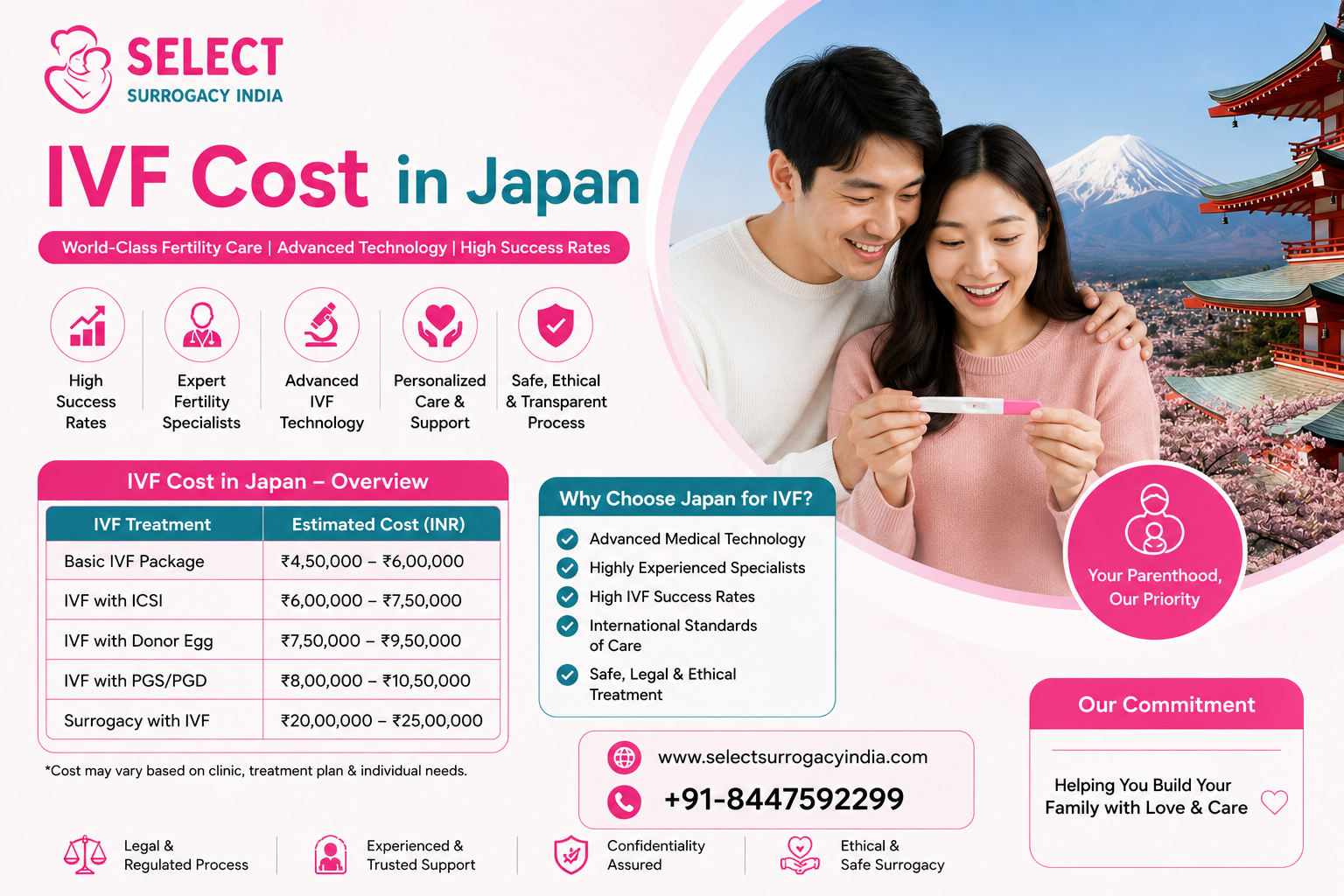
IVF Cost in Japan – Complete Guide to Prices, Clinics, Insurance & What Every Couple Must Know (2026)
There comes a point in every fertility journey where the questions stop being purely medical and start becoming financial. How much will this actually cost? What does insurance cover? Are there hidden expenses nobody warned us about? And most importantly — can we actually afford this? If you are exploring IVF in Japan — whether as a Japanese resident, an expat living in Tokyo, or an international couple considering Japan as a fertility destination — this guide is written for you. Not as a brochure. Not as a sales pitch. But as an honest, detailed, and genuinely useful breakdown of what IVF in Japan costs in 2026, why it costs what it does, and how to plan your journey without financial surprises. Japan occupies a unique position in the world of fertility treatment. It is one of the most experienced IVF nations on earth — with the first Japanese IVF baby born at Tōhoku University back in 1983, and over 850,000 IVF babies born since. It also performs more IVF cycles per capita than almost any other country in the world. And since April 2022, Japan became one of the few large economies to bring IVF under national health insurance — a landmark shift that changed the financial landscape for couples across the country. Yet despite all of this, the cost of IVF in Japan remains a subject of significant confusion. Insurance covers some things but not others. Local government subsidies exist in some cities but not all. Advanced procedures sit entirely outside the insurance system. And for foreigners, the picture is even less clear. This guide cuts through all of that. Understanding IVF in Japan — The Basics First Before we get into costs, it helps to understand what IVF in Japan actually involves and why the country has become such a significant player in fertility medicine. Gestational IVF — the most common form — involves stimulating the ovaries to produce multiple eggs, retrieving those eggs, fertilising them in a laboratory with sperm, culturing the resulting embryos, and transferring the best-quality embryo back into the uterus. In Japan, frozen embryo transfer (FET) cycles are far more common than fresh transfers — Japanese clinics have long preferred to freeze embryos and transfer them in a separate, more controlled cycle. This approach has contributed to Japan’s reputation for technical precision in embryology. IVF in Japan is appropriate for: Japan’s IVF success rates vary significantly by age — as they do worldwide — but clinics in major cities like Tokyo, Osaka, and Nagoya consistently report competitive success rates, particularly for women under 38. IVF Cost in Japan — The Master Summary (2026) Let’s start with the numbers. Here is a clear overview of what IVF costs in Japan across different scenarios in 2026: Treatment Type Cost in JPY Cost in USD (approx.) Basic IVF Cycle (insurance-covered, patient pays 30%) ¥150,000 – ¥200,000 $1,000 – $1,400 Full IVF Cycle (self-pay, no insurance) ¥400,000 – ¥600,000 $2,700 – $4,100 IVF with ICSI (self-pay) ¥500,000 – ¥750,000 $3,400 – $5,100 Frozen Embryo Transfer (FET) — insurance covered ¥50,000 – ¥80,000 $340 – $540 Frozen Embryo Transfer (FET) — self-pay ¥100,000 – ¥200,000 $680 – $1,350 IVF with Donor Eggs (not covered by insurance) ¥800,000 – ¥1,500,000 $5,400 – $10,100 PGT-A Genetic Testing (advanced, self-pay) ¥300,000 – ¥600,000 $2,000 – $4,050 Cumulative cost (multiple cycles, self-pay) ¥1,500,000 – ¥3,000,000 $10,100 – $20,200 These numbers tell a story that surprises many people — IVF in Japan, particularly under the national insurance system, is among the most affordable in any developed country. The catch, as we will explore below, is what insurance covers and what it does not. The 2022 Insurance Revolution — What Changed and Why It Matters April 1, 2022 is a date that fertility specialists across Japan remember clearly. On that day, the Japanese government brought IVF and other assisted reproductive technologies (ART) under the national health insurance (shakai hoken / kokumin kenko hoken) system for the first time. Before 2022, IVF was almost entirely self-funded. A single cycle cost ¥400,000 to ¥500,000 out of pocket — more than the average Japanese household’s monthly income. The government had provided some subsidies previously, but access was patchy, eligibility was limited, and the financial burden remained substantial. The 2022 reform changed this fundamentally. Under the new system, patients pay only 30% of the cost of standard IVF treatment, with the national insurance covering the remaining 70%. For a ¥500,000 cycle, this means the patient’s out-of-pocket cost drops to roughly ¥150,000 — a dramatic reduction. However, the insurance coverage comes with conditions that every couple must understand: Who is eligible: What is covered: What is NOT covered: This distinction matters enormously in practice. Many couples find that their specific treatment needs — particularly if they have had repeated implantation failure, recurrent miscarriage, or are older — require precisely the add-ons that fall outside the insurance system. The result is a treatment journey that mixes insured and non-insured components, producing a total cost that can be significantly higher than the basic insurance figures suggest. Component-by-Component Cost Breakdown Understanding the total IVF cost in Japan requires looking at each stage of treatment individually. Here is how the costs break down in practice. 1. Initial Consultations and Diagnostic Testing Before IVF begins, both partners require a series of diagnostic tests to establish their baseline fertility profile and identify the cause of infertility. Diagnostic Component Estimated Cost (JPY) Initial fertility consultation ¥3,000 – ¥8,000 AMH (ovarian reserve) blood test ¥5,000 – ¥15,000 Antral follicle count (ultrasound) ¥3,000 – ¥8,000 Hormone panel (FSH, LH, E2, prolactin) ¥8,000 – ¥20,000 Semen analysis ¥5,000 – ¥15,000 Hysteroscopy or HSG (uterine assessment) ¥15,000 – ¥40,000 Infectious disease screening (both partners) ¥10,000 – ¥25,000 Total diagnostics (estimated) ¥50,000 – ¥130,000 Many of these basic diagnostic tests are covered under the national insurance system, particularly those that fall under standard infertility workup. The costs above reflect the 30% patient co-payment after insurance. 2. Ovarian Stimulation and Medications